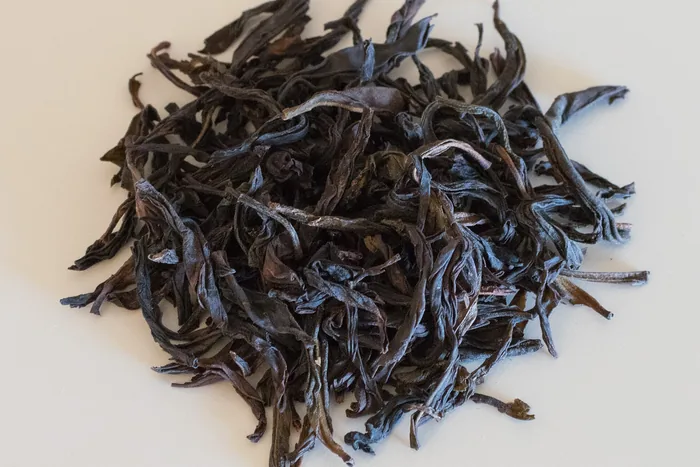
Dandelion root tea is made from the taproot of the common dandelion (Taraxacum officinale), the plant that takes over lawns across Europe and North America. The root is dug up, chopped, dried, and usually roasted. That roasting step turns a fibrous white root into something dark and aromatic, caramelizing its sugars until a finished cup looks a lot like weak coffee.
It tastes the way it looks: earthy, toasty, faintly bitter, with a nutty edge and no caffeine at all. That is why it gets sold so often as a coffee substitute. It will not fool anyone who drinks espresso, but it has real body and a clean bitterness that holds up to honey, lemon, or milk. Dandelion leaf tea, by contrast, is grassy and sharp — a different drink from the same plant.
Dandelion has a long record in European, Middle Eastern, Chinese, and Native American herbal traditions, mostly as a bitter tonic for sluggish digestion and as a springtime cleansing drink. Modern marketing stretched that history into promises about liver detox, water weight, and even cancer. The honest picture is thinner. The National Center for Complementary and Integrative Health states plainly that there is no compelling scientific evidence supporting the use of dandelion for any health condition, and the few human studies that exist tested concentrated extracts, capsules, or multi-herb formulas rather than tea. So: a pleasant, caffeine-free, bitter brew with centuries of traditional use, a scattering of rodent and cell studies, and very little human data. Drink it because you enjoy it, and treat the claims on the box with skepticism.
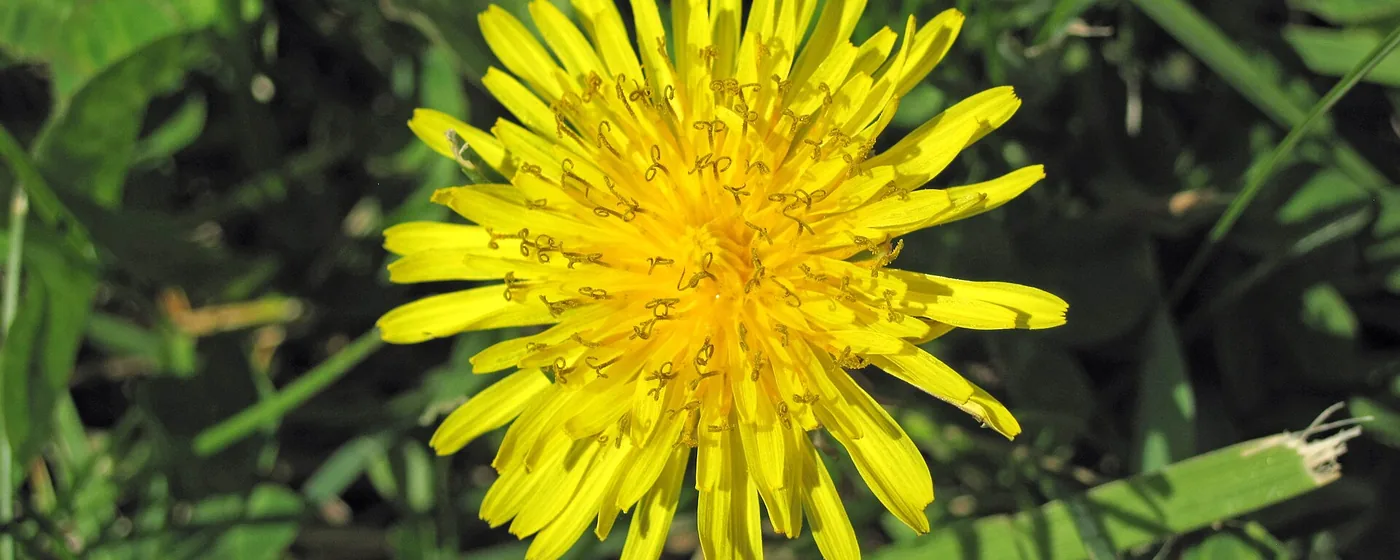
Photo: Taraxacum officinale (common dandelion) (Newark, Ohio, USA) 1 (16716367824).jpg by James St. John — CC BY 2.0. Cropped and re-encoded.
What the evidence says
Dandelion is traditionally used as a diuretic, but the one small trial that tested dandelion root found no significant effect.
A 2009 pilot gave 17 volunteers a hydroethanolic extract of dandelion leaf (not root) three times in a day, finding more frequent urination after the first dose and a higher excretion ratio after the second. The third dose did nothing, and there was no placebo group. A 2026 open-label, counterbalanced crossover trial tested the root: 14 physically active adults drank a liter of water with or without capsules supplying about 2.1 g of dandelion root powder. Cumulative urine output over four hours did not differ significantly between conditions (mean difference 105 g, 95% CI -35 to 244; p = 0.13). The authors are careful to say this tested one product, one dose, and one time course, so it does not close the question — but it offers no support for the diuretic reputation.
The 'liver support' reputation rests almost entirely on rodent and cell studies, not human trials.
In mice given alcohol, a hot-water extract of dandelion root prevented the expected rise in liver enzymes and raised hepatic antioxidant activity. A separate mouse study found dandelion leaf extract blunted acetaminophen-induced liver damage, which the authors attributed to scavenging of reactive oxygen species. Both used concentrated extracts dosed by body weight — nothing like a mug of tea in a person. No clinical trial has measured what this tea does to human liver function.
As a digestive bitter it has a coherent mechanism, but the human data comes from multi-herb products.
Dandelion root contains bitter sesquiterpene lactones, and bitters are thought to stimulate saliva, gastric secretion, and bile flow — the traditional reason to drink it before a meal. A review of Taraxacum pharmacology describes choleretic activity, shown mostly in animals; its authors explicitly list assessment of these activities in humans as an unmet research need. The nearest human evidence is an uncontrolled 60-day cohort of 311 people with functional dyspepsia taking a four-herb capsule of artichoke leaf, dandelion root, turmeric, and rosemary. With no placebo arm and three other actives, it cannot isolate dandelion's contribution.
Dandelion root stores inulin, a prebiotic fiber — but a brewed cup likely supplies far less than studied prebiotic doses.
Dandelion root is a fructan storage organ; plant biochemists have cloned the enzyme that builds inulin and shown it is concentrated in the root phloem. Chicory inulin, a close chemical relative, is a well-studied prebiotic. The gap is dose: prebiotic trials often use around 5 to 10 grams of purified inulin daily, while a cup brewed from a few grams of roasted root extracts a fraction of that. No trial has measured whether this tea changes the gut microbiome.
Sources: [7]
Lab studies showing anti-inflammatory activity and cancer-cell death do not mean the tea treats inflammation or cancer.
A methanol extract of dandelion reduced adhesion-molecule expression and NF-kB activation in cultured human endothelial cells. An aqueous root extract triggered programmed cell death in colon cancer cell lines and slowed tumor growth in mouse xenografts. These are real findings and the source of most dramatic online claims, but they are dish-and-mouse experiments using concentrated extracts. No human trial has tested dandelion root for cancer or inflammatory disease, and substituting it for conventional care is dangerous.
Traditionally taken as a spring bitter and appetite stimulant.
In European folk medicine, dandelion root was a classic spring tonic — a bitter drink taken as winter ended to wake up the appetite. Chinese and Middle Eastern traditions used the plant similarly. That history is the entire basis of the claim; no controlled human study has tested it.
No published human clinical trials found for this use.
There is no clinical evidence that dandelion root tea helps with weight loss.
Dandelion appears constantly in detox and slimming teas, on the theory that it flushes water weight. No human trial has tested it for weight loss, and the one small crossover trial of root powder found no significant extra urine output. Even a true diuretic effect would shed water, not fat — the weight returns the moment you rehydrate.
Sources: [1]
How to brew Dandelion Root Tea
Roots surrender flavor far more slowly than leaves, so give this one time. Best is a simmer: put the root in cold water, bring to a gentle boil, and hold it covered 10 to 15 minutes before straining. To steep instead, pour boiling water over the root, cover, and wait the full 10 to 15 minutes.
- Check the label for 'roasted.' Roasted root is dark and coffee-like; raw dried root is paler and far more bitter.
- Keep the cup or pot covered so the aromatics don't leave with the steam.
- A pinch of roasted chicory root or cinnamon deepens the coffee character.
- Drinking it before a meal as a bitter? Traditionally it's taken unsweetened — the bitter taste is thought to be the point.
- Gas or bloating may come from the root's inulin, a fermentable fiber; use less.
Safety, side effects & who should avoid it
For most healthy adults, dandelion root tea is a low-risk drink, and dandelion has been eaten as food for centuries. NCCIH considers dandelion in the amounts commonly found in food likely safe. The real cautions are allergy in people sensitive to related plants, gallbladder problems, and several plausible drug interactions. It is not a treatment for liver, gallbladder, or kidney disease — if you have symptoms, see a doctor rather than reaching for tea.
Who should avoid it
- Anyone allergic to plants in the Asteraceae (Compositae) family — mugwort, ragweed, chrysanthemum, marigold, daisy, chamomile, echinacea, feverfew. In a review of nearly 6,500 allergy-clinic patients, about 8.5% had positive skin-prick tests to dandelion pollen, and dandelion showed extensive cross-reactivity with mugwort and chrysanthemum. NCCIH notes the evidence is conflicting on whether dandelion actually provokes reactions in people sensitive to these relatives, so treat this as a reason for caution rather than a certainty.
- People with gallstones, a blocked bile duct, or gallbladder inflammation, unless a doctor clears it. Dandelion is traditionally used to increase bile flow, and stimulating bile against an obstruction is a bad idea.
- People with bowel obstruction or a history of ileus, for the same reason bile-stimulating bitters are avoided in that setting.
- Anyone with kidney disease, heart failure, or a supervised fluid or potassium restriction should check first — dandelion is traditionally diuretic and the plant is mineral-rich.
- People taking lithium, prescription diuretics, or a narrow-therapeutic-index drug such as cyclosporine or sirolimus, unless a pharmacist clears it.
- Children. Dandelion tea has not been studied in children and there is no established safe dose, so ask a pediatrician before giving it.
Possible side effects
- Mild heartburn, stomach upset, or loose stools, usually at higher intakes.
- Gas and bloating from the root's inulin, a fermentable fiber. People with IBS or FODMAP sensitivity notice this more.
- Allergic contact dermatitis from handling the fresh plant or its milky latex is well described. A published case report documents seasonal hand dermatitis in a florist patch-tested to dandelion, and dandelion appears in European reviews of contact allergy to herbal products.
- NCCIH notes some evidence that topical dandelion may cause an allergic reaction in people who have atopic dermatitis (eczema).
- Itchy mouth or lips are plausible in people sensitized to Compositae pollens. One 1996 case report describes anaphylaxis after a man swallowed an herbalist's pollen preparation; he tested positive to dandelion, but the product was a pollen mixture in which dandelion made up roughly 15% alongside mugwort and willow, so dandelion alone was not established as the cause. Stop drinking it and get emergency help if you develop hives, swelling of the lips, tongue, or throat, or trouble breathing.
- One case report describes recurrent hemorrhagic cystitis in a woman taking a multi-herb slimming product containing dandelion, juniper, and bladderwrack. The culprit ingredient was never identified, so it cannot be pinned on dandelion — but multi-herb detox blends carry risks the individual herbs may not.
Medication interactions
- Quinolone antibiotics (ciprofloxacin, levofloxacin): in rats, an aqueous extract of a related dandelion species (Taraxacum mongolicum) lowered peak plasma ciprofloxacin by 73%, though total drug exposure (AUC) was unchanged and the authors described the interaction as multifactorial rather than simple mineral binding in the gut. Untested in people; separating tea from a quinolone dose by several hours is a cheap precaution.
- Drugs cleared by CYP3A4 (cyclosporine, sirolimus, many statins, some benzodiazepines): a dandelion extract inhibited CYP3A4 in a test-tube assay (IC50 about 141 micrograms/mL), in work prompted by a real case of toxic cyclosporine and sirolimus levels after a multi-herb tea. Whether brewed dandelion tea does this in people is untested. Ask a pharmacist if you take any narrow-margin medication.
- Lithium: dandelion's traditional diuretic use could in principle shift fluid and sodium balance, and lithium levels are sensitive to exactly that. This interaction is theoretical and is not listed by NCCIH, but the consequences of getting lithium wrong are serious. Do not add it without your prescriber's sign-off.
- Prescription diuretics (furosemide, hydrochlorothiazide, spironolactone): NCCIH flags a theoretical interaction with 'water pill' drugs. Potassium-sparing diuretics deserve extra caution given the plant's potassium content.
- Diabetes medications: NCCIH notes a theoretical interaction with antidiabetes drugs, meaning additive blood-sugar lowering cannot be ruled out. Monitor if you use insulin or a sulfonylurea.
- Anticoagulants and antiplatelets (warfarin, clopidogrel, aspirin): NCCIH lists a theoretical interaction. No human cases confirm one, but tell your anticoagulation clinic if you drink it regularly.
Pregnancy & breastfeeding
Dandelion has been eaten as food for a very long time, and food-level amounts are generally considered safe. But there is essentially no clinical safety data on medicinal or daily-tea amounts during pregnancy or breastfeeding — NCCIH says outright that little is known about whether dandelion is safe in amounts greater than those found in foods during pregnancy or while breastfeeding. Talk to your doctor or midwife before making it a habit.
How much is too much
No established limit. Human studies did not use tea: the 2009 diuretic pilot gave 8 mL of a concentrated leaf extract three times in one day, and the 2026 crossover trial used a single dose of about 2.1 g of root powder in capsules. Herbal references commonly suggest one to three cups a day, but that reflects tradition, not a tested ceiling. No study has examined repeated daily use, so long-term intake is unstudied.
Taste & pairing
Tasting notes: Roasted, Earthy, Similar to coffee.
Pairs well with: Honey, Lemon.
Best time to drink: Morning or before meals.
Frequently asked questions
How long should you steep dandelion root tea?
Longer than you'd think — 10 to 15 minutes, covered. Roots are dense and woody and release flavor far more slowly than leaves, so a 3-minute steep gives you tinted water. Better still, simmer it: start the root in cold water, bring to a gentle boil, and hold it there 10 to 15 minutes. That's a decoction, the traditional way to prepare any root.
Does dandelion root tea have caffeine, and is it a real coffee substitute?
Zero caffeine. The coffee comparison is about roasting, which caramelizes the root's sugars into dark, nutty, slightly bitter compounds. It stands in for the ritual and the flavor, but does nothing for alertness and tastes thin next to a strong cup. Blending it with roasted chicory root gets you closer.
When is the best time to drink dandelion root tea?
There's no evidence-based answer, only a traditional one. As a bitter, it was classically taken 10 to 20 minutes before a meal. As a caffeine-free coffee substitute, morning makes sense. Because of dandelion's diuretic reputation — which a single small root-powder trial did not confirm — some people avoid it near bedtime.
What are the side effects of dandelion root tea?
Most people have none. When they occur they're mild: heartburn, stomach upset, loose stools, or gas from the root's inulin. The bigger issue is allergy. If you react to mugwort, ragweed, chrysanthemums, marigolds, daisies, chamomile, or echinacea, you may react to dandelion too, since they're in the same plant family — though the evidence on how often this actually happens is mixed. Get emergency help for signs of a serious allergic reaction: hives, swelling of the lips, tongue, or throat, or trouble breathing. Skip it if you have gallstones or a bile duct problem, and ask a pharmacist if you take lithium, a diuretic, a quinolone antibiotic, or a transplant drug.
How many cups of dandelion root tea can I drink a day?
Nobody has established a safe upper limit, which is itself the honest answer. Tradition points at one to three cups a day, and food-level dandelion is considered low-risk. Human research has only tested single doses of extracts and capsules, never sustained tea drinking. If you're pregnant, breastfeeding, on prescription medication, or have kidney, liver, or gallbladder disease, ask your doctor first.
What's the difference between dandelion root tea and dandelion leaf tea?
Same plant, different organ, different drink. The root is dense and starchy, stores inulin, and once roasted tastes earthy and coffee-like. The leaf is grassy, sharply bitter, and rich in potassium. Research histories differ too: the human diuretic pilot used leaf extract, while the one small trial of root powder found no significant diuretic effect. Neither has good human evidence for a health claim, so choose on flavor.
References
- Co-Ingestion of a Commercially Available Dandelion Root Powder Elicited No Additional Diuretic Effect Over 4 Hr Compared to Ingestion of Water Alone in Physically Active Young Adults.. Int J Sport Nutr Exerc Metab, 2026. PubMed 42398668 · doi:10.1123/ijsnem.2026-0001
- The diuretic effect in human subjects of an extract of Taraxacum officinale folium over a single day.. J Altern Complement Med, 2009. PubMed 19678785 · doi:10.1089/acm.2008.0152
- In vitro and in vivo hepatoprotective effects of the aqueous extract from Taraxacum officinale (dandelion) root against alcohol-induced oxidative stress.. Food Chem Toxicol, 2010. PubMed 20347918 · doi:10.1016/j.fct.2010.03.037
- Antioxidant properties of Taraxacum officinale leaf extract are involved in the protective effect against hepatoxicity induced by acetaminophen in mice.. J Med Food, 2012. PubMed 22424457 · doi:10.1089/jmf.2011.0282
- [Phytotherapy with a mixture of dry extracts with hepato-protective effects containing artichoke leaves in the management of functional dyspepsia symptoms].. Minerva Gastroenterol Dietol, 2010. PubMed 20485248
- Taraxacum--a review on its phytochemical and pharmacological profile.. J Ethnopharmacol, 2006. PubMed 16950583 · doi:10.1016/j.jep.2006.07.021
- Cloning, developmental, and tissue-specific expression of sucrose:sucrose 1-fructosyl transferase from Taraxacum officinale. Fructan localization in roots.. Plant Physiol, 2000. PubMed 10806226 · doi:10.1104/pp.123.1.71
- Anti-inflammatory evaluation of the methanolic extract of Taraxacum officinale in LPS-stimulated human umbilical vein endothelial cells.. BMC Complement Altern Med, 2017. PubMed 29187173 · doi:10.1186/s12906-017-2022-7
- Dandelion root extract affects colorectal cancer proliferation and survival through the activation of multiple death signalling pathways.. Oncotarget, 2016. PubMed 27564258 · doi:10.18632/oncotarget.11485
- Herbal tea extracts inhibit Cytochrome P450 3A4 in vitro.. J Pharm Pharmacol, 2014. PubMed 24824478 · doi:10.1111/jphp.12270
- Effects of taraxacum mongolicum on the bioavailability and disposition of ciprofloxacin in rats.. J Pharm Sci, 1999. PubMed 10350500 · doi:10.1021/js980367q
- Cross-allergenicity of pollens from the Compositae family: Artemisia vulgaris, Dendranthema grandiflorum, and Taraxacum officinale.. Ann Allergy Asthma Immunol, 2007. PubMed 18219834 · doi:10.1016/S1081-1206(10)60382-1
- Contact dermatitis as an adverse reaction to some topically used European herbal medicinal products - part 4: Solidago virgaurea-Vitis vinifera.. Contact Dermatitis, 2017. PubMed 28543097 · doi:10.1111/cod.12807
- Seasonal allergic contact dermatitis from Taraxacum officinale (dandelion) in an Israeli florist.. Contact Dermatitis, 2000. PubMed 10902595
- Anaphylaxis induced by ingestion of a pollen compound.. J Investig Allergol Clin Immunol, 1996. PubMed 8807513
- Hemorrhagic cystitis induced by an herbal mixture.. South Med J, 2010. PubMed 19996849 · doi:10.1097/SMJ.0b013e3181c46e0d
Last reviewed and updated . HelperTea is written by an enthusiast, not a clinician, and is not medically reviewed. How we research and rate evidence. Found an error? Tell us — safety corrections get priority.