Most headaches fall into two groups. Tension-type headache is the common one: a dull, pressing band across both sides of the head. Migraine is often one-sided and throbbing, and usually brings nausea or sensitivity to light and sound. A few headaches signal something serious, which is why the red flags below matter more than anything else here.
Now the honest position. No tea is a headache treatment. Only ginger has been tested in people with headache in a form resembling something you drink, and even there the evidence is thin. For peppermint and lavender, the herbs recommended most often, the real clinical evidence involves oil rubbed on the forehead or vapor breathed in — not a mug of anything. Much of the relief people feel from a hot cup is probably the fluid, the warmth, and twenty minutes sitting still in a dim room. That is worth having. It is not pharmacology.
Tea suits a mild, familiar headache. It is the wrong response to a thunderclap onset, or a headache with fever, a stiff neck, or confusion.
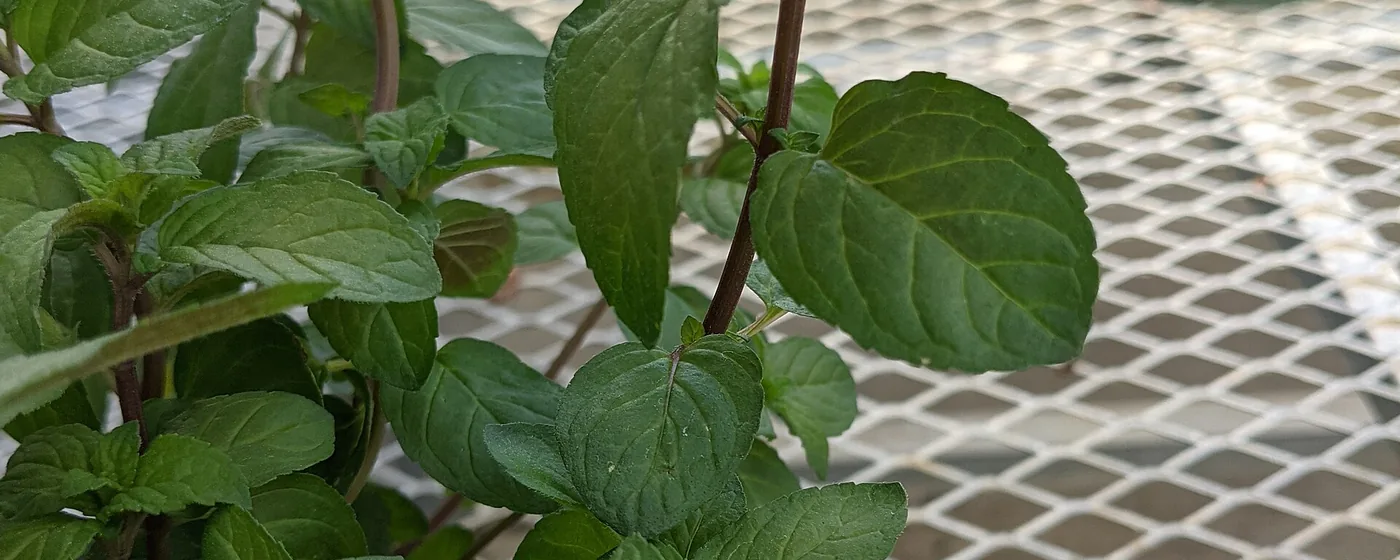
Photo: Peppermint Plant.jpg by Joshua T Polito — CC0. Cropped and re-encoded.
Ranked by evidence
Ginger Tea
The best-supported pick, and the one for a migraine starting with nausea.
moderate evidence
Gingerols inhibit inflammatory prostaglandin pathways. In a double-blind trial of 100 adults, 250 mg of ginger powder matched sumatriptan at two hours, though with no placebo group. Adding 400 mg of ginger extract to intravenous ketoprofen beat placebo in a second trial. A 2021 review pooling two trials found more people pain-free at two hours (risk ratio 1.79), but called the evidence base too small for formal recommendations. Ginger did not prevent attacks over three months. Tea delivers a smaller, unknown dose.
Feverfew Tea
For migraine prevention — but capsules, not tea, are what was studied.
limited evidence
Feverfew's parthenolide blocks platelet serotonin release in laboratory work. A 2015 Cochrane review pooled six randomized trials in 561 patients; the largest found feverfew cut migraine frequency by 1.9 attacks a month versus 1.3 for placebo. Reviewers graded that 0.6-attack difference low-quality evidence, insufficient for firm conclusions. Every trial used a standardized capsule extract. Feverfew tea has never been tested, and a homemade infusion delivers uncontrolled parthenolide. It is preventive only.
Peppermint Tea
A safe, pleasant cup for tension headache — but the peppermint shown to work goes on your forehead.
Traditional use
Menthol activates cold-sensing skin receptors, producing a cooling, mildly numbing effect. A randomized placebo-controlled crossover study covering 164 tension headache attacks found 10 percent peppermint oil on the forehead and temples reduced pain within 15 minutes, about as well as 1,000 mg of acetaminophen. None of that supports drinking the tea, which sends menthol to your gut, not your scalp. Never apply the oil to the face of infants or young children, as inhaled menthol can affect breathing.
Chamomile Tea
The gentlest option, when headaches track with stress, clenching, or bad sleep.
Traditional use
Chamomile's apigenin binds sedation-associated receptors in the lab. Its only headache trial is a double-blind crossover in 72 patients where a topical chamomile oleogel — rubbed on, not drunk — eased migraine pain within 30 minutes. Chamomile tea has no headache trials. It plausibly helps you unwind and sleep, and poor sleep is a recognized trigger. Avoid it if you react to ragweed or daisies: NCCIH notes anaphylaxis has occurred, and flags warfarin interactions.
Sources: [9]
Lavender Tea
Choose it for the smell, not the sip — inhaling lavender is what was tested.
Traditional use
Lavender's linalool has calming effects in animal models. The one human headache study had 47 patients inhale lavender oil for 15 minutes during a migraine, reporting larger pain drops than those inhaling paraffin. It was small and only single-blinded — a real flaw, since lavender is unmistakable by smell. Lavender tea itself has never been tested for headache.
Sources: [10]
Assam
The double-edged pick: caffeine is tea's only compound with a real analgesic record, and a common headache cause.
limited evidence
Caffeine blocks adenosine receptors, which is why it appears in over-the-counter headache tablets. A Cochrane review of 19 studies and 7,238 participants found that adding at least 100 mg of caffeine to a painkiller helped 5 to 10 percent more people reach good relief. A strong cup of Assam holds roughly 40 to 70 mg, below the tested dose. Meanwhile, a review of 57 studies found headache in about half of people during caffeine abstinence.
How to choose between them
Start with what your headache is doing. For a migraine just beginning, especially with a turning stomach, ginger has the only real human trial data here; brew it strong from fresh root. For the familiar tension band, chamomile and peppermint are caffeine-free and safe, and their honest job is to get you sitting down, hydrated, and calmer.
Caffeine is the decision that matters most. If you drink caffeinated tea or coffee daily, keep your intake steady rather than skipping days, since abstinence headaches begin 12 to 24 hours after the last dose. If you are quitting, taper with weaker brews. Do not lean on caffeine as a remedy: a cup delivers less than the 100 mg that showed benefit.
On safety, avoid feverfew in pregnancy — NCCIH warns it may affect uterine contractions. Feverfew may also slow blood clotting; stop it two weeks before surgery. Feverfew and chamomile can both trigger reactions in people allergic to ragweed and daisy-family plants. Ginger commonly causes heartburn.
When to see a doctor
Call emergency services for a headache peaking within about a minute (a thunderclap headache), the worst headache of your life, or any headache with fever, a stiff neck, confusion, seizure, one-sided weakness or numbness, difficulty speaking, or loss of vision. Seek urgent care for a headache after a head injury, one clearly worse when you lie flat, cough, or strain, or one that wakes you from sleep. Book an appointment for a headache that is new after age 50, a pattern that has changed or keeps worsening, a new headache in pregnancy or soon after giving birth (which can signal preeclampsia), or a new headache if you have cancer or a weakened immune system. Also see a doctor for headaches on 15 or more days a month, or painkillers on more than about two days a week — that pattern can itself cause medication-overuse headache.
Frequently asked questions
Which tea works fastest for a headache?
Ginger, on the human data: oral ginger eased migraine pain by the two-hour mark, and in one trial ginger plus a painkiller beat placebo at one hour. Topical peppermint oil worked within 15 minutes, faster than anything you drink.
Is feverfew tea as good as feverfew capsules?
No reason to think so, and no study compares them. Every trial in the 2015 Cochrane review used a standardized capsule extract; a homemade infusion delivers an unpredictable parthenolide dose. Even the capsules produced only a low-quality signal.
Can drinking tea cause headaches?
Yes — the most common way tea and headaches interact. A review of 57 studies found headache in about half of people during caffeine abstinence, starting 12 to 24 hours after the last dose and lasting 2 to 9 days.
Peppermint tea or peppermint oil for a headache?
The oil, if you want the demonstrated effect. In a randomized crossover study covering 164 tension headache attacks, 10 percent peppermint oil on the forehead reduced pain within 15 minutes, comparably to 1,000 mg of acetaminophen. The tea has never been tested.
How much ginger tea should I drink for a migraine?
Nobody can give an honest number, because ginger tea has not been dose-tested. Trials used 250 mg of ginger powder once at the onset of an attack. A cautious approach is one strong infusion of about a teaspoon of grated root.
Can I drink these teas with my migraine medication?
Ask a pharmacist rather than assuming. NCCIH warns feverfew may interact with migraine medicines and may slow blood clotting; chamomile has documented concerns with warfarin. Separately, painkillers on more than two days a week can cause medication-overuse headache.
References
- Comparison between the efficacy of ginger and sumatriptan in the ablative treatment of the common migraine.. Phytotherapy Research, 2013. PubMed 23657930 · doi:10.1002/ptr.4996
- Double-blind placebo-controlled randomized clinical trial of ginger (Zingiber officinale Rosc.) addition in migraine acute treatment.. Cephalalgia, 2018. PubMed 29768938 · doi:10.1177/0333102418776016
- Double-blind placebo-controlled randomized clinical trial of ginger in the prophylactic treatment of migraine.. Cephalalgia, 2019. PubMed 31398997 · doi:10.1177/0333102419869319
- Ginger for Migraine.. The Journal of Clinical Psychiatry, 2021. PubMed 34851560 · doi:10.4088/JCP.21f14325
- Feverfew for preventing migraine.. Cochrane Database of Systematic Reviews, 2015. PubMed 25892430 · doi:10.1002/14651858.CD002286.pub3
- A double-blind placebo-controlled pilot study of sublingual feverfew and ginger (LipiGesic M) in the treatment of migraine.. Headache, 2011. PubMed 21631494 · doi:10.1111/j.1526-4610.2011.01910.x
- Effectiveness of Oleum menthae piperitae and paracetamol in therapy of headache of the tension type.. Der Nervenarzt, 1996. PubMed 8805113 · doi:10.1007/s001150050040
- Peppermint oil in the acute treatment of tension-type headache.. Schmerz, 2016. PubMed 27106030 · doi:10.1007/s00482-016-0109-6
- Evaluation of the effect of topical chamomile (Matricaria chamomilla L.) oleogel as pain relief in migraine without aura: a randomized, double-blind, placebo-controlled, crossover study.. Neurological Sciences, 2018. PubMed 29808331 · doi:10.1007/s10072-018-3415-1
- Lavender essential oil in the treatment of migraine headache: a placebo-controlled clinical trial.. European Neurology, 2012. PubMed 22517298 · doi:10.1159/000335249
- Caffeine as an analgesic adjuvant for acute pain in adults.. Cochrane Database of Systematic Reviews, 2012. PubMed 22419343 · doi:10.1002/14651858.CD009281.pub2
- A critical review of caffeine withdrawal: empirical validation of symptoms and signs, incidence, severity, and associated features.. Psychopharmacology (Berlin), 2004. PubMed 15448977 · doi:10.1007/s00213-004-2000-x
Last reviewed and updated . HelperTea is written by an enthusiast, not a clinician, and is not medically reviewed. How we research and rate evidence. Found an error? Tell us — safety corrections get priority.