Period cramps, or primary dysmenorrhea, happen because the uterine lining releases prostaglandins as it breaks down. These make the uterine muscle contract hard enough to squeeze its own blood vessels, and that brief drop in blood flow is what you feel. Ibuprofen and naproxen work by blocking the enzyme that makes prostaglandins.
Here is the honest version of what tea can do. Ginger is the only herb on this page with repeated trial evidence, and several of those trials are small and poorly run. When Cochrane reviewed 27 randomized trials of supplements for period pain, it concluded there was no high-quality evidence that any of them work, and that safety data were largely missing. Just as important: nearly every trial tested weighed capsules of dried powder, not a brewed cup. Swallowing 750 to 2,000 mg of ginger powder a day is not obviously the same as drinking ginger tea, and nobody has run a good trial on the tea.
So treat these as a low-risk comfort measure that may take some of the edge off, alongside a heating pad and rest. They are not a replacement for NSAIDs, hormonal contraception, or a diagnosis. If your cramps are severe, don't respond to painkillers, or show up outside your period, see a doctor. Endometriosis, adenomyosis, fibroids, and pelvic infection all cause cramps, and all need real treatment.
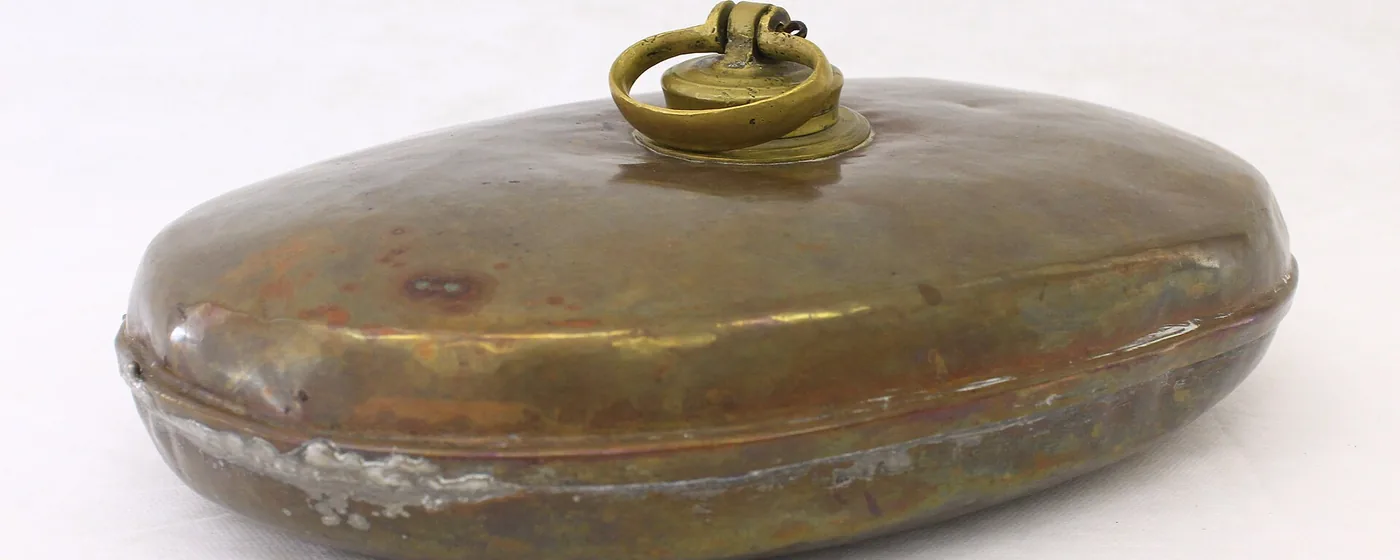
Photo: Botija de água quente Hot water bottle.JPG by Conrado Secassi — CC BY-SA 4.0. Cropped and re-encoded.
Ranked by evidence
Ginger Tea
The best-supported option, and the one to try first.
moderate evidence
Gingerols appear to inhibit the same COX enzymes ibuprofen blocks, lowering prostaglandin production in the uterine lining. Three meta-analyses found oral ginger reduced menstrual pain more than placebo, and two found no significant difference between ginger and the NSAID mefenamic acid. All three caution that the underlying trials were small, heterogeneous, and of limited methodological quality, and Cochrane judged the evidence low or very low quality. Trials used 750 to 2,000 mg of dried powder in capsules, so tea likely delivers less.
Chamomile Tea
Best if cramps come with poor sleep or a churning stomach.
limited evidence
In laboratory work, chamomile extract suppresses prostaglandin production, and its flavonoid apigenin binds brain receptors involved in relaxation. The human evidence is thinner than that mechanism suggests. Cochrane found only very limited evidence, from one 160-woman trial, that chamomile beat an NSAID, and rated the placebo-controlled data too poor to pool. A 2024 trial in people with endometriosis reported less dysmenorrhea on chamomile capsules than placebo.
Peppermint Tea
A cooling alternative if ginger's heat bothers your stomach.
limited evidence
Menthol activates TRPM8 cold receptors and relaxes smooth muscle in laboratory preparations, the proposed route to easing cramping. A double-blind crossover study in 127 students found peppermint extract lowered pain about as much as mefenamic acid, though the peppermint group took extra painkillers more often. A 2025 review of five randomized trials concluded peppermint may reduce pain severity but that better trials are needed.
Fennel Tea
Worth a cup if bloating and nausea bother you more than the cramp.
limited evidence
Fennel's anethole relaxes smooth muscle in animal and laboratory studies, and the herb has a long history of use for menstrual complaints. The trial record is mixed. A randomized comparison in 110 teenagers found fennel and mefenamic acid gave similar rates of pain relief, but Cochrane found no consistent benefit over placebo and no difference from NSAIDs. Treat it as unproven.
Raspberry Leaf Tea
The most popular cramp tea with the least evidence behind it.
Traditional use
Red raspberry leaf has been used for menstrual complaints for generations, and it heads most online lists of period teas. That recommendation rests on tradition. Cochrane's review covered 12 herbs, and raspberry leaf was not among them, because there are no controlled trials of it for period pain. A survey of 121 postnatal women found 38 percent used it in pregnancy despite, as the authors put it, no experimental data supporting the claims made for it.
How to choose between them
Start with ginger if you want the option with the most trial support, and start it early: in the trials showing the largest effect, people began one to two days before bleeding and continued three to four days. Ginger tea is warming and sharp, and it can cause heartburn. Peppermint is the cooling counterpart, but menthol relaxes the valve at the top of the stomach, so neither suits you if reflux is already part of your bad days. Chamomile and fennel are gentler there.
All five teas are caffeine-free, which matters if cramps keep you awake, and chamomile is the sensible evening pick. None of them work like a painkiller. An NSAID reaches useful blood levels in about half an hour; nobody has measured how fast a cup of tea affects cramping, or whether it does at all. In one head-to-head trial, ten minutes of pelvic stretching three times a week beat ginger by the second cycle. Tea belongs alongside heat, rest, and movement, not instead of them.
When to see a doctor
See a doctor if your cramps don't respond to over-the-counter NSAIDs after two or three cycles, if the pain regularly makes you miss school or work, or if it has worsened year over year. Pain that starts more than five days before bleeding, continues after it stops, or appears outside your period deserves evaluation, as does new pain during sex or bowel movements, and cramping that begins more than three months after an IUD was placed. These can signal endometriosis, adenomyosis, fibroids, or infection. Call the same day for fever with pelvic pain, foul-smelling discharge, or bleeding that soaks a pad every hour for several hours. Get emergency care for sudden, severe, one-sided pelvic pain if your period is more than a week late and you could be pregnant.
Frequently asked questions
Is ginger tea as effective as ibuprofen for period cramps?
Nobody has tested ginger tea against ibuprofen. Two meta-analyses found no significant difference between ginger powder in capsules and mefenamic acid, an NSAID in the same family. But "no significant difference" across small, low-quality trials is not proof of equivalence, and the reviewers said so themselves. NSAIDs remain first-line. If ibuprofen works for you, keep using it.
When should I start drinking it, and how much?
Trials that found a benefit gave 750 to 2,000 mg of dried ginger powder a day, split into three or four doses, starting one to two days before the period or on day one of bleeding, and continuing three to four days. Waiting until the cramp arrives is probably starting late. There is no studied dose for tea, so two or three cups a day is a cautious approximation.
Does a cup of ginger tea contain the dose used in the studies?
Probably not, and you can't know. Trials weighed dried root powder into capsules, so participants swallowed all of it. Tea is a water extract: some compounds cross into the cup, others stay in the root you throw away, and the amount depends on how much ginger you used and how long you steeped it.
Are any of these teas unsafe with medications or during pregnancy?
Yes. If you take warfarin or another blood thinner, talk to your pharmacist before drinking ginger or chamomile regularly. A prospective study of 171 warfarin patients found ginger use roughly tripled the odds of a self-reported bleeding event, and a systematic review of 149 articles lists both ginger and chamomile tea among products linked to increased bleeding. Chamomile can also trigger allergic reactions, rarely including anaphylaxis, in people allergic to ragweed, daisies, or marigolds. In pregnancy, food-level amounts are generally considered fine, but medicinal amounts are not well studied. Ask your midwife or OB.
Does red raspberry leaf tea actually help period cramps?
There is no clinical trial evidence that it does. Cochrane's review of 27 supplement trials for dysmenorrhea covered a dozen herbs, and raspberry leaf was not one of them, because the trials don't exist. It's a mild, caffeine-free tea, and tradition is the entire case for it.
References
- Dietary supplements for dysmenorrhoea. Cochrane Database of Systematic Reviews, 2016. PubMed 27000311 · doi:10.1002/14651858.CD002124.pub2
- Efficacy of Ginger for Alleviating the Symptoms of Primary Dysmenorrhea: A Systematic Review and Meta-analysis of Randomized Clinical Trials. Pain Medicine, 2015. PubMed 26177393 · doi:10.1111/pme.12853
- Ginger for Pain Management in Primary Dysmenorrhea: A Systematic Review and Meta-Analysis. Journal of Integrative and Complementary Medicine, 2024. PubMed 38770631 · doi:10.1089/jicm.2023.0799
- Efficacy of Oral Ginger (Zingiber officinale) for Dysmenorrhea: A Systematic Review and Meta-Analysis. Evidence-Based Complementary and Alternative Medicine, 2016. PubMed 27274753 · doi:10.1155/2016/6295737
- Effect of Zingiber officinale R. rhizomes (ginger) on pain relief in primary dysmenorrhea: a placebo randomized trial. BMC Complementary and Alternative Medicine, 2012. PubMed 22781186 · doi:10.1186/1472-6882-12-92
- The effect of mefenamic acid and ginger on pain relief in primary dysmenorrhea: a randomized clinical trial. Archives of Gynecology and Obstetrics, 2014. PubMed 25399316 · doi:10.1007/s00404-014-3548-2
- Use of ginger versus stretching exercises for the treatment of primary dysmenorrhea: a randomized controlled trial. Journal of Integrative Medicine, 2017. PubMed 28659234 · doi:10.1016/S2095-4964(17)60348-0
- The Effect of Chamomile on Pain and Menstrual Bleeding in Primary Dysmenorrhea: A Systematic Review. International Journal of Community Based Nursing and Midwifery, 2021. PubMed 34222539 · doi:10.30476/ijcbnm.2021.87219.1417
- The Effects of Chamomile and Flaxseed on Pelvic Pain, Dyspareunia, and Dysmenorrhea in Endometriosis: A Controlled Randomized Clinical Trial. Iranian Journal of Nursing and Midwifery Research, 2024. PubMed 39759908 · doi:10.4103/ijnmr.ijnmr_110_23
- Effects of chamomile and L-theanine beverage on menstrual pain, menstrual symptoms, mood, and sleep quality in young women experiencing primary dysmenorrhea: A randomized, double-blind, placebo-controlled study. Journal of Food and Drug Analysis, 2025. PubMed 41525193 · doi:10.38212/2224-6614.3565
- Evaluation of mint efficacy regarding dysmenorrhea in comparison with mefenamic acid: A double blinded randomized crossover study. Iranian Journal of Nursing and Midwifery Research, 2016. PubMed 27563318 · doi:10.4103/1735-9066.185574
- The Effects of Peppermint on Menstrual Disorders: A Systematic Review of Randomized Controlled Trials. Iranian Journal of Nursing and Midwifery Research, 2025. PubMed 41311590 · doi:10.4103/ijnmr.ijnmr_283_23
- Comparison of the effectiveness of fennel and mefenamic acid on pain intensity in dysmenorrhoea. Eastern Mediterranean Health Journal, 2006. PubMed 17037712
- The effect of fennel on pain quality, symptoms, and menstrual duration in primary dysmenorrhea. Journal of Pediatric and Adolescent Gynecology, 2014. PubMed 25085020 · doi:10.1016/j.jpag.2013.12.003
- Efficacy of herbal medicine (cinnamon/fennel/ginger) for primary dysmenorrhea: a systematic review and meta-analysis of randomized controlled trials. The Journal of International Medical Research, 2020. PubMed 32603204 · doi:10.1177/0300060520936179
- Survey of Raspberry Leaf Tea in pregnancy. Australian and New Zealand Journal of Obstetrics and Gynaecology, 2022. PubMed 35188267 · doi:10.1111/ajo.13496
- Warfarin and food, herbal or dietary supplement interactions: A systematic review. British Journal of Clinical Pharmacology, 2020. PubMed 32478963 · doi:10.1111/bcp.14404
- Risk of warfarin-related bleeding events and supratherapeutic international normalized ratios associated with complementary and alternative medicine: a longitudinal analysis. Pharmacotherapy, 2007. PubMed 17723077 · doi:10.1592/phco.27.9.1237
Last reviewed and updated . HelperTea is written by an enthusiast, not a clinician, and is not medically reviewed. How we research and rate evidence. Found an error? Tell us — safety corrections get priority.