When people search for a tea that gives them energy and focus, they are almost always looking for caffeine. Every tea on this page comes from the same plant, Camellia sinensis. The difference between a mug of Assam and a bowl of matcha is mostly how much caffeine lands in your cup, and how fast.
In double-blind trials, people who drank ordinary brewed black tea were more accurate on attention-switching tasks and felt more alert than people given a placebo tea. Tea also contains L-theanine, an amino acid that takes some of the edge off caffeine's jitteriness. But a cup holds far less theanine than the doses used in most trials, so the "calm, alert focus" printed on matcha packaging is a bigger promise than the evidence behind it.
What tea cannot do is create energy. Caffeine briefly blocks the brain's fatigue signal. It does not repay sleep debt, and it does nothing for the medical causes of exhaustion. In daily caffeine drinkers, much of the morning lift looks like reversal of overnight withdrawal rather than a net gain. Tea is a modest, short-acting nudge, not a treatment. If your fatigue or brain fog has lasted more than a few weeks, or is getting worse, see a doctor first.
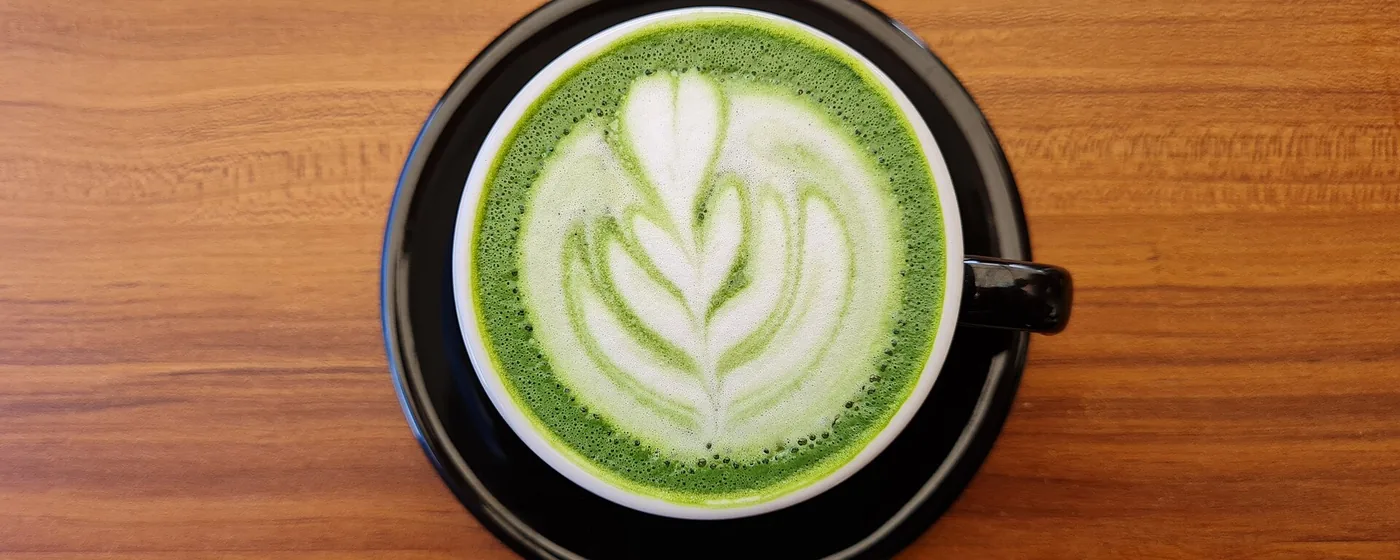
Photo: Matcha tea latte with rosetta latte art.jpg by Irvan Ary Maulana — CC BY-SA 4.0. Cropped and re-encoded.
Ranked by evidence
Matcha
Best for the most caffeine and theanine per serving.
moderate evidence
Matcha is powdered whole leaf whisked into water, so a serving carries more caffeine and theanine than most brewed teas: about 72 mg and 50 mg in one trial's 2.7 g dose. Small randomized trials of matcha found modest attention gains. A 12-month trial in older adults missed both primary cognitive endpoints, and much of this research is funded by a tea company.
Assam
The most reliable straightforward caffeine hit among brewed teas.
moderate evidence
Black tea is the one brewed tea with direct placebo-controlled evidence. In two double-blind crossover studies, people drinking black tea from ordinary tea bags were more accurate on an attention-switching task and felt more alert than people given a placebo tea. A meta-analysis of eleven trials of tea's constituents found moderate effects on alertness within two hours, tracking caffeine dose more than theanine.
Green Tea
The everyday middle ground: gentler than matcha or Assam.
moderate evidence
Sencha pairs caffeine with theanine like matcha, but lighter, and brewed short and cool, which keeps caffeine down. No trial has tested sencha itself, so the evidence is borrowed from green tea's constituents and from matcha. In one 16-week trial, green tea extract plus L-theanine improved selective attention among the more impaired participants; the group overall improved only marginally.
Earl Grey
For people who will only drink a cup they actually enjoy.
limited evidence
Earl Grey is black tea plus bergamot orange oil; any alertness comes from the caffeine. No trial has tested Earl Grey, and bergamot has not been shown to affect attention. One caution: a Lancet case report describes muscle cramps, fasciculations and blurred vision in a man drinking roughly four liters a day, attributed to bergamot's furocoumarins. Symptoms resolved when he cut back.
Darjeeling
The better afternoon black tea: lighter and usually lower in caffeine.
limited evidence
Darjeeling is a lightly oxidized black tea brewed cooler and shorter than Assam, which generally means less caffeine per cup. No trial has tested Darjeeling specifically, so the only reason to expect anything is the black tea evidence above.
Dragonwell
For caffeine-sensitive people who still want something to sip.
limited evidence
Dragonwell is a pan-fired Chinese green tea, low in caffeine and brewed briefly. Expect a small effect: caffeine drives most of tea's measurable benefit, and effect sizes in the constituent meta-analysis tracked caffeine dose more than theanine. Theanine alone is not a stimulant: in one trial, 200 mg without caffeine did not raise alertness.
How to choose between them
Start with caffeine, because that is the active ingredient. Matcha usually delivers the most per serving, since you drink the leaf itself; strong black teas like Assam come next, then green teas and lighter black teas. Numbers swing widely with leaf, dose, water temperature and steep time: a long hot steep pulls far more caffeine than a short cool one, so if you are sensitive, brew shorter and cooler before switching teas.
Expect to feel something within 30 to 60 minutes, with the effects concentrated in the first couple of hours. Side effects are predictable: jitteriness, a faster heartbeat, reflux, worsened anxiety, and a withdrawal headache on days you skip it. Tea also strongly blocks absorption of non-heme (plant) iron. In a stable-isotope study, tea drunk with a fortified wheat meal cut iron absorption by more than 85 percent in both anemic and non-anemic women, so drink it between meals if you are iron-deficient or menstruate heavily. Green tea in large amounts can lower blood levels of the beta-blocker nadolol and of atorvastatin, and matcha, being whole leaf, carries more vitamin K than a strained infusion, worth mentioning if you take warfarin.
When to see a doctor
Reaching for tea to get through a dull afternoon is normal; needing it to function is not. See a doctor if fatigue or brain fog has lasted more than two to four weeks despite decent sleep, or if it comes with unintentional weight loss, fever or night sweats, breathlessness or a racing heart on mild effort, unusual paleness, heavy periods, easy bruising, or new swelling. Loud snoring, gasping at night, or falling asleep while driving point toward sleep apnea. New memory loss or confusion, especially in an older adult, needs prompt assessment, as does persistent low mood. Fatigue is a symptom of anemia, thyroid disease, diabetes, depression, sleep apnea and heart disease, none of which respond to tea. If caffeine reliably triggers palpitations, chest pain or panic attacks, stop and get evaluated.
Frequently asked questions
Is matcha better than coffee for focus?
For raw alertness, probably not: coffee usually carries more caffeine, and caffeine drives most of the measurable effect. Matcha's selling point is L-theanine, which at 100 to 250 mg alongside caffeine improved attention-switching accuracy in trials. But a serving of matcha supplies only around 50 mg. Matcha may feel smoother; it is not a bigger boost.
How much caffeine is actually in a cup of tea?
More variable than most charts admit, since extraction depends on leaf, amount, temperature and steep time. As an anchor, the 2.7 g matcha serving used in one randomized trial held about 72 mg of caffeine, roughly a small coffee; brewed green and black teas typically land below that. If precision matters, assume the high end and count caffeine from every source.
How much tea per day is too much?
For most healthy adults, a large systematic review supports up to about 400 mg of caffeine a day without overt cardiovascular, behavioral or acute adverse effects. In pregnancy, standard US advice is under 200 mg daily; that review concluded up to 300 mg was generally not associated with harm, so ask your provider. Children and teenagers should have far less. Brewed tea is not linked to liver injury, but concentrated green tea extract capsules rarely are, with reported cases from roughly 140 mg of EGCG a day upward.
When should I stop drinking tea so it does not wreck my sleep?
Early afternoon is a sane cutoff. In a double-blind trial, 400 mg of caffeine taken six hours before bedtime still significantly disrupted sleep. Tea usually delivers well under that dose, so a light green tea at four may be fine. But if you are lying awake, tea is the first thing to move earlier, not the last.
Why does tea stop working after a few weeks?
Tolerance, and something less flattering. In habitual caffeine drinkers, much of the daily boost appears to be reversal of overnight withdrawal rather than a genuine performance gain: in one study, caffeine improved mood and psychomotor performance in regular consumers but had little positive effect in people who never drink it. Escalating your dose buys less than you would hope.
References
- Matcha Does Not Affect Electroencephalography during Sleep but May Enhance Mental Well-Being: A Randomized Placebo-Controlled Clinical Trial.. Nutrients, 2024. PubMed 39275223 · doi:10.3390/nu16172907
- Matcha consumption maintains attentional function following a mild acute psychological stress without affecting a feeling of fatigue: A randomized placebo-controlled study in young adults.. Nutrition research (New York, N.Y.), 2021. PubMed 33744591 · doi:10.1016/j.nutres.2020.12.024
- Effects of Daily Matcha and Caffeine Intake on Mild Acute Psychological Stress-Related Cognitive Function in Middle-Aged and Older Adults: A Randomized Placebo-Controlled Study.. Nutrients, 2021. PubMed 34067795 · doi:10.3390/nu13051700
- Effect of matcha green tea on cognitive functions and sleep quality in older adults with cognitive decline: A randomized controlled study over 12 months.. PloS one, 2024. PubMed 39213264 · doi:10.1371/journal.pone.0309287
- Black tea improves attention and self-reported alertness.. Appetite, 2010. PubMed 21172396 · doi:10.1016/j.appet.2010.12.011
- Acute effects of tea constituents L-theanine, caffeine, and epigallocatechin gallate on cognitive function and mood: a systematic review and meta-analysis.. Nutrition reviews, 2014. PubMed 24946991 · doi:10.1111/nure.12120
- The effects of L-theanine, caffeine and their combination on cognition and mood.. Biological psychology, 2007. PubMed 18006208 · doi:10.1016/j.biopsycho.2007.09.008
- Effect of Green Tea Phytochemicals on Mood and Cognition.. Current pharmaceutical design, 2017. PubMed 28056735 · doi:10.2174/1381612823666170105151800
- A combination of green tea extract and l-theanine improves memory and attention in subjects with mild cognitive impairment: a double-blind placebo-controlled study.. Journal of medicinal food, 2011. PubMed 21303262 · doi:10.1089/jmf.2009.1374
- The combination of L-theanine and caffeine improves cognitive performance and increases subjective alertness.. Nutritional neuroscience, 2010. PubMed 21040626 · doi:10.1179/147683010X12611460764840
- Time for tea: mood, blood pressure and cognitive performance effects of caffeine and theanine administered alone and together.. Psychopharmacology (Berl), 2007. PubMed 17891480 · doi:10.1007/s00213-007-0938-1
- Earl Grey tea intoxication.. Lancet (London, England), 2002. PubMed 11988248 · doi:10.1016/S0140-6736(02)08436-2
- Systematic review of the potential adverse effects of caffeine consumption in healthy adults, pregnant women, adolescents, and children.. Food and chemical toxicology, 2017. PubMed 28438661 · doi:10.1016/j.fct.2017.04.002
- Caffeine effects on sleep taken 0, 3, or 6 hours before going to bed.. Journal of clinical sleep medicine : JCSM, 2013. PubMed 24235903 · doi:10.5664/jcsm.3170
- Absence of reinforcing, mood and psychomotor performance effects of caffeine in habitual non-consumers of caffeine.. Psychopharmacology (Berl), 2003. PubMed 12601503 · doi:10.1007/s00213-002-1360-3
- Tea Consumption Reduces Iron Bioavailability from NaFeEDTA in Nonanemic Women and Women with Iron Deficiency Anemia: Stable Iron Isotope Studies in Morocco.. The Journal of nutrition, 2021. PubMed 34038558 · doi:10.1093/jn/nxab159
- United States Pharmacopeia (USP) comprehensive review of the hepatotoxicity of green tea extracts.. Toxicology reports, 2020. PubMed 32140423 · doi:10.1016/j.toxrep.2020.02.008
Last reviewed and updated . HelperTea is written by an enthusiast, not a clinician, and is not medically reviewed. How we research and rate evidence. Found an error? Tell us — safety corrections get priority.