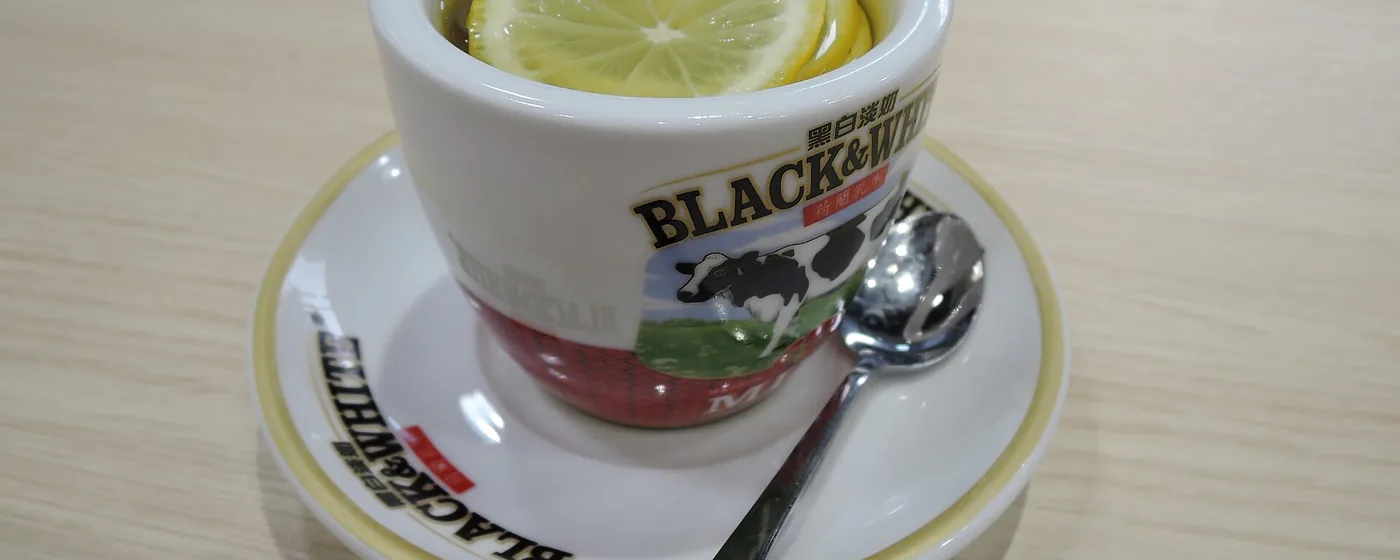
A cough is a reflex, not a disease. Something irritates the throat or airways, usually a virus, sometimes post-nasal drip, reflux, asthma or a medication, and the body forces air out to clear it. Most acute coughs settle on their own, slowly: a systematic review put the average at about 18 days, while surveyed adults expected a week.
What tea can honestly do is make you more comfortable for a while. In a small study of people with a cold or flu, a hot drink brought immediate relief from cough, runny nose and sore throat that the same drink at room temperature did not. Sweet taste and inhaled menthol vapor each raised the amount of irritant needed to trigger a cough in the lab. Researchers argue much of a cough syrup's benefit comes from sweetness, thickness and warmth, not the drug.
What tea cannot do is shorten a cough, clear a chest infection, or fix the asthma or reflux behind it. No herbal tea has been shown in a good trial to do any of that. The best-supported thing in the cup is honey, and even that effect is modest. If your cough brings breathlessness, chest pain or blood, see a doctor.
Photo: Lemon with honey.jpg by Geoffreyrabbit — CC BY-SA 4.0. Cropped and re-encoded.
Ranked by evidence
Thyme Tea
The best pick for a chesty, productive cough, and the only plant here with human trial data behind it.
limited evidence
Two double-blind trials in adults with acute bronchitis found that concentrated thyme extracts, paired with ivy leaf or primrose root, cut daytime coughing fits more than placebo: roughly 68% versus 48% in one, 67% versus 51% in the other. But both tested standardized extracts, not tea. A thyme infusion is far weaker and has never been studied this way.
Peppermint Tea
Best for a dry, tickly cough at night, especially if you breathe in the steam.
limited evidence
Menthol is the reason. In a small randomized crossover experiment, volunteers who inhaled menthol vapor needed more capsaicin to trigger a cough than with a control vapor. That was a lab challenge rather than sick people, and the effect is brief. Peppermint also relaxes the valve at the top of the stomach, so a reflux-driven cough may worsen.
Sources: [8]
Marshmallow Root Tea
The gentlest option for a raw, scratchy dry cough and the sore throat that comes with it.
limited evidence
Marshmallow root is rich in mucilage, a slippery polysaccharide thought to coat the throat and blunt the signal that starts a cough. In guinea pigs, the isolated polysaccharide suppressed cough dose-dependently, the higher dose performing comparably to codeine. Human evidence is thinner: a review found most clinical data come from multi-herb syrups, not marshmallow alone.
Ginger Tea
A sensible choice when your cough arrives with nausea, chills or a queasy stomach.
limited evidence
In the laboratory, ginger and three of its constituents relaxed isolated human airway smooth muscle, and nebulized 8-gingerol reduced airway resistance in mice. That is a plausible mechanism far from a mug of tea: high concentrations, tissue in a dish, no human cough trial.
Sources: [13]
Licorice Root Tea
Sweet and soothing, and the one tea here you should not drink every day.
Traditional use
Licorice has been used for coughs for centuries, and it is sweet and mildly mucilaginous. No good human trial has tested licorice tea for cough, so the sweetness may be doing most of the work. Its compound glycyrrhizin raises blood pressure, drops potassium and causes fluid retention; case reports describe hypertensive crisis, dangerous arrhythmias and a heart attack after heavy use.
Slippery Elm Tea
A fine substitute for marshmallow root: comfort, not a cure.
Traditional use
Slippery elm bark works on the same principle, coating an irritated throat with mucilage. Unlike marshmallow, it has essentially no controlled cough research in humans or animals. Its reputation rests on traditional use and on the broader finding that thick, sweet liquids reduce cough through taste and expectation.
Sources: [10]
How to choose between them
Start with the kind of cough. Dry and tickly, especially at night: marshmallow root or slippery elm for the coating effect, or peppermint for menthol steam. Chesty and productive: thyme. Cough with nausea or chills: ginger. All six are caffeine-free, so any is fine at bedtime, which matters when the cough is wrecking your sleep.
Stir in honey if the drinker is over one year old; it is the only ingredient here with moderate-certainty Cochrane evidence. Never give honey to a baby under 12 months, as it can cause infant botulism. Marshmallow root and slippery elm may slow absorption of oral medicines, so leave an hour or two between tea and pills. Skip licorice if you have high blood pressure, heart or kidney disease, or low potassium, if you take diuretics, digoxin or corticosteroids, or if you are pregnant. Herbal doses are not established for children, so ask a pediatrician first.
When to see a doctor
Tea is for the ordinary post-cold cough. Get help the same day for coughing up blood, breathlessness at rest, wheezing, chest pain, or blue lips or fingertips. Call a doctor promptly for a fever above 100.4°F (38°C) lasting more than three days or returning after you improved; unexplained weight loss, drenching night sweats or swelling ankles; a barking cough or noisy breathing in a child; coughing fits ending in vomiting or a whooping sound; any cough in an infant under three months; or a cough that began after choking. See a doctor for a cough past three weeks, and certainly past eight: that is a chronic cough and needs a diagnosis, not a beverage. If a new blood pressure medicine preceded a persistent dry cough, tell your prescriber: ACE inhibitors commonly do this.
Frequently asked questions
What is the best tea for a dry cough versus a chesty cough?
For a dry, tickly cough, reach for a demulcent: marshmallow root or slippery elm, which coat the throat, or peppermint, whose menthol vapor raised the cough threshold in a small human experiment. For a chesty, productive cough, thyme has the strongest claim, since concentrated thyme extracts beat placebo in two double-blind bronchitis trials.
Does adding honey to tea actually work, and how much should I use?
Honey is the best-evidenced thing in the mug. A Cochrane review of six trials in 899 children found honey probably relieves cough better than no treatment or placebo, roughly matches dextromethorphan, and probably beats diphenhydramine. Most children got a single dose at bedtime. No one has tested tea as a vehicle, so a spoonful or two per cup is reasonable. Never give honey to an infant under 12 months.
Is licorice root tea safe to drink every day for a cough?
No. Glycyrrhizin blocks a kidney enzyme and mimics excess mineralocorticoid hormone: rising blood pressure, falling potassium, fluid retention. Case reports document hypertensive crisis, life-threatening arrhythmias, and a heart attack in heavy or long-term users. NCCIH warns that even small amounts may be risky for people with high blood pressure or heart or kidney conditions. Keep it to a few cups over a few days, and stop for headaches, swelling or palpitations.
Peppermint tea or ginger tea for a cough, which is better?
Peppermint has the more direct human data: inhaled menthol vapor made the cough reflex harder to trigger in a randomized crossover study of healthy volunteers. Ginger's evidence is confined to isolated human airway tissue and mice. So peppermint edges it out for a dry, tickly cough. Choose ginger if you are also nauseated or chilled, or if reflux may be behind your cough. Neither shortens the illness.
How quickly does tea help, and how many cups a day should I drink?
Fast, and briefly. In the hot-drink study relief was immediate and outlasted the drink, but this is comfort measured in minutes to an hour, not a treatment that builds over days. Three or four cups across the day, one before bed, covers most people, and no larger dose works better. Remember the baseline: an acute cough averages roughly 18 days, so getting better over a fortnight is the cough resolving, not the tea.
References
- How long does a cough last? Comparing patients' expectations with data from a systematic review of the literature.. Annals of Family Medicine, 2013. PubMed 23319500 · doi:10.1370/afm.1430
- The effects of a hot drink on nasal airflow and symptoms of common cold and flu.. Rhinology, 2008. PubMed 19145994
- Honey for acute cough in children.. Cochrane Database of Systematic Reviews, 2018. PubMed 29633783 · doi:10.1002/14651858.CD007094.pub5
- Honeybee products for the treatment and recovery from viral respiratory infections including SARS-COV-2: A rapid systematic review.. Integrative Medicine Research, 2021. PubMed 34611512 · doi:10.1016/j.imr.2021.100779
- Over-the-counter (OTC) medications for acute cough in children and adults in community settings.. Cochrane Database of Systematic Reviews, 2014. PubMed 25420096 · doi:10.1002/14651858.CD001831.pub5
- Efficacy and tolerability of a fluid extract combination of thyme herb and ivy leaves and matched placebo in adults suffering from acute bronchitis with productive cough. A prospective, double-blind, placebo-controlled clinical trial.. Arzneimittel-Forschung, 2006. PubMed 17063641 · doi:10.1055/s-0031-1296767
- Evaluation of efficacy and tolerability of a fixed combination of dry extracts of thyme herb and primrose root in adults suffering from acute bronchitis with productive cough. A prospective, double-blind, placebo-controlled multicentre clinical trial.. Arzneimittel-Forschung, 2007. PubMed 17966760 · doi:10.1055/s-0031-1296656
- Sweet taste and menthol increase cough reflex thresholds.. Pulmonary Pharmacology & Therapeutics, 2012. PubMed 22465565 · doi:10.1016/j.pupt.2012.03.005
- Mechanisms of the placebo effect of sweet cough syrups.. Respiratory Physiology & Neurobiology, 2005. PubMed 16326149 · doi:10.1016/j.resp.2005.10.004
- The Powerful Placebo Effect in Cough: Relevance to Treatment and Clinical Trials.. Lung, 2019. PubMed 31834478 · doi:10.1007/s00408-019-00305-5
- Marsh Mallow (Althaea officinalis L.) and Its Potency in the Treatment of Cough.. Complementary Medicine Research, 2019. PubMed 31770755 · doi:10.1159/000503747
- Antitussive activity of Althaea officinalis L. polysaccharide rhamnogalacturonan and its changes in guinea pigs with ovalbumine-induced airways inflammation.. Bratislavske Lekarske Listy, 2011. PubMed 22372330
- Effects of ginger and its constituents on airway smooth muscle relaxation and calcium regulation.. American Journal of Respiratory Cell and Molecular Biology, 2012. PubMed 23065130 · doi:10.1165/rcmb.2012-0231OC
- How Much Is Too Much? Exploring Pseudohyperaldosteronism in Glycyrrhizic Acid Toxicity From Chronic Licorice Root Consumption.. Cureus, 2021. PubMed 34422484 · doi:10.7759/cureus.16454
- Hypertensive crisis with 2 target organ impairment induced by glycyrrhizin: A case report.. Medicine (Baltimore), 2018. PubMed 29538199 · doi:10.1097/MD.0000000000010073
- [Adverse effects of licorice consumed as food: An update].. La Revue de Medecine Interne, 2023. PubMed 37005098 · doi:10.1016/j.revmed.2023.03.004
Last reviewed and updated . HelperTea is written by an enthusiast, not a clinician, and is not medically reviewed. How we research and rate evidence. Found an error? Tell us — safety corrections get priority.