Nausea is a symptom, not a disease. It is the body's shared alarm bell for dozens of unrelated things: early pregnancy, motion, migraine, a stomach bug, anesthesia, chemotherapy, anxiety, alcohol, or a new medication. Because the causes differ so much, no single remedy works for all of them, and tea is never treating the reason you feel sick.
Here is the honest picture. Ginger is the only tea on this page with a real body of human trial evidence behind it, and even that comes with an asterisk: nearly all those trials gave around 1 gram a day of concentrated dried ginger in capsules, over several days. A teabag or a few slices of fresh root delivers an unmeasured and almost certainly smaller amount. Peppermint, chamomile, and fennel have thinner evidence still, and most of what exists tests oils or extracts rather than the tea. Part of why tea helps at all may have little to do with the herb: sipping warm fluid slowly, staying hydrated, and breathing in a pleasant smell all make nausea more bearable on their own.
So treat tea as comfort and as a low-risk thing to try, not as an anti-sickness drug. If nausea is severe, persistent, or arrives with the red flags below, skip the kettle and call a doctor. Real medications for nausea exist, work better, and are reasonable to ask for.
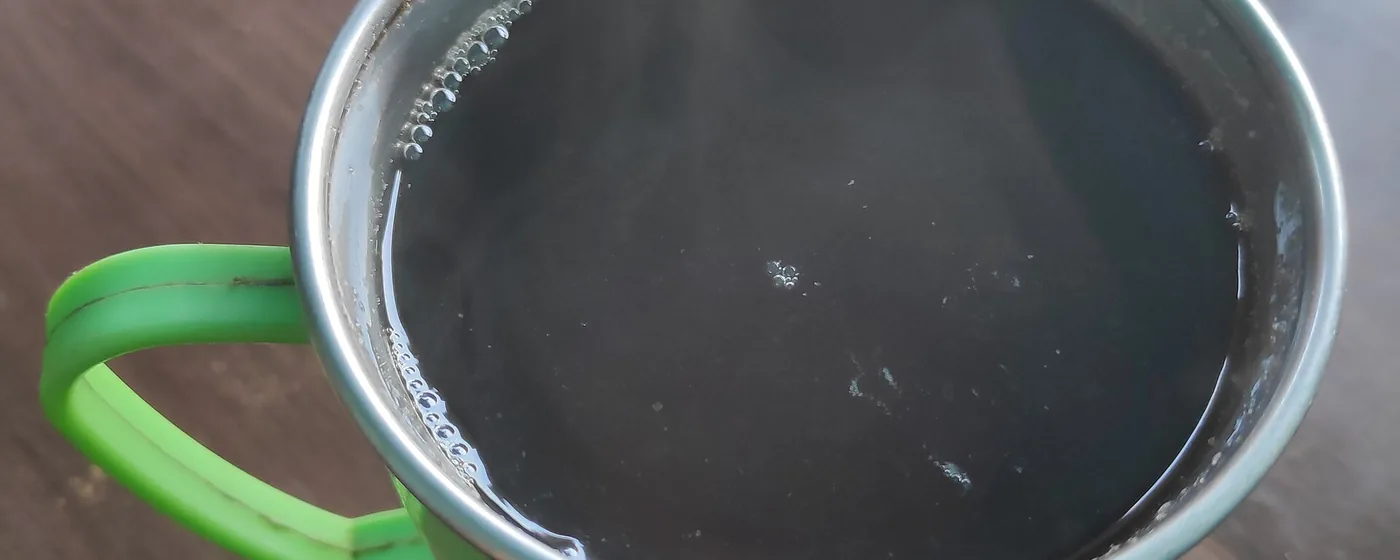
Photo: Black Ginger Tea.jpg by Gaurav Dhwaj Khadka — CC BY-SA 4.0. Cropped and re-encoded.
Ranked by evidence
Ginger Tea
The one worth trying first, especially for morning sickness or nausea after surgery.
moderate evidence
Gingerols and shogaols act on the gut and possibly on serotonin receptors involved in vomiting, though the mechanism is debated. Meta-analyses found that about 1 gram of ginger daily improved nausea in early pregnancy (508 women across six placebo-controlled trials) and lowered nausea severity after surgery. But Cochrane called the pregnancy data limited and inconsistent, chemotherapy reviews are largely null, and every one of these trials used capsules rather than tea.
Peppermint Tea
Best if the smell of ginger turns your stomach and you want something cool to sip.
limited evidence
Menthol relaxes smooth muscle in the digestive tract, the usual explanation offered for peppermint's effect. Nearly every human trial tested inhaled peppermint oil rather than tea: a 2018 Cochrane review found peppermint aromatherapy no better than placebo after surgery, while a 2024 meta-analysis in cancer patients reported reduced nausea from inhaled oils on low-certainty evidence. Peppermint tea itself is untested for nausea, and it can worsen reflux.
Chamomile Tea
A reasonable pick when nausea comes bundled with stress or tension.
limited evidence
Chamomile contains apigenin, which is antispasmodic in laboratory models. In one randomized, double-blind trial of 65 women receiving chemotherapy, 500 mg of chamomile extract twice daily reduced how often they vomited but, unlike ginger, did not significantly reduce nausea. A network meta-analysis of pregnancy nausea treatments ranked chamomile above placebo while grading that evidence very low. Extract capsules are not a teabag.
Fennel Tea
A gentle, sweet after-meal option if nausea comes with fullness and gas.
Traditional use
Fennel seeds contain anethole, which relaxes intestinal smooth muscle in laboratory preparations, and chewing fennel after meals is a long habit in Mediterranean and South Asian kitchens. We could not find a single published clinical trial testing fennel for nausea in people. It is a mild, caffeine-free drink whose sweetness sits easier on some queasy stomachs than ginger's heat. That is the whole case.
Lemon Balm Tea
Worth a try only if nausea rides along with anxiety.
Traditional use
Lemon balm has been a calming digestive herb in European herbal medicine for centuries, and its light citrus scent is mild enough to tolerate when nothing else appeals. Beyond that there is little to report: we found no human trials of lemon balm for nausea. It is an honest last option, not a demonstrated one.
How to choose between them
Start with smell, because when you are nauseated your nose gets a veto. If ginger's heat sounds punishing right now, it is not the right tea today. Peppermint is cool and sharp, chamomile soft and apple-like, fennel sweet and licorice-ish, lemon balm light and lemony. All five are caffeine-free; this is not the moment for green, black, or matcha tea.
Sip small amounts slowly rather than gulping a mug, which can itself trigger vomiting. Nobody has measured how fast these teas work, so treat any promise of relief in ten minutes with suspicion. Ginger can cause heartburn, throat irritation, and loose stools. Peppermint may worsen reflux, and is the one tea here that can make matters worse if heartburn is the real problem. Chamomile can trigger allergic reactions, rarely anaphylaxis, in people sensitive to ragweed, daisies, chrysanthemums, or marigolds, and it interacts with warfarin and cyclosporine. A review of warfarin interactions flags ginger and chamomile tea as possibly raising bleeding risk, so ask your pharmacist if you take a blood thinner.
When to see a doctor
Call emergency services if there is blood in your vomit or it looks like dark coffee grounds, or if you suspect poisoning. See a doctor promptly for vomiting lasting more than 24 hours, inability to keep fluid down for 12 hours, three or more vomiting episodes in a day, severe abdominal pain, headache with a stiff neck, no urination in eight hours, or dehydration signs such as dark urine, sunken eyes, or skin that stays pinched. Nausea after a head injury, nausea with chest pain or shortness of breath, and nausea alongside unexplained weight loss all need evaluation, not tea. In pregnancy, vomiting that causes weight loss or dehydration may be hyperemesis gravidarum, which has real treatments.
Frequently asked questions
Is ginger tea as good as ginger capsules for nausea?
Almost certainly not. The trials gave 0.5 to 2 grams a day of concentrated dried ginger, usually in capsules over several days. A teabag or a few fresh slices delivers an unmeasured, probably much smaller amount, and no trial has tested ginger tea against placebo. Tea is pleasant and low-risk; the studied dose means a standardized supplement, worth asking a pharmacist about.
How much ginger tea should I drink, and how fast does it work?
There is no evidence-based dose, because ginger tea has not been studied as a tea. Most people find two or three cups a day comfortable, and reviews of ginger supplements suggest a few grams daily is generally well tolerated, with heartburn the commonest complaint. Onset has never been measured. In the pregnancy trials, benefit was assessed after four or more days of steady use, not one cup.
Is ginger tea safe for morning sickness during pregnancy?
Ginger has the best evidence of any herb for nausea in early pregnancy, and trial reviews report few side effects. But the studies are small, pregnancy safety data are genuinely limited, and NCCIH advises talking to your health care provider before using ginger. Raise it at your next prenatal appointment. Vitamin B6 and prescription doxylamine-pyridoxine also have trial support.
Does peppermint tea help nausea, or make it worse?
It depends what is causing it. Menthol relaxes the muscle between the esophagus and stomach, which helps if your gut is cramping and hurts if your nausea is really acid reflux in disguise. Peppermint oil taken by mouth causes heartburn in some people. If your queasiness comes with burning behind the breastbone or a sour taste, try chamomile, fennel, or ginger instead.
Will ginger tea help motion sickness or a hangover?
Motion sickness is where ginger's reputation outruns its evidence. A systematic review of randomized trials found no clear evidence it works there, and NCCIH says most studies have not found it helpful. Antihistamines and scopolamine patches have far better support. For hangover nausea, no tea has been tested.
Can I drink these teas on blood thinners, or before surgery?
Check first. A systematic review of warfarin interactions names ginger and chamomile tea among herbs linked to increased bleeding risk, and a study following warfarin patients found ginger use associated with more self-reported bleeding. Chamomile also interacts with cyclosporine. Before an operation, tell your anesthesiologist about any herbal products; many surgical teams ask patients to stop them a week or two beforehand.
References
- Effects of ginger for nausea and vomiting in early pregnancy: a meta-analysis.. Journal of the American Board of Family Medicine, 2014. PubMed 24390893 · doi:10.3122/jabfm.2014.01.130167
- Treatments for Hyperemesis Gravidarum and Nausea and Vomiting in Pregnancy: A Systematic Review.. JAMA, 2016. PubMed 27701665 · doi:10.1001/jama.2016.14337
- Interventions for nausea and vomiting in early pregnancy.. Cochrane Database of Systematic Reviews, 2015. PubMed 26348534 · doi:10.1002/14651858.CD007575.pub4
- Interventions for treating nausea and vomiting in pregnancy: a network meta-analysis and trial sequential analysis of randomized clinical trials.. Expert Review of Clinical Pharmacology, 2018. PubMed 30261764 · doi:10.1080/17512433.2018.1530108
- Efficacy of Ginger in Preventing Postoperative Nausea and Vomiting: A Systematic Review and Meta-Analysis.. Journal of Nursing Scholarship, 2021. PubMed 34312974 · doi:10.1111/jnu.12691
- The preventive and relieving effects of ginger on postoperative nausea and vomiting: A systematic review and meta-analysis of randomized controlled trials.. International Journal of Nursing Studies, 2021. PubMed 34700257 · doi:10.1016/j.ijnurstu.2021.104094
- Efficacy of Ginger (Zingiber officinale) in Ameliorating Chemotherapy-Induced Nausea and Vomiting and Chemotherapy-Related Outcomes: A Systematic Review Update and Meta-Analysis.. Journal of the Academy of Nutrition and Dietetics, 2019. PubMed 31519467 · doi:10.1016/j.jand.2019.06.009
- Effects of Ginger Intake on Chemotherapy-Induced Nausea and Vomiting: A Systematic Review of Randomized Clinical Trials.. Nutrients, 2022. PubMed 36501010 · doi:10.3390/nu14234982
- Is ginger a clinically relevant antiemetic? A systematic review of randomized controlled trials.. Forschende Komplementarmedizin und klassische Naturheilkunde, 2005. PubMed 15772458 · doi:10.1159/000082536
- Aromatherapy for treatment of postoperative nausea and vomiting.. Cochrane Database of Systematic Reviews, 2018. PubMed 29523018 · doi:10.1002/14651858.CD007598.pub3
- Effects of aromatherapy on nausea and vomiting in patients with cancer: A systematic review and meta-analysis of randomized controlled trials.. Complementary Therapies in Clinical Practice, 2024. PubMed 38330531 · doi:10.1016/j.ctcp.2024.101838
- Effect of Ginger and Chamomile on Nausea and Vomiting Caused by Chemotherapy in Iranian Women with Breast Cancer.. Asian Pacific Journal of Cancer Prevention, 2016. PubMed 27644672
- Warfarin and food, herbal or dietary supplement interactions: A systematic review.. British Journal of Clinical Pharmacology, 2020. PubMed 32478963 · doi:10.1111/bcp.14404
- Risk of warfarin-related bleeding events and supratherapeutic international normalized ratios associated with complementary and alternative medicine: a longitudinal analysis.. Pharmacotherapy, 2007. PubMed 17723077 · doi:10.1592/phco.27.9.1237
Last reviewed and updated . HelperTea is written by an enthusiast, not a clinician, and is not medically reviewed. How we research and rate evidence. Found an error? Tell us — safety corrections get priority.