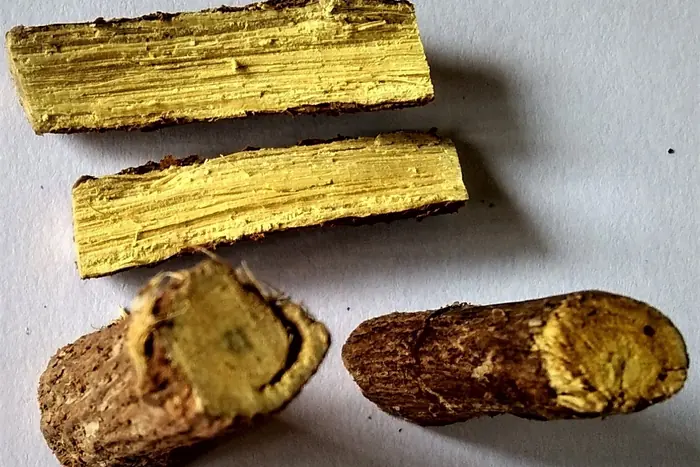
Slippery elm tea isn't made from a leaf or a flower. It comes from the inner bark of Ulmus rubra, an elm native to eastern and central North America, stripped, dried, and usually ground to a pale tan powder. The powder is rich in mucilage, a gel-forming polysaccharide that turns slick the moment it meets water. Steep it and you get not a clear infusion but a cloudy, slightly thickened drink.
The flavor is unassertive: mild, a little sweet, faintly of maple and cooked oatmeal, with almost no bitterness. What people notice is texture rather than taste. It coats. A cup left ten minutes is visibly thicker than when you poured it. Honey is the traditional pairing, and a sensible one, since both are viscous and mild.
So what is it for? Mostly people drink it to soothe a raw throat, and secondarily for heartburn, coughs, and irritable bowel symptoms. The soothing idea is easy to believe: a viscous liquid could coat irritated tissue, much as a lozenge does. Anything beyond that is harder to establish. Slippery elm has been studied remarkably little on its own. Nearly every human trial tested it as one ingredient among several in a commercial blend, so nobody can say what the elm bark contributed. No published trial has tested slippery elm tea alone for sore throat, reflux, or IBS. The honest summary is a long history of traditional use, a plausible mechanism, and a thin evidence base. A page telling you otherwise is selling something.
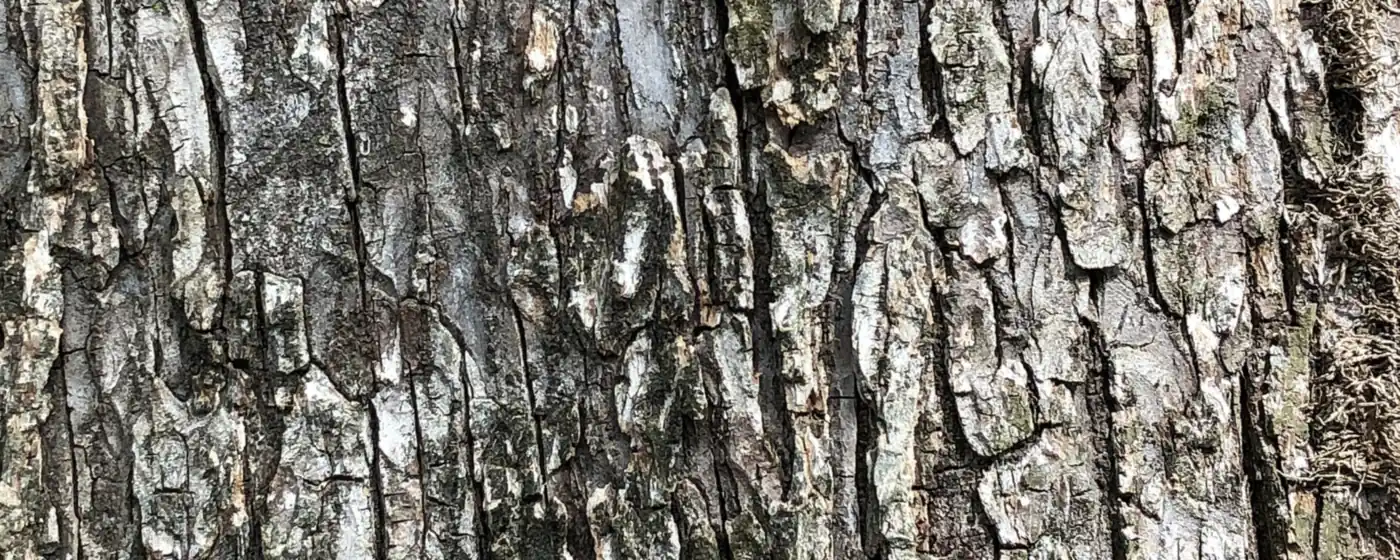
Photo: 2023-06-21 09 47 13 Slippery Elm bark along Mountain View Road in the Mountainview section of Ewing Township, Mercer County, New Jersey.jpg by Famartin — CC BY-SA 4.0. Cropped and re-encoded.
What the evidence says
Slippery elm may briefly ease sore throat pain, though it has never been tested on its own.
Mucilage, the bark's branched polysaccharide, traps water and thickens it, which could plausibly coat an irritated throat. The one placebo-controlled trial gave 60 adults with acute pharyngitis Throat Coat, a multi-herb demulcent tea that contains slippery elm bark alongside other herbs; throat pain on swallowing fell more than with placebo over the 30 minutes after the first cup. The relief was rapid and temporary. Nothing in that trial isolates the elm from the other ingredients, the study was small and brief, and the lead author worked for the tea's manufacturer.
It may help some irritable bowel symptoms, but the trials are small, uncontrolled, and test multi-herb formulas.
An open-label pilot enrolled 31 people with IBS across two different formulas. The 10 with constipation-predominant IBS took slippery elm with lactulose, oat bran, and licorice, and reported more frequent bowel movements and less straining, pain, and bloating. The 21 on the diarrhea-and-alternating formula (bilberry, slippery elm, agrimony, cinnamon) saw no meaningful change in bowel habit, though several symptom scores did improve. A separate 16-week before-and-after study in 43 adults used a seven-ingredient formula. Neither study had a placebo group, neither isolated slippery elm, and IBS symptoms respond strongly to placebo.
Slippery elm is traditionally used for heartburn and reflux, but no trial has tested it for this.
If a viscous liquid coats the throat, perhaps it coats an irritated esophagus. That is a hypothesis, not a finding. A 2019 critical appraisal of popular esophageal remedies concluded that a substantial gap persists between anecdotal and empirical understanding for slippery elm and similar products. No controlled study has measured its effect on heartburn symptoms, acid exposure, or esophageal healing.
Sources: [6]
Slippery elm extract has antioxidant activity in laboratory tests, which has never been followed into a human trial.
In cell-free chemistry, slippery elm extract scavenged superoxide and peroxyl radicals. A separate screen of 28 herbs found it scavenged peroxynitrite, ranking below witch hazel bark, rosemary, jasmine tea, and sage. In the same 2002 study, incubating slippery elm with biopsies taken from the inflamed colon of people with ulcerative colitis reduced oxygen radical release in the dish. That is a test-tube result, not a treatment effect, and two decades later no human trial has followed it up. A 2023 Caco-2 cell study of yogurts fortified with eight different 'leaky gut' ingredients did not find slippery elm among the ingredients that improved gut barrier measures.
Essiac-type herbal blends containing slippery elm have not been shown to help people with cancer.
Slippery elm is one of four core herbs in Essiac, which is marketed to people with cancer. A retrospective cohort of 510 Ontario women with breast cancer found no improvement in quality of life or mood among Essiac users; on two subscales users actually scored worse, though those users were younger and had more advanced disease. Chemical analysis of the related Flor-Essence blend traced all 16 identified phenolic markers to four other herbs, not to the elm. None of this is a substitute for oncology treatment, and anyone in cancer care should tell their oncology team about every herbal product they take.
Slippery elm has a long history as a food, a survival ration, and a topical poultice.
The inner bark is edible carbohydrate, eaten as a thin porridge by several Native American nations and later by settlers. Mixed to a paste, it was applied to wounds and burns. This is well documented historically. It is not clinical evidence that it does anything.
No published human clinical trials found for this use.
How to brew Slippery Elm Tea
Stir powder into cool water until smooth, then pour boiling water over it while stirring. With shredded bark or a tea bag, pour boiling water over and steep 5 to 10 minutes. Don't strain hard: the cloudy body is the mucilage.
- Powder dumped into hot water clumps instantly. Make a cool-water slurry first.
- Take oral medications at least an hour before the tea, or wait two hours after it. The gel can slow absorption.
- Never swallow the dry powder. Always mix it with plenty of liquid.
- Harvesting inner bark generally kills the tree, and wild stands have been hit by Dutch elm disease. Buy from suppliers who document sourcing, and read the full ingredient list: many 'slippery elm' teas are blends.
Safety, side effects & who should avoid it
As a tea, slippery elm looks low-risk. The NIH LiverTox database reviewed it and found no published case reports of liver injury, and no serious harms from drinking the tea are well documented. That reflects long use and thin safety monitoring rather than proof of safety. The practical concern with the drink is absorption: the gel can slow uptake of medications swallowed alongside it. The serious documented harms all come from something else entirely, which is whole bark used as a physical device rather than as a beverage.
Who should avoid it
- Anyone allergic to elm trees or elm pollen. Cross-reactivity between pollen and bark is plausible and unstudied. LiverTox notes rare cutaneous allergic reactions to slippery elm.
- People with trouble swallowing, esophageal stricture, or past bowel obstruction. Gel-forming powders swell in fluid and can lodge in the esophagus.
- Anyone considering whole or stick slippery elm bark internally or vaginally. That is not a tea. Inserted bark swells, and published case reports describe pieces migrating into the bladder and encrusting into stones that had to be removed surgically.
- Anyone using it to self-treat gut symptoms that come with alarm features: trouble swallowing, food sticking, unintentional weight loss, vomiting blood, black or tarry stools, or anemia. Those need a diagnosis, not a demulcent. The same goes for heartburn that persists beyond a couple of weeks or starts new in later life.
- Children under 12, and anyone using it daily beyond a few weeks, without asking a clinician. No pediatric or long-term safety data exists.
- Anyone using it instead of care for a sore throat that is severe, one-sided, or comes with high fever, drooling, or trouble breathing.
Possible side effects
- Nausea, a heavy coated stomach, bloating, and gas. Mucilage is a fermentable soluble fiber.
- Rare allergic reactions, mostly skin: rash, itching, hives, swelling. Stop and seek emergency care if breathing, swallowing, or facial swelling is involved.
- Choking or esophageal obstruction if the powder is swallowed dry or with too little liquid.
- No published case reports describe liver injury from slippery elm, and none describe serious harm from drinking the tea. That reflects long use and absent safety monitoring, not proof of safety.
Medication interactions
- Mucilage can slow absorption of oral drugs swallowed alongside it. A review of herb-drug interactions in inflammatory bowel disease flags slippery elm bark for this. Take medications at least an hour before the tea, or wait two hours after it.
- This matters most for narrow-margin drugs: levothyroxine, lithium, warfarin, digoxin, phenytoin, carbamazepine, cyclosporine, tacrolimus, and oral contraceptives. Ask a pharmacist before daily use. Space iron, zinc, and other mineral supplements the same way.
- No pharmacokinetic study has measured this in humans; the caution extrapolates from how soluble fiber behaves. Precautionary rather than proven, but it costs nothing to follow.
- Read the full label on throat and gut blends, since 'slippery elm tea' is often several herbs. Many add licorice root, whose glycyrrhizin can raise blood pressure and lower potassium, and which interacts with diuretics, digoxin, and corticosteroids.
Pregnancy & breastfeeding
Safety in pregnancy has not been established, because slippery elm has never been studied in pregnant people. No evidence says a cup of the tea harms a pregnancy, and no evidence says it is safe. The familiar 'causes miscarriage' warning traces to a different practice: whole sticks of bark, which swell as they absorb moisture, were used as surgical bougies and as cervical 'tents' to induce abortion, and case reports from that era describe bark ending up in the bladder as a stone. That is inserted bark, not a drink. Even so, ask your doctor or midwife before drinking it, and never use whole bark internally or vaginally. Breastfeeding has not been studied at all. Nobody has measured whether anything from the bark reaches breast milk, so the honest answer is that we do not know.
How much is too much
No established limit. In the only placebo-controlled trial, participants drank 5 to 8 oz of a multi-herb tea containing slippery elm, four to six times daily, for up to seven days. That is not a tested limit for slippery elm on its own. Traditional use runs to about three cups a day. Long-term daily use has never been studied, so keep it short and ask a clinician before going past a few weeks.
Taste & pairing
Tasting notes: Mild, Slightly sweet, Smooth.
Pairs well with: Honey.
Best time to drink: When experiencing throat or digestive discomfort.
Frequently asked questions
How long should I steep slippery elm tea?
Five to ten minutes in boiling water. There is no bitterness to over-extract, so a longer steep mainly thickens it. Powder yields thin porridge; shredded bark gives a lighter cup.
Why is my slippery elm tea slimy or full of lumps?
Slimy is correct; the mucilage is why people drink it. Lumps are technique: powder hitting boiling water gels outside, sealing dry powder inside. Make a cool-water slurry first.
When is the best time to drink slippery elm tea?
Whenever the discomfort is, since any coating effect would be immediate and short-lived. For a sore throat, sip it through the day. Take oral medications at least an hour before the tea, or wait two hours after it.
How many cups of slippery elm tea can I drink a day?
No established upper limit, which is honest rather than reassuring. Participants in the one placebo-controlled trial drank up to six cups a day of a multi-herb blend for a week. Traditional use is about three.
Slippery elm or marshmallow root: what's the difference?
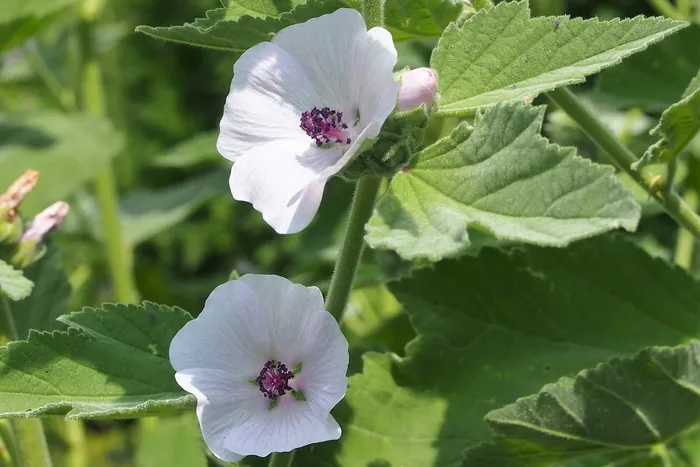
Both are mucilage-rich demulcents thought to work the same way, and neither is well studied in humans. Slippery elm thickens dramatically; marshmallow root is blander and usually cold-infused. In one 2023 study of fortified yogurts in cultured gut cells, marshmallow root improved barrier measures where slippery elm did not. That is a dish, not a person.
Does slippery elm heal 'leaky gut' or acid reflux?
No human evidence supports either. Both rest on the same guess: mucilage coats things, so perhaps it protects the gut lining. The direct tests are cell studies and small uncontrolled trials of multi-herb blends. If reflux is persistent, see a clinician rather than self-treating.
References
- Safety and efficacy of a traditional herbal medicine (Throat Coat) in symptomatic temporary relief of pain in patients with acute pharyngitis: a multicenter, prospective, randomized, double-blinded, placebo-controlled study.. Journal of alternative and complementary medicine (New York, N.Y.), 2003. PubMed 12804082 · doi:10.1089/10755530360623400
- Chemical constitution of slippery elm mucilage; isolation of 3-methyl d-galactose from the hydrolysis products.. Nature, 1950. PubMed 15400433 · doi:10.1038/165034a0
- Constitution of the mucilage from the bark of Ulmus fulva (slippery elm mucilage); the sugars formed in the hydrolysis of the methylated mucilage.. Journal of the Chemical Society, 1946. PubMed 20282480 · doi:10.1039/jr9460001025
- Effects of two natural medicine formulations on irritable bowel syndrome symptoms: a pilot study.. Journal of alternative and complementary medicine (New York, N.Y.), 2010. PubMed 20954962 · doi:10.1089/acm.2009.0090
- Herbal formula improves upper and lower gastrointestinal symptoms and gut health in Australian adults with digestive disorders.. Nutrition research (New York, N.Y.), 2020. PubMed 32151878 · doi:10.1016/j.nutres.2020.02.008
- Popular Remedies for Esophageal Symptoms: a Critical Appraisal.. Current gastroenterology reports, 2019. PubMed 31289950 · doi:10.1007/s11894-019-0707-4
- Antioxidant effects of herbal therapies used by patients with inflammatory bowel disease: an in vitro study.. Alimentary pharmacology & therapeutics, 2002. PubMed 11860402 · doi:10.1046/j.1365-2036.2002.01157.x
- Peroxynitrite scavenging activity of herb extracts.. Phytotherapy research : PTR, 2002. PubMed 12112294 · doi:10.1002/ptr.904
- Influences of Yogurt with Functional Ingredients from Various Sources That Help Treat Leaky Gut on Intestinal Barrier Dysfunction in Caco-2 Cells.. Pharmaceuticals (Basel, Switzerland), 2023. PubMed 38004377 · doi:10.3390/ph16111511
- Trial of Essiac to ascertain its effect in women with breast cancer (TEA-BC).. Journal of alternative and complementary medicine (New York, N.Y.), 2006. PubMed 17212569 · doi:10.1089/acm.2006.12.971
- Characterisation of phenolics in Flor-Essence--a compound herbal product and its contributing herbs.. Phytochemical analysis : PCA, 2009. PubMed 19609882 · doi:10.1002/pca.1139
- Drug-Herb Interactions in the Elderly Patient with IBD: a Growing Concern.. Current treatment options in gastroenterology, 2017. PubMed 28918484 · doi:10.1007/s11938-017-0154-y
- Two cases of slippery elm bladder calculus in pregnancy.. The Journal of obstetrics and gynaecology of the British Empire, 1954. PubMed 13192523 · doi:10.1111/j.1471-0528.1954.tb07516.x
- A Piece of Slippery Elm Removed from the Bladder.. Proceedings of the Royal Society of Medicine, 1932. PubMed 19988576 · doi:10.1177/003591573202500478
- Elm Bark in Surgery: An Account of the Use of the Bark of the Slippery Elm Tree (Ulmus Fulva), for Bougies, Tents, Catheters, and Similar Purposes in Surgery.. The Western journal of the medical and physical sciences, 1837. PubMed 38080966
Last reviewed and updated . HelperTea is written by an enthusiast, not a clinician, and is not medically reviewed. How we research and rate evidence. Found an error? Tell us — safety corrections get priority.