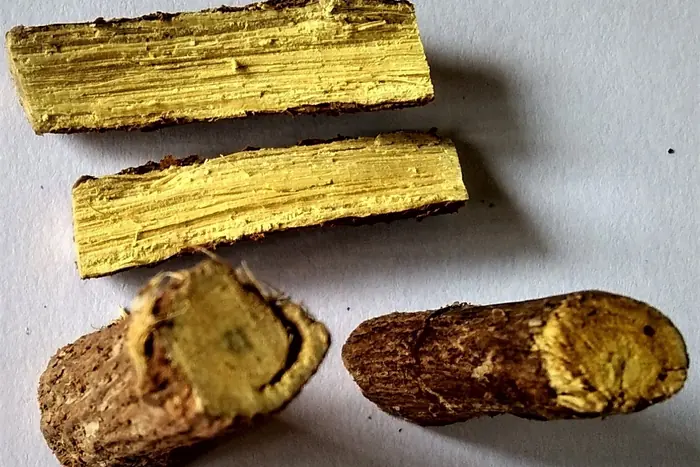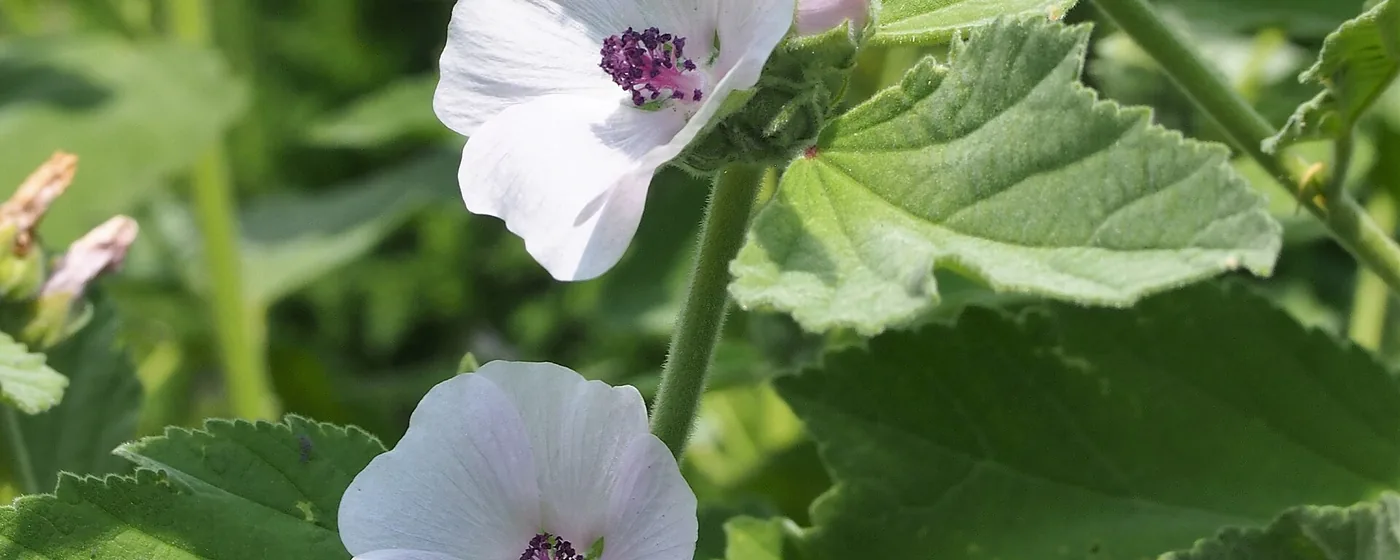
Marshmallow root tea is an infusion of the dried root of Althaea officinalis, a tall pink-flowered plant native to Europe and western Asia that likes damp, salty ground. It has nothing to do with the puffy white candy, except by ancestry: confectioners once whipped the plant's sticky root sap with sugar and egg white. Modern marshmallows contain no marshmallow plant. The root does contain mucilage, a slippery polysaccharide gel that swells in water and gives the tea its faintly viscous body.
The flavor is quiet. Most people describe it as mild, slightly sweet, a little earthy, and unusually smooth on the tongue. This is a tea people reach for when their throat feels raw, not when they want a flavor experience. It takes honey and lemon well, and it is caffeine-free, so it works at any hour.
What it is actually used for is throat and mouth irritation and the dry, scratchy, unproductive cough that comes with it. Marshmallow root is classified as a demulcent, meaning it is thought to work mechanically: the mucilage is believed to form a temporary film over irritated tissue rather than fighting an infection through the bloodstream. That explanation is plausible and widely repeated, though it has not been directly demonstrated in a human throat. European regulators recognize the root as a traditional herbal medicine for exactly this, along with mild stomach discomfort. That recognition rests on long-standing use, not on strong clinical trials.
The honest summary is that marshmallow root is old, gentle, widely tolerated, and thinly studied in humans. It may make a sore throat feel better while your body handles the underlying problem. It is not a treatment for the underlying problem itself.
Photo: Althaea officinalis Prawoślaz lekarski 2020-07-18 02.jpg by Agnieszka Kwiecień, Nova — CC BY-SA 4.0. Cropped and re-encoded.
What the evidence says
May ease dry, irritative cough and throat irritation
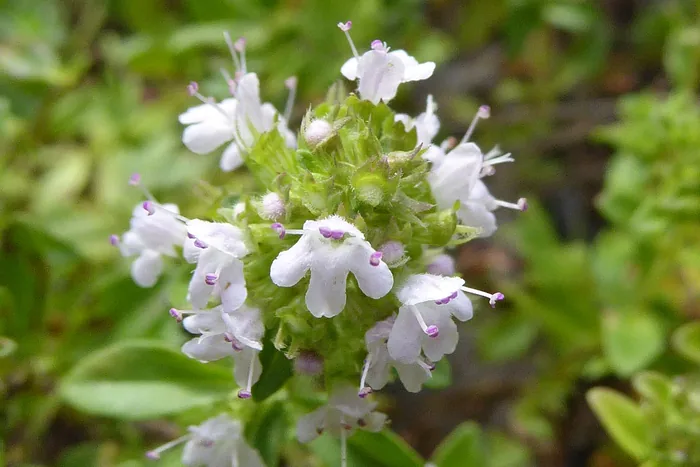
Mucilage swells into a gel that is thought to coat the throat and shield irritated tissue. The main human data are two uncontrolled pharmacy surveys (822 people total) of a standardized aqueous root extract; most users reported relief within about 10 minutes. There was no placebo group, outcomes were self-reported, users knew what they were taking, and these were concentrated lozenge and syrup extracts, not brewed tea. Other trials placed marshmallow inside multi-herb cough products alongside ivy, thyme, or mustard seed, so they cannot isolate what the marshmallow contributed.
Purified polysaccharides suppressed induced cough in animal studies
In cats and guinea pigs, polysaccharides isolated from marshmallow reduced experimentally induced coughing. In guinea pigs the effect of rhamnogalacturonan, a polysaccharide from the root, was dose-dependent and in some comparisons similar to codeine. A later experiment implicated serotonergic 5-HT2 receptors. Read these carefully: they are small animal studies of purified compounds given at controlled doses, and one of them drew its polysaccharides from flowers and aerial parts rather than the root. No human trial has tested this mechanism, and a cup of tea is not a measured dose of purified polysaccharide.
Root extract calmed inflammation and oxidative stress in cell cultures
In cultured human endothelial cells taken from umbilical vein, not from throat tissue, root extract lowered interleukin-6 release, reduced reactive oxygen species, and sped scratch-wound closure. Several authors of that study were employed by the manufacturer of the commercial cough syrup tested alongside the extract. A separate review catalogs the structure and reported bioactivities of Althaea officinalis polysaccharides. Note what these papers do not show: neither one demonstrates that a protective film forms over an irritated human throat. That soothing mechanism is an inference, not something these experiments measured. Cells in a dish are not a throat.
May slightly relieve the feeling of dry mouth
In a randomized trial of 60 people with measured low saliva flow, three saliva substitutes were used four times daily for two weeks. Dry-mouth intensity fell in all groups, including the 15 people assigned to marshmallow root, though a thermal spring water spray outperformed it on quality-of-life scores. Two caveats matter: only 15 participants received marshmallow and there was no placebo arm, and the marshmallow was applied directly in the mouth as a saliva substitute rather than sipped as a brewed tea.
Sources: [8]
May soothe mild stomach and gut discomfort
Europe's traditional-use approval for mild stomach and gut discomfort rests on long history rather than on trials, and there are no human studies to point to. The mucilage that coats the throat may plausibly coat the stomach lining too. In rats given pyloric ligation plus indomethacin, 14 days of Althaea officinalis extract reduced ulcer counts and oxidative-stress markers. But that is pretreatment against drug-induced ulceration in rodents, which is a different thing from easing indigestion, gastritis, or reflux in a person.
Sources: [9]
Traditionally used for dry skin, digestive irritation, and urinary discomfort
European and Persian herbalists have used the root for centuries as a general soothing agent: on chapped skin, for gastritis and heartburn, for burning urination. These uses rest on tradition. One small double-blind pilot trial did test a 1% marshmallow ointment against 1% hydrocortisone in children with atopic dermatitis, and the 22 children who finished improved in both groups; the authors called for larger studies to confirm it. That was an ointment rubbed on skin, and it tells you nothing about drinking the tea. No controlled trial supports drinking marshmallow root tea for skin or urinary symptoms, and burning urination can signal an infection that needs treatment.
Sources: [13]
How to brew Marshmallow Root Tea
Pour fully boiling water over the chopped root and cover the cup so the steam stays in. Steep 5 to 10 minutes, then strain well; the root pieces stay gritty. Sip slowly rather than gulping.
- For a slicker drink, cold-infuse: soak the root in room-temperature water 4 hours or overnight, strain, then rewarm gently. Cold water is widely said to pull out more mucilage and less starch, though this is herbalist practice rather than something a trial has tested.
- Expect a slightly thick, silky texture. That viscosity is the mucilage, the part believed to do the soothing, so do not over-dilute it.
- Keep oral medications at least 2 hours away from this tea, and ask your pharmacist whether any of yours need a wider gap.
Safety, side effects & who should avoid it
Marshmallow root has a long record of gentle use, and when European regulators assessed licensed marshmallow root medicines, no side effects had been reported to them. That is reassuring, but it is not proof of safety: traditional-use registration does not require the systematic safety monitoring a new drug goes through, and side effects of herbal products are under-reported generally. The most practical concern is mechanical. The same mucilage that coats your throat can slow the absorption of medicines swallowed with it.
Who should avoid it
- Anyone on medication where exact absorption matters, unless they space doses well away from the tea: levothyroxine, warfarin, digoxin, anti-seizure drugs, immunosuppressants. Ask your pharmacist what gap your specific medicine needs.
- People allergic to mallow-family plants (Malvaceae), which also includes hibiscus, okra, and hollyhock.
- Anyone whose cough has lasted over a week, or comes with fever, breathlessness, chest pain, or blood. This tea soothes a symptom, not its cause.
- Children under 3 for throat and cough use, under 12 for digestive use, per European regulatory limits. Ethanol extracts are adults-only. Check with a pediatrician before giving any herbal preparation to a child.
- Anyone swallowing dry root powder or capsules without plenty of water, since mucilaginous material can swell and lodge in the esophagus. Well-strained brewed tea is not thought to carry this risk.
Possible side effects
- Few are documented. At the time of the European assessment, no side effects had been reported for licensed marshmallow root medicines, though a survey of 822 users of a marshmallow syrup did record three minor adverse events. Absence of reports is not the same as absence of risk.
- A slippery, coated feeling in the mouth and throat, which is the intended effect.
- Occasional mild stomach upset or loose stools if you drink a lot.
- Allergic reactions appear to be rare, but stop and seek advice if you develop rash, itching, or swelling of the lips, tongue, or throat.
Medication interactions
- Oral medications generally: mucilage forms a viscous layer in the gut that may delay or reduce absorption of drugs taken alongside it. Separate the tea from your medicines by at least 2 hours. Some drugs need a wider gap; levothyroxine, for example, is usually kept about 4 hours away from fiber and other binding agents. This has not been measured directly with marshmallow root. It is a standard precaution for mucilaginous herbs, and the same reasoning applies to mineral supplements like iron.
- Drugs with a narrow therapeutic window, such as warfarin, digoxin, lithium, anti-seizure medicines, and immunosuppressants, are where a small absorption change would matter most. Talk to your pharmacist before making this tea a daily habit.
- Diabetes medications: a related species, hollyhock (Althaea rosea), lowered blood glucose in diabetic mice. That is a different plant part of a different species, so it is a weak signal at best, and marshmallow root itself has no human glucose data at all. If you take insulin or an oral hypoglycemic, mention the tea to your prescriber and watch your readings rather than assuming an effect in either direction.
Pregnancy & breastfeeding
There is no reliable human safety data on marshmallow root in pregnancy or breastfeeding, and European regulators do not recommend it in either situation for that reason. That means unknown, not proven harmful. Talk to your doctor or midwife first.
How much is too much
No established upper limit. Traditional and regulatory preparations use a few grams of dried root per cup, up to about three times daily, with treatment normally capped near one week for throat and cough symptoms (two weeks for digestive ones). Studies of the brewed tea barely exist. In the United States, marshmallow root is sold as a dietary supplement, so the FDA does not review it for safety, purity, or potency before sale, and the strength of what is in the bag varies between products.
Taste & pairing
Tasting notes: Mild, Slightly sweet, Smooth.
Pairs well with: Honey, Lemon.
Best time to drink: When experiencing throat or respiratory discomfort.
Frequently asked questions
How long should I steep marshmallow root, and is a cold infusion really better?
Five to ten minutes in boiling water makes a fine cup. A cold infusion, soaking the root in room-temperature water for four hours or overnight, is said to pull out more mucilage and less starch and gives a slicker drink. Many herbalists prefer it for that reason. The two have never been compared in a trial.
How many cups of marshmallow root tea can I drink per day?
There is no established maximum, which is an honest answer rather than a reassuring one. Licensed marshmallow root medicines in Europe are typically taken up to three times daily, a sensible ceiling for tea. If a sore throat or cough has not improved after a week, see a clinician. If the person coughing is a child, ask a pediatrician before starting.
Will marshmallow root tea interfere with my medications?
It might, and this is the most practical safety point here. The gel that coats your throat also coats your gut and can slow how quickly other swallowed medicines are absorbed. Nobody has measured this directly with marshmallow root, but the mechanism is well accepted for mucilaginous plants. Keep at least 2 hours between your pills and the tea, and ask your pharmacist whether any of your medicines need a wider gap. Levothyroxine, for instance, is usually kept about 4 hours from fiber and other binding agents.
What is the difference between marshmallow root and slippery elm?
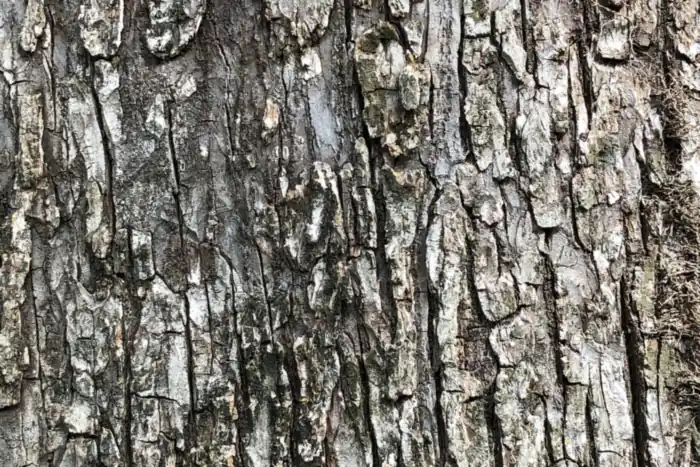
Functionally, not much. Both are demulcents whose value comes from mucilage, both are used for sore throats and irritated digestive linings, and both have thin human evidence. Marshmallow root comes from Althaea officinalis; slippery elm from the bark of Ulmus rubra. No head-to-head trial favors either.
Does marshmallow root tea taste like marshmallows?
No. The candy was named after the plant, not the other way around, and modern marshmallows contain gelatin and sugar with no Althaea in them. The tea tastes mild, faintly sweet, and slightly earthy, with a smooth, thickened mouthfeel.
References
- [Marshmallow Root Extract for the Treatment of Irritative Cough: Two Surveys on Users' View on Effectiveness and Tolerability].. Complementary medicine research, 2018. PubMed 30064132 · doi:10.1159/000489560
- The antitussive activity of polysaccharides from Althaea officinalis l., var. Robusta, Arctium lappa L., var. Herkules, and Prunus persica L., Batsch.. Bratislavske lekarske listy, 2007. PubMed 17685009
- [Antitussive action of extracts and polysaccharides of marsh mallow (Althea officinalis L., var. robusta)].. Die Pharmazie, 1992. PubMed 1615030
- Antitussive activity of Althaea officinalis L. polysaccharide rhamnogalacturonan and its changes in guinea pigs with ovalbumine-induced airways inflammation.. Bratislavske lekarske listy, 2011. PubMed 22372330
- Possible mechanisms of dose-dependent cough suppressive effect of Althaea officinalis rhamnogalacturonan in guinea pigs test system.. International journal of biological macromolecules, 2009. PubMed 19447256 · doi:10.1016/j.ijbiomac.2009.03.008
- Phytohustil and root extract of Althaea officinalis L. exert anti-inflammatory and anti-oxidative properties and improve the migratory capacity of endothelial cells.. Frontiers in pharmacology, 2022. PubMed 36569306 · doi:10.3389/fphar.2022.948248
- Isolation, structural properties, and bioactivities of polysaccharides from Althaea officinalis Linn.: A review.. International journal of biological macromolecules, 2023. PubMed 37245776 · doi:10.1016/j.ijbiomac.2023.125098
- Comparison between three different saliva substitutes in patients with hyposalivation.. Clinical oral investigations, 2015. PubMed 25617026 · doi:10.1007/s00784-015-1405-8
- Gastro-Protective and Anti-Oxidant Potential of Althaea officinalis and Solanum nigrum on Pyloric Ligation/Indomethacin-Induced Ulceration in Rats.. Antioxidants (Basel, Switzerland), 2019. PubMed 31731465 · doi:10.3390/antiox8110512
- Open trial to assess aspects of safety and efficacy of a combined herbal cough syrup with ivy and thyme.. Forschende Komplementarmedizin und klassische Naturheilkunde = Research in complementary and natural classical medicine, 2005. PubMed 16391481 · doi:10.1159/000088934
- The evaluation ofefficacy and safety of Cough (EMA) granules used for upper respiratory disorders.. Pakistan journal of pharmaceutical sciences, 2018. PubMed 30587469
- To evaluate the efficacy and safety of CofNovex plus (EMA) syrup.. Pakistan journal of pharmaceutical sciences, 2017. PubMed 28650326
- Effect of topical marshmallow (Althaea officinalis) on atopic dermatitis in children: A pilot double-blind active-controlled clinical trial of an in-silico-analyzed phytomedicine.. Phytotherapy research : PTR, 2020. PubMed 33034099 · doi:10.1002/ptr.6899
- Hypoglycemic activity evaluation and chemical study on hollyhock flowers.. Fitoterapia, 2015. PubMed 25677352 · doi:10.1016/j.fitote.2015.02.001
Last reviewed and updated . HelperTea is written by an enthusiast, not a clinician, and is not medically reviewed. How we research and rate evidence. Found an error? Tell us — safety corrections get priority.