Short answer
Steep chamomile 3 to 5 minutes in water just off the boil, about 200°F (93°C), with the cup covered so the aroma does not leave with the steam. Five minutes gives a fuller cup; most drinkers find longer steeps turn bitter. No study shows that a longer steep makes chamomile work better.
Three to five minutes, water just off the boil, lid on the cup. That is the spec on our chamomile tea page. Worth knowing why: the reason is about flavor, not medicine.
Chamomile is a flower, not a leaf. The dried heads are light and papery, so hot water gets into them fast. Most of what you will taste is in the cup by minute three. What follows is mostly the plant giving up its harsher compounds.
Nobody has run a trial testing whether a five-minute chamomile steep works better than a ten-minute one. Your steep time is a taste decision. Treat it as one.
Why 3 to 5 minutes, and not 10?
- 2 minutes. Pale and thin. Fine if you like it delicate.
- 3 to 5 minutes. Where most packages and most drinkers land. Full apple-honey character, no bitterness.
- 7 to 10 minutes. Deeper color, more hay and straw, a growing bitter edge.
- Over 10 minutes. Bitter, drying, faintly medicinal to most palates.
No published study has tracked chamomile's bitterness against steep time, so that list is convention, not data. Like a ten-minute cup? Drink one. You are just not getting a stronger dose of anything that matters.
What water temperature is right for chamomile tea?
About 200°F (93°C), meaning boiling water that has stood 30 seconds. Chamomile has no tea-leaf catechins to scald, so pouring straight off the boil will not turn it astringent, and plenty of people do exactly that.
The reason to back off is aroma: chamomile's smell comes from volatile oils, and a rolling boil sends more of it into the room than into your cup. Two hundred degrees is also far too hot to drink, which matters more than brewing temperature.
Do you have to cover the cup while it steeps?
Cover it. It is a small step that makes a noticeable difference to the aroma.
Chemists have measured what ends up in a chamomile infusion. In one analysis the brewed tea's volatile profile looked strikingly different from chamomile essential oil, carrying much lower proportions of mono- and sesquiterpene hydrocarbons, and less bisabolol oxide and chamazulene, than the distilled oil (PubMed). Much of the aromatic oil never reaches your mug.
No study has compared a covered cup with an uncovered one. Trapping the steam is a sensible inference from the chemistry, not a tested claim: it will make the tea smell better, not work better.
Does steeping chamomile longer extract more apigenin?
Apigenin is the flavone behind chamomile's calming reputation. The intuition is that a longer soak pulls out more.
The evidence here is limited, and what exists points the other way. A laboratory study of brewing conditions found rutin and apigenin to be the major flavonoids in chamomile's water extract, and reported that increasing extraction time had very little impact on chamomile's antioxidant activity — unlike St. John's wort, where longer extraction mattered a great deal (PubMed). That is test-tube chemistry, and it tracked antioxidant capacity rather than plotting apigenin against the clock. Nobody has published that curve.
Chamomile tea does deliver apigenin in an absorbable form. In a small clinical study in healthy men, the tea supplied it as apigenin-7-O-glucoside; the main metabolite peaked in blood about two hours later, and roughly 34% of the intake turned up in urine, against about 0.5% for pure apigenin swallowed alone (PubMed). Something real crosses from flower to bloodstream. That study measured absorption only — it says nothing about steep time, anxiety, or sleep.
Here is the part the packaging skips. The proposed calming mechanism — apigenin binding the benzodiazepine site on the GABA-A receptor complex — rests on laboratory and mouse work (PubMed): limited evidence by any standard. And the anxiety trial usually cited, a double-blind study in 57 adults with generalized anxiety disorder, used pharmaceutical-grade chamomile extract capsules escalated to a maximum of 1,100 mg a day, not tea (PubMed). A later open-label study pushed that to 1,500 mg a day, still in capsules (PubMed). A capsule trial cannot establish that brewed tea does anything.
For sleep the evidence is limited and inconsistent. A 2024 systematic review identified ten trials in 772 people; pooling the five that reported the Pittsburgh Sleep Quality Index, scores fell about 1.9 points, though those trials disagreed sharply with one another, and the review found no improvement in sleep duration or sleep efficiency (PubMed). Most of the trials it gathered used chamomile extract rather than brewed tea. A 28-day placebo-controlled pilot of extract capsules in chronic insomnia found no change in any sleep-diary measure (PubMed), and among 80 postpartum women who did drink the tea, the benefit had vanished by four weeks (PubMed). No steep time fixes that. Fuller picture: our page on teas for sleep.
What does over-steeping do to the taste?
It turns apple into hay: the sweetness recedes, a dry bitterness moves in, and the cup starts tasting the way a barn smells.
There is a plausible chemical reason. That same analysis found the infusion comparatively enriched, relative to the distilled oil, in spiroethers, coumarins, and sesquiterpene lactones (PubMed) — and sesquiterpene lactones are the compound class behind the bitterness of many daisy-family plants. Whether they build up with steep time is unmeasured.
If it tastes bitter, steep it shorter rather than sweetening it. Honey in a ten-minute cup treats a symptom.
Loose chamomile flowers or tea bags?
Whole flower heads generally give a rounder, more aromatic cup than the dust in cheap bags. The one real difference between them has nothing to do with flavor.
| Question | Loose dried flowers | Tea bags |
|---|---|---|
| What the evidence supports | No trial has compared them for any health outcome. Chemistry favors intact flowers for aroma. | Same: no trial has compared bags against loose flowers. |
| How fast it steeps | Slower. Whole heads need room to swell, so use a roomy infuser. 4 to 5 minutes. | Faster. Small particles, more surface area. 3 to 4 minutes. |
| Taste | Fuller apple-and-honey character, more floral aroma. | Flatter, sometimes strawy, quicker to turn bitter if the bag stays in. |
| Caffeine | None. Chamomile is not from the tea plant. | None, unless the blend adds green or black tea. |
| Who should avoid it | Infants under 12 months. One study found Clostridium botulinum spores in 7.5% of 200 chamomile samples, more often in loose flowers than bags (PubMed). | Also never for infants. Anyone allergic to ragweed, mugwort, or other daisy-family plants should avoid both forms. |
Either way, a teaspoon of flowers or one bag per 8 oz is standard. The chamomile tea trial in type 2 diabetes used 3 grams per 150 mL, three times daily (PubMed) : stronger than most brew at home.
The steeping mistake that actually carries a risk
It is not over-steeping. It is drinking the tea too hot.
The Golestan Cohort Study followed 50,045 adults in northeastern Iran for about ten years. Drinking tea at a measured 60°C or above was associated with higher risk of esophageal squamous cell carcinoma than drinking it below 60°C, as was drinking within two minutes of pouring rather than waiting six minutes or more (PubMed). That is observational data from a high-risk region, so an average American drinker's absolute risk is far smaller. Still, it is consistent human evidence, and the International Agency for Research on Cancer classifies very hot beverages, above 65°C, as probably carcinogenic. One small sensory pilot in 87 coffee drinkers put the average pain threshold near 67°C (PubMed).
You pour chamomile at roughly 93°C. Steep it, then let it sit a few minutes. Straining is not the last step. Cooling is.
Three things a longer steep will never fix:
- Steeping does not sterilize. Brewing water is nowhere near hot enough to destroy bacterial spores. That is why chamomile tea is unsafe under 12 months, and simmering longer is no workaround.
- Steeping does not remove allergens. Chamomile is in the daisy family. NCCIH notes that allergic reactions are likelier in people allergic to ragweed, chrysanthemums, marigolds, or daisies, and a case series of 14 chamomile-allergic patients found most were also sensitized to mugwort or birch pollen (PubMed). In one case report a man reached hospital about 30 minutes after a cup with itchy palms, swollen eyelids and lip, and a tight throat (PubMed). Anaphylaxis is documented. Facial swelling or wheezing is a call-911 situation.
- Steeping does not change drug interactions. NCCIH reports interactions between chamomile and warfarin and some drugs metabolized by the liver; a review of transplant medicine lists chamomile among herbs reported to raise cyclosporine blood levels (PubMed). NCCIH also notes a theoretical additive effect with sedatives, and preliminary evidence that chamomile may blunt birth control pills. Those cautions, set out in our chamomile safety section, apply at any brew strength. In pregnancy or breastfeeding, there is not enough reliable data to call daily medicinal use safe — ask your doctor or midwife.
How do you brew a cup of chamomile, step by step?
- Measure 1 teaspoon of flowers, or one tea bag, per 8 oz.
- Boil the water, let it stand 30 seconds, then pour and cover the cup.
- Steep 3 to 5 minutes: bags at the shorter end, whole flowers at the longer end.
- Strain, or lift the bag out. Leaving it in only extracts bitterness.
- Wait a few minutes before the first sip. Warm, not scalding.
The bottom line
Steep chamomile 3 to 5 minutes at about 200°F, covered, then let it cool before drinking. A longer steep buys a stronger, more bitter cup and nothing else: the one lab study on brewing time found extraction time barely moved chamomile's measured antioxidant activity, and no clinical trial has compared steep times. Brew it the way it tastes best. That, plus the ritual of a warm cup before bed, is most of what chamomile reliably offers.
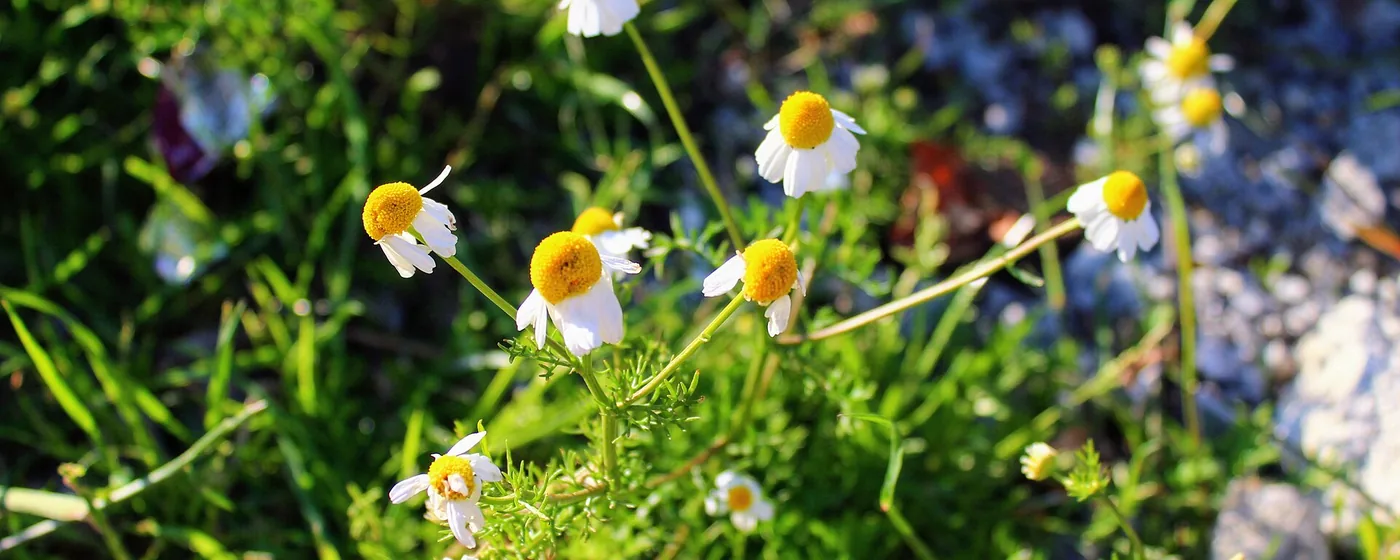
Photo: Matricaria chamomilla–IMG 6148 02.jpg by Kızıl — CC BY-SA 4.0. Cropped and re-encoded.
Frequently asked questions
Can you cold brew chamomile tea or steep it overnight?
Yes. Cold brewing makes a milder, sweeter, less bitter drink, because the harsher compounds extract slowly in cold water. Use about twice the flowers, refrigerate 6 to 12 hours, then strain. What you should not do is leave it steeping on the counter overnight: that is a plant infusion held at room temperature for eight hours, which is a food-safety problem rather than a brewing technique. Keep cold brew in the fridge and drink it within a day or two.
Can you re-steep chamomile flowers for a second cup?
You can, but the second cup is noticeably weaker and often strawy. Chamomile gives up most of its flavor in the first infusion, unlike a rolled oolong that unfurls over several. If you want two cups, brew a larger pot rather than re-steeping, and do not leave wet flowers sitting out at room temperature between infusions.
How much chamomile should I use per cup?
One heaped teaspoon of dried flowers, or one tea bag, per 8 oz (240 mL). For reference, the chamomile tea trial in adults with type 2 diabetes used 3 grams per 150 mL, roughly double the usual home strength. There is no established dose for chamomile tea, and anyone quoting a precise one is guessing.
Is it better to boil chamomile flowers instead of steeping them?
No. Boiling, which makes a decoction, is the technique for tough roots and barks, not for delicate flower heads. It drives off the aromatic oils that give chamomile its smell, and it will not destroy bacterial spores either, so it buys you nothing on safety. Pour hot water over the flowers and cover the cup instead.
Does chamomile tea have caffeine, and does a longer steep add any?
Chamomile is caffeine-free, and no amount of steeping can extract caffeine that is not in the plant. Only blends that mix chamomile with green, black, or white tea contain caffeine, so check the ingredient list on anything sold as a bedtime blend.
How long should I steep chamomile in a blend with lavender or valerian?
Blends are a compromise. Chamomile wants 3 to 5 minutes, and lavender is similar, turning soapy and perfumed if pushed much past 5 to 7 minutes. Valerian root is the outlier and typically wants 10 to 15 minutes, because roots release their compounds slowly. If you want valerian brewed properly, steep it separately and combine the liquids. Two cautions before you do. NCCIH advises not taking valerian with alcohol or sedatives, and rare cases of liver injury have been reported with valerian products, usually in combination with other herbs — so see how a valerian blend affects you before driving. And we are not aware of any trial testing a chamomile-lavender-valerian blend against placebo, so the specific combination is guesswork with a nice smell.
References
- Effects of brewing process on phenolic compounds and antioxidant activity of herbs.. Food science and biotechnology, 2016. PubMed 30263361 · doi:10.1007/s10068-016-0157-9
- Guaianolides and volatile compounds in chamomile tea.. Plant foods for human nutrition (Dordrecht, Netherlands), 2012. PubMed 22410959 · doi:10.1007/s11130-012-0277-1
- Absorption, distribution, metabolism and excretion of apigenin and its glycosides in healthy male adults.. Free radical biology & medicine, 2022. PubMed 35452808 · doi:10.1016/j.freeradbiomed.2022.04.007
- Apigenin, a component of Matricaria recutita flowers, is a central benzodiazepine receptors-ligand with anxiolytic effects.. Planta medica, 1995. PubMed 7617761 · doi:10.1055/s-2006-958058
- A randomized, double-blind, placebo-controlled trial of oral Matricaria recutita (chamomile) extract therapy for generalized anxiety disorder.. Journal of clinical psychopharmacology, 2009. PubMed 19593179 · doi:10.1097/JCP.0b013e3181ac935c
- Short-term open-label chamomile (Matricaria chamomilla L.) therapy of moderate to severe generalized anxiety disorder.. Phytomedicine : international journal of phytotherapy and phytopharmacology, 2016. PubMed 27912871 · doi:10.1016/j.phymed.2016.10.013
- Effects of chamomile (Matricaria chamomilla L.) on sleep: A systematic review and meta-analysis of clinical trials.. Complementary therapies in medicine, 2024. PubMed 39106912 · doi:10.1016/j.ctim.2024.103071
- Preliminary examination of the efficacy and safety of a standardized chamomile extract for chronic primary insomnia: a randomized placebo-controlled pilot study.. BMC complementary and alternative medicine, 2011. PubMed 21939549 · doi:10.1186/1472-6882-11-78
- Effects of an intervention with drinking chamomile tea on sleep quality and depression in sleep disturbed postnatal women: a randomized controlled trial.. Journal of advanced nursing, 2015. PubMed 26483209 · doi:10.1111/jan.12836
- Chamomile tea improves glycemic indices and antioxidants status in patients with type 2 diabetes mellitus.. Nutrition (Burbank, Los Angeles County, Calif.), 2015. PubMed 26437613 · doi:10.1016/j.nut.2015.07.011
- Presence of Clostridium botulinum spores in Matricaria chamomilla (chamomile) and its relationship with infant botulism.. International journal of food microbiology, 2007. PubMed 18068252 · doi:10.1016/j.ijfoodmicro.2007.11.008
- A prospective study of tea drinking temperature and risk of esophageal squamous cell carcinoma.. International journal of cancer, 2019. PubMed 30891750 · doi:10.1002/ijc.32220
- What Temperature of Coffee Exceeds the Pain Threshold? Pilot Study of a Sensory Analysis Method as Basis for Cancer Risk Assessment.. Foods (Basel, Switzerland), 2018. PubMed 29857570 · doi:10.3390/foods7060083
- Anaphylaxis to camomile: clinical features and allergen cross-reactivity.. Clinical and experimental allergy : journal of the British Society for Allergy and Clinical Immunology, 2000. PubMed 10998021 · doi:10.1046/j.1365-2222.2000.00902.x
- [Anaphylactic reaction to camomile tea].. Der Hautarzt; Zeitschrift fur Dermatologie, Venerologie, und verwandte Gebiete, 2018. PubMed 29737365 · doi:10.1007/s00105-018-4166-x
- Cyclosporine and herbal supplement interactions.. Journal of toxicology, 2014. PubMed 24527031 · doi:10.1155/2014/145325
Last reviewed and updated . HelperTea is written by an enthusiast, not a clinician, and is not medically reviewed. How we research and rate evidence. Found an error? Tell us — safety corrections get priority.