Short answer
Passionflower, narrowly — and only on a technicality: it is the one tested as a brewed tea. Forty-one adults rated their sleep slightly better after a week of nightly cups, with no change in the sleep lab. Valerian's trials used extracts, and pooled data have not shown it shortens sleep onset.
Both are caffeine-free herbal infusions sold as bedtime teas, and both have thinner evidence behind them than the packaging implies. No trial has ever compared the two head to head, so everything below is an indirect comparison. What separates them is a detail almost nobody mentions: passionflower has been studied in the form people actually drink it. Valerian has not.
That matters more than any claim about GABA receptors. A capsule of standardized extract and a mug of hot water poured over dried plant material are not the same product, and a trial of the first tells you little about the second.
What does the research actually show for passionflower?
The evidence for passionflower and sleep is limited. The centerpiece is a double-blind, placebo-controlled crossover trial in which 41 healthy adults drank a cup of passionflower tea or a matched placebo tea nightly for a week (PubMed). Sleep quality, one of six sleep-diary measures analyzed, came out better on passionflower. The other five did not move. Ten participants also underwent overnight polysomnography, which showed no change.
That is a modest result: a small improvement in how people said they slept, in healthy adults with mild sleep fluctuations rather than insomnia. It is also the only placebo-controlled trial of a brewed bedtime infusion we could find indexed in PubMed. There is no equivalent for valerian tea.
The one passionflower study in people with a diagnosis used an extract. Over two weeks, 110 adults with DSM-5 insomnia disorder gained about 23 minutes of total sleep versus placebo on polysomnography, barely clearing significance (p = 0.049); sleep efficiency improved within the passionflower group but not compared with placebo (PubMed).
And what does it show for valerian?
Valerian is the most heavily studied herbal sedative there is, which is why its record is awkward. Pooling 18 randomized placebo-controlled trials, the mean difference in sleep-onset latency between valerian and placebo was 0.70 minutes — about forty seconds, in valerian's disfavor — with a confidence interval running from roughly 3.4 minutes faster to 4.8 minutes slower (PubMed). Those authors detected no publication bias for that outcome, though they did report heterogeneity across trials. An earlier meta-analysis of 16 trials in 1,093 patients found valerian ahead on a crude yes-or-no question about whether sleep improved, and detected evidence of publication bias in precisely that estimate (PubMed).
A 2024 umbrella review of eight systematic reviews concluded there is no evidence of efficacy for the treatment of insomnia, while noting that valerian does appear to improve sleep quality on subjective measures (PubMed). A review of 37 studies put its verdict in the title: safe but not effective (PubMed). The American Academy of Sleep Medicine suggests clinicians not use valerian for sleep-onset or sleep-maintenance insomnia, grading that as a weak recommendation (PubMed). A 2020 review that did find signals of benefit blamed the inconsistency between trials on variable extract quality (PubMed).
Note the shape of that. None of it proves valerian cannot work — failing to demonstrate an effect is not the same as demonstrating there is none. But repeated attempts to measure a benefit have not found one, the positive signals that do exist are subjective and heterogeneous, and one of them is undercut by publication bias. That is a limited evidence base pointing mostly at nothing.
Why does "tested as a tea" matter so much?
Because hot water is a selective solvent, not a neutral one.
Valerian's best-known active compound is valerenic acid, which modulates GABA-A receptors in laboratory preparations. When one lab compared valerian extracts of different polarity in frog oocytes, only the apolar ones enhanced GABA-A currents, with activity tracking valerenic acid content; the polar extracts did nothing (PubMed). Hot water is a polar solvent. That is bench work, not proof that valerian tea is inert, but a fair reason to wonder how much of valerian's pharmacology survives the teapot.
To be fair to valerian, an often-cited positive trial from 1982 gave 128 people 400 mg of an aqueous valerian root extract and found shorter self-rated sleep latency and better self-rated sleep quality (PubMed). Water extraction pulls out something. But 400 mg of concentrated dried powder is not a teaspoon of cut root steeped for twelve minutes, and nobody has run the trial bridging the two.
Passionflower tea sidesteps the argument. The tea trial brewed tea.
How do the two teas compare side by side?
| Passionflower tea | Valerian root tea | |
|---|---|---|
| What the evidence supports | Limited. One placebo-controlled trial of the brewed tea found better self-rated sleep quality; the sleep-lab subgroup showed no objective change. A separate extract trial in insomnia added about 23 minutes of sleep, at p = 0.049. | Limited. Pooled trials have not shown any shortening of sleep onset. Meta-analyses find subjective gains only, and one detected publication bias in that estimate. Nearly all trials used extracts, not tea. |
| How fast it acts | Untested. Benefit emerged over a week of nightly cups, not one night. | Untested. Trials dosed nightly for one to four weeks. One trial found a very slight dip in vigilance one to two hours after a single dose of a valerian syrup. |
| Taste | Mild, grassy, faintly bitter. Not fruity, despite the name. | Earthy and musty — isovaleric acid gives it a damp-cellar, worn-socks smell. Plenty of people cannot finish a cup. |
| Caffeine | None. | None. |
| How to brew | 1–2 tsp per 8 oz, boiling water (212°F / 100°C), 5–10 minutes, covered. | 1 tsp (2–3 g) per 8 oz, boiling water (212°F / 100°C), 10–15 minutes, covered. |
| Who should avoid it | Pregnancy (NCCIH: may induce uterine contractions). Breastfeeding, children. Anyone facing surgery or sedated dental work. Anyone on sedatives or opioids, drinking alcohol, or driving. Ask a cardiologist about a long QT interval. NCCIH says the tea may be safe for up to about seven nights; longer is unstudied. | Anyone drinking alcohol or taking sedatives (NCCIH is explicit that valerian should not be taken with either). Anyone driving within a few hours. Liver disease. Older adults. Pregnancy, breastfeeding, children. Anyone facing anesthesia, who should tell the team weeks ahead rather than quit cold. Anyone who has used it nightly for weeks should taper rather than stop abruptly. |
Which one should you try first?
Start with passionflower if you want evidence for the format you are actually using. It is pleasant to drink, caffeine-free, and the only one of the two with a placebo-controlled trial of the brewed infusion behind it. NCCIH says passionflower may be safe as a tea for up to about seven nights; nobody has studied longer. Our passionflower tea page has the brewing and safety detail.
Valerian is a reasonable second stop if passionflower does nothing and you can get past the smell. The valerian root tea page explains why it deserves to be treated as a sedative rather than a beverage.
For the rest of the bedtime herbs, see our guide to teas for sleep. Chamomile has the largest pooled dataset of the three, for whatever that is worth in a field this thin — though it too was mostly tested as an extract, and it has never been compared with either of these head to head. It carries its own cautions: NCCIH notes that people allergic to ragweed, chrysanthemums, marigolds, or daisies are more likely to react to chamomile, and that interactions with warfarin and with drugs metabolized by the liver have been reported.
What is the catch nobody mentions?
Two things, and vendors skip both. First, benefits turn up on questionnaires far more reliably than on machines. Passionflower's tea trial found improvement on a sleep diary and nothing on polysomnography; its extract trial did nudge measured total sleep time, but barely, and sleep efficiency did not separate from placebo. Valerian's meta-analyses find people reporting better sleep while measured sleep barely moves. A nightly warm, caffeine-free, screen-free cup is a real cue that the day is over, and the tea may be doing less than the ritual around it.
Second, valerian is not a neutral bedtime drink. NCCIH states plainly that it should not be taken along with alcohol or sedatives. NIH LiverTox gives valerian a likelihood score of C — a probable but rare cause of clinically apparent liver injury — and notes that most reported cases involved multi-herb products; one published case report attributed hepatotoxicity to valerian root alone (PubMed). A controlled trial found a very slight but statistically significant dip in vigilance one to two hours after a single dose of a valerian syrup, though its main performance measures were unchanged (PubMed) — exactly the window after an evening cup. The morning after looks clearer: in 102 volunteers, an evening 600 mg dose did not impair reaction time or alertness (PubMed). NCCIH also warns that stopping abruptly after chronic use can bring on anxiety, irritability, heart disturbances, insomnia, and rarely hallucinations, so taper rather than quit cold.
Passionflower has its own list. Drowsiness, dizziness, and confusion are reported; NCCIH advises against it in pregnancy, because it may induce uterine contractions, and says to talk to your provider if you are taking it within two weeks of a scheduled surgery. Both herbs are expected to add to the effects of alcohol, benzodiazepines, Z-drugs, and opioids. Both also sit in a loosely regulated category: a 2026 review of sedative herbal supplements flagged adulteration and undeclared ingredients as a real risk (PubMed).
Can you drink passionflower and valerian together?
Sleep blends do it constantly, and the sedation is expected to stack. A polyherbal tablet of valerian, passionflower, and hops produced sleep improvements that did not differ statistically from 10 mg of zolpidem over two weeks, in a trial where 78 people with primary insomnia completed treatment (PubMed). But there was no placebo arm, so it cannot show either product beat doing nothing — and with 39 people per group it was not built to prove equivalence either. "No significant difference" can simply mean too few people to find one.
It also cannot isolate what either herb contributed, and it used extracts, not tea. Combining has no demonstrated advantage and doubles your exposure to the drowsiness each can cause. Read the label before assuming your "bedtime blend" holds only one.
The bottom line
Passionflower wins on a technicality that happens to be the one that matters: somebody actually tested the tea. The result was small, subjective, and found in people without insomnia, so "wins" means "limited evidence rather than none." Nobody has run the head-to-head trial that would settle it. Valerian has far more research and less to show for it: its pooled trials have repeatedly failed to find any shortening of sleep onset.
Choose passionflower if you want the better-supported cup. Choose valerian if the gentler options failed and you can stomach the smell. Choose neither if you have been drinking, are taking a sedative, or plan to drive within a few hours. And if you have had trouble sleeping three nights a week for three months, that is chronic insomnia disorder: the American Academy of Sleep Medicine strongly recommends cognitive behavioral therapy for insomnia as first-line treatment (PubMed). No tea competes with that.
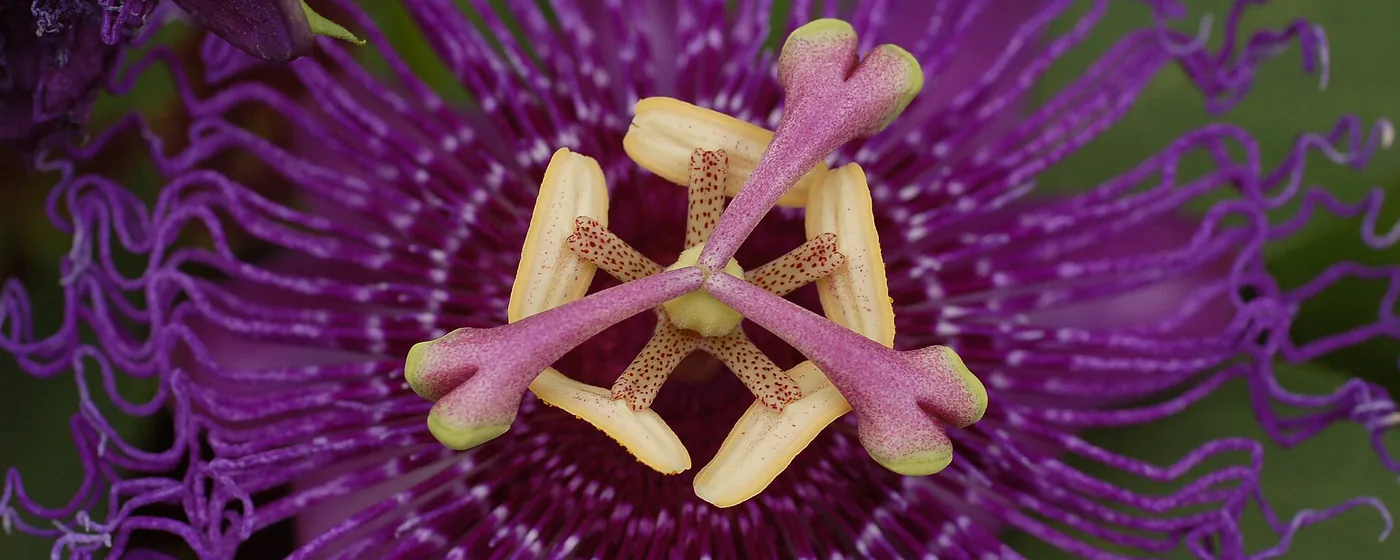
Photo: Passion Flower Passiflora Flower 3008px.jpg by Photo by and (c)2007 Derek Ramsey (Ram-Man). Co-attribution must be given to the Chanticleer Garden. Both parties have shared, contractual copyright control. — CC BY-SA 3.0. Cropped and re-encoded.
Frequently asked questions
Is passionflower or valerian better for anxiety rather than sleep?
Probably passionflower, though nobody has compared the two directly. Five randomized trials gave concentrated passionflower extract before dental or minor surgery. Two placebo-controlled trials found lower anxiety scores with passionflower; three trials used oral midazolam as a comparator, and two of those found passionflower worked about as well. A 2025 trial in 30 patients found no difference between passionflower, midazolam, and placebo on anxiety scores. Valerian's anxiety data are thinner: NCCIH says there is not enough evidence to allow any conclusions about whether valerian helps anxiety. None of the passionflower work used tea, and the doses are far above what a cup delivers.
Does valerian tea actually contain valerenic acid?
Some, probably, but nobody has published how much a normal mug delivers. The concern is chemical: in one laboratory comparison, only apolar valerian extracts boosted GABA-A currents, and hot water is a polar solvent. A 1982 trial did find a benefit using a water-based extract, so water pulls out something active. That was 400 mg of concentrated powder, not a teabag. Treat mug-to-mug potency as unpredictable; it also varies with the root's age, cut, and storage.
How long does passionflower or valerian tea take to work?
Longer than one night, if it works at all. The passionflower tea trial ran a cup nightly for a week before finding any diary improvement. Valerian's trials typically dosed nightly for one to four weeks. Convention is to drink either 30 to 60 minutes before bed, but no trial has tested tea timing directly. If you are expecting a single cup to knock you out, you are expecting a sleeping pill.
Is passionflower or valerian safer for your liver?
Passionflower, based on what is documented. NIH LiverTox rates passionflower an unlikely cause of liver injury (likelihood score E). It gives valerian a likelihood score of C, a probable but rare cause of clinically apparent liver injury, with onset typically 3 to 12 weeks after starting and recovery within 2 to 4 months of stopping. Most reported valerian cases involved multi-herb products, and NCCIH calls liver injury from valerian very rare; one published case was attributed to valerian root alone. Skip valerian if you have liver disease, and see a doctor for jaundice, dark urine, or persistent nausea.
Why does valerian tea make some people feel more awake?
Excitability and uneasiness are on NCCIH's list of valerian's reported side effects, alongside headache, stomach upset, mental dullness, and vivid dreams. Nobody has established how often this happens or why. It is a good reason to try your first cup on a night when nothing depends on the morning after.
Is there a tea with better sleep evidence than either of these?
Chamomile has the largest pooled dataset of the three, which in a field this thin is a low bar. A 2019 meta-analysis of randomized and quasi-randomized trials found chamomile improved self-reported sleep quality, though the same review found no significant change in insomnia severity, and a 28-day placebo-controlled pilot in chronic primary insomnia found no significant difference from placebo on any sleep-diary measure. Most of that work used extract rather than tea, and no trial has compared chamomile with passionflower or valerian. It has its own cautions too: NCCIH notes that people allergic to ragweed, chrysanthemums, marigolds, or daisies are more likely to react to chamomile, and that interactions with warfarin and with drugs metabolized by the liver have been reported.
References
- A double-blind, placebo-controlled investigation of the effects of Passiflora incarnata (passionflower) herbal tea on subjective sleep quality.. Phytotherapy research : PTR, 2011. PubMed 21294203 · doi:10.1002/ptr.3400
- Effects of Passiflora incarnata Linnaeus on polysomnographic sleep parameters in subjects with insomnia disorder: a double-blind randomized placebo-controlled study.. International clinical psychopharmacology, 2020. PubMed 31714321 · doi:10.1097/YIC.0000000000000291
- Effectiveness of Valerian on insomnia: a meta-analysis of randomized placebo-controlled trials.. Sleep medicine, 2010. PubMed 20347389 · doi:10.1016/j.sleep.2009.12.009
- Valerian for sleep: a systematic review and meta-analysis.. The American journal of medicine, 2006. PubMed 17145239 · doi:10.1016/j.amjmed.2006.02.026
- Does valerian work for insomnia? An umbrella review of the evidence.. European neuropsychopharmacology : the journal of the European College of Neuropsychopharmacology, 2024. PubMed 38359657 · doi:10.1016/j.euroneuro.2024.01.008
- A systematic review of valerian as a sleep aid: safe but not effective.. Sleep medicine reviews, 2007. PubMed 17517355 · doi:10.1016/j.smrv.2007.03.002
- Clinical Practice Guideline for the Pharmacologic Treatment of Chronic Insomnia in Adults: An American Academy of Sleep Medicine Clinical Practice Guideline.. Journal of clinical sleep medicine : JCSM : official publication of the American Academy of Sleep Medicine, 2017. PubMed 27998379 · doi:10.5664/jcsm.6470
- Valerian Root in Treating Sleep Problems and Associated Disorders-A Systematic Review and Meta-Analysis.. Journal of evidence-based integrative medicine, 2020. PubMed 33086877 · doi:10.1177/2515690X20967323
- Modulation of GABAA receptors by valerian extracts is related to the content of valerenic acid.. Planta medica, 2007. PubMed 18095218 · doi:10.1055/s-2007-993761
- Aqueous extract of valerian root (Valeriana officinalis L.) improves sleep quality in man.. Pharmacology, biochemistry, and behavior, 1982. PubMed 7122669 · doi:10.1016/0091-3057(82)90264-7
- [Vigilance-decreasing effects of 2 plant-derived sedatives].. Praxis, 1996. PubMed 8657986
- The influence of valerian treatment on "reaction time, alertness and concentration" in volunteers.. Pharmacopsychiatry, 1999. PubMed 10599933 · doi:10.1055/s-2007-991100
- A case of valerian-associated hepatotoxicity.. Journal of clinical gastroenterology, 2008. PubMed 18431248 · doi:10.1097/MCG.0b013e3180500348
- Efficacy and Safety of Herbal Supplements with Anxiolytic, Antidepressant, and Sedative Action: A Review of Clinical Data and Toxicological Risks.. Pharmaceuticals (Basel, Switzerland), 2026. PubMed 41901246 · doi:10.3390/ph19030399
- Efficacy and safety of a polyherbal sedative-hypnotic formulation NSF-3 in primary insomnia in comparison to zolpidem: a randomized controlled trial.. Indian journal of pharmacology, 2013. PubMed 23543804 · doi:10.4103/0253-7613.106432
- Behavioral and psychological treatments for chronic insomnia disorder in adults: an American Academy of Sleep Medicine clinical practice guideline.. Journal of clinical sleep medicine : JCSM : official publication of the American Academy of Sleep Medicine, 2021. PubMed 33164742 · doi:10.5664/jcsm.8986
- Preoperative oral Passiflora incarnata reduces anxiety in ambulatory surgery patients: a double-blind, placebo-controlled study.. Anesthesia and analgesia, 2008. PubMed 18499602 · doi:10.1213/ane.0b013e318172c3f9
- Passiflora incarnata Linneaus as an anxiolytic before spinal anesthesia.. Journal of anesthesia, 2011. PubMed 22048283 · doi:10.1007/s00540-011-1265-6
- Effects of passiflora incarnata and midazolam for control of anxiety in patients undergoing dental extraction.. Medicina oral, patologia oral y cirugia bucal, 2017. PubMed 27918731 · doi:10.4317/medoral.21140
- Herbal medicines as anxiolytics prior to third molar surgical extraction. A randomized controlled clinical trial.. Clinical oral investigations, 2020. PubMed 32951121 · doi:10.1007/s00784-020-03468-1
- Effects of Passiflora incarnata on salivary biomarkers and anxiety in patients undergoing third molar extraction surgery.. Scientific reports, 2025. PubMed 41381570 · doi:10.1038/s41598-025-27468-x
- Therapeutic efficacy and safety of chamomile for state anxiety, generalized anxiety disorder, insomnia, and sleep quality: A systematic review and meta-analysis of randomized trials and quasi-randomized trials.. Phytotherapy research : PTR, 2019. PubMed 31006899 · doi:10.1002/ptr.6349
- Preliminary examination of the efficacy and safety of a standardized chamomile extract for chronic primary insomnia: a randomized placebo-controlled pilot study.. BMC complementary and alternative medicine, 2011. PubMed 21939549 · doi:10.1186/1472-6882-11-78
Last reviewed and updated . HelperTea is written by an enthusiast, not a clinician, and is not medically reviewed. How we research and rate evidence. Found an error? Tell us — safety corrections get priority.