Short answer
Steep green tea 2 to 3 minutes in water around 175°F (80°C), not boiling. Japanese sencha is cut finer and needs less, 1 to 2 minutes. Hotter water and longer steeps pull bitter catechins and more caffeine out of the leaf. Matcha is never steeped, only whisked.
Two to three minutes at about 175°F (80°C) covers most loose-leaf green tea and most tea bags. Japanese sencha is cut finer and steeped shorter, one to two minutes. Matcha is the exception that proves the rule: you never steep it at all, because you whisk the powdered leaf into the water and swallow it.
The numbers are not arbitrary. Heat and time are two dials on the same extraction, and turning either too far stops pulling flavor out of the leaf and starts pulling harshness.
Why 175°F instead of boiling water?
Hotter water extracts more of everything, faster. In bagged teas steeped at 70, 85 and 100°C, more caffeine, catechins and gallic acid came out as the water got hotter, and more came out the longer it sat PubMed. That sounds like an argument for boiling water, until you taste it: the compounds that rush out first under heat are the ones that taste bitter and mouth-drying.
Here is something a vendor will not tell you: 175°F is a convention, not a number derived from a trial. The closest thing to a controlled test brewed Turkish green tea at 75, 85 and 95°C for 1 to 45 minutes, with nine trained panelists scoring the results. The winner was 85°C for 3 minutes, which both maximized EGCG and earned the highest scores for color, taste, aroma and overall acceptability PubMed. But 85°C is 185°F, hotter than the 175°F most guides recommend, including our own sencha page. That was one sensory panel, one tea, one laboratory. A separate panel working on white tea settled on 98°C for 7 minutes PubMed, which would wreck a sencha. Brewing optima are tea-specific and lightly studied. Treat 175°F as a starting point, not a law.
Why does green tea taste bitter when you steep it too long?
Because you are extracting the exact molecules health marketing sells back to you.
Researchers once quantified 51 candidate taste compounds in a black tea infusion, rebuilt the taste from purified chemicals, then removed them one at a time to see which mattered. The key contributors were bitter caffeine, EGCG (both bitter and astringent), puckering-astringent catechin, and flavonol glycosides that amplify caffeine's bitterness PubMed. A metabolomics study of white tea infusions independently identified EGCG and ECG as the puckering astringent compounds, caffeine as the bitter one, and theanine as the source of umami PubMed. Comparable green tea work is thinner, but the compounds are the same.
Two things follow. What tea drinkers call tannins in green tea are mostly catechins, a family of flavan-3-ols, not the hydrolyzable tannins of an oak barrel. And a bitter cup is not a stronger cup in any sense that benefits you.
Time behaves less simply than you would guess. In that Turkish study, the epistructured catechins that dominate fresh leaf (EGCG, EGC, ECG and EC) climbed rapidly over the first three to five minutes at 85°C and then fell as brewing continued, while their non-epistructured isomers kept accumulating. Sensory scores peaked at three and five minutes at every temperature tested, and at 85 and 95°C the 30- and 45-minute cups scored very low; the panel called them bitter and dark PubMed. Steeping longer stops buying you more of the interesting molecules. After a few minutes, it mostly buys you a worse cup.
How long should you steep sencha, Dragonwell, and matcha?
| Sencha | Dragonwell (Longjing) | Matcha | |
|---|---|---|---|
| Water temperature | 175°F / 80°C | 175°F / 80°C | 175°F / 80°C |
| Steep time | 1-2 minutes | 2-3 minutes | Not steeped; whisk 15-30 seconds |
| Amount | 1 tsp (about 2 g) per 8 oz | 1 tsp (about 2-3 g) per 8 oz | 1 tsp (about 2 g) per 2-3 oz |
| Re-steeps | Yes; 20-30 seconds for the second | Yes; two or three, adding 15-30 seconds each | None; there is no leaf to re-use |
| Caffeine per serving | About 25-45 mg | About 25-45 mg | About 50-70 mg |
| Most common mistake | Water too hot; leaf left sitting | Boiling water straight from the kettle | Not sifting; scorching water |
Sencha is steamed and cut into fine needles, so it has enormous surface area and gives everything up fast: hence the short, cool steep, and its reputation for turning bitter the moment you look away. Dragonwell is pan-fired and pressed flat against a wok, a sturdier leaf that tolerates two or three minutes and forgives most sloppiness except boiling water.
Matcha is not steeped. You sift the powder, add water at about 175°F, and whisk 15 to 30 seconds until it foams. There is no leaf to strain out, so over-steeping is impossible, though near-boiling water still scorches the powder and drives bitterness. Because you swallow the leaf instead of an infusion, the dose is higher: one randomized trial used a daily 2.7 g serving of matcha containing 71.5 mg of caffeine and 50.3 mg of L-theanine PubMed.
Can you steep green tea leaves more than once?
Yes, and the chemistry says when it is worth it. In the bagged-tea study, water at 85 or 100°C loaded the most caffeine, catechins and gallic acid into the first infusion, with each later steep giving progressively less. At 70°C, the second infusion was the richest, because cooler water had left more behind PubMed. Brew cool and short, as green tea wants, and a second steep is genuinely worth making.
In practice: give sencha 20 to 30 seconds on the second infusion, since the leaf is already open. Give Dragonwell an extra 15 to 30 seconds each round, and expect two or three infusions, the second often the sweetest.
Cold brewing runs the same trade in reverse. Cold water extracts slowly, and pulls the non-gallated catechins out preferentially over the gallated EGCG and ECG that carry most of the astringency PubMed. That may be part of why cold brew tastes sweet and thin, though no one has tested that link directly. One optimization study found that 12 hours at 20°C yielded more vitamin C, riboflavin, epicatechin and EGC than any hot method tested — but only with distilled water and whole leaves rather than powder PubMed. That is laboratory chemistry under laboratory conditions, not a health claim.
Does a longer, hotter steep make green tea healthier?
Almost certainly not, and here is the part vendors skip: maximizing catechins optimizes for something that has never been shown to pay off much.
Green tea's strongest human evidence is for cholesterol: a meta-analysis of 31 randomized trials in 3,321 people found total cholesterol about 4.7 mg/dL lower and LDL about 4.6 mg/dL lower than control, with no change in HDL PubMed. That is the top tier of evidence available here, and the effect is still small. Many of those trials fed people catechin capsules or extract rather than brewed tea. Capsule and extract trials do not establish that a brewed cup does anything, at any temperature or steep time. For cancer prevention, a 2020 Cochrane review of 142 studies rated the evidence low-certainty and inconsistent, with no association between green tea and cancer mortality PubMed.
Push the dose harder and you cross into extract territory, a different and riskier product: a US Pharmacopeia review found published liver-injury cases spanning green tea extract intakes from about 140 to 1,000 mg of EGCG a day PubMed. NIH's LiverTox rates green tea a well-established cause of clinically apparent liver injury. Nearly all of those reports involve capsules, not cups — but LiverTox also records a small number of cases after drinking green tea infusions, so the brewed leaf is not entirely without risk either. Either way, this should retire the idea that more catechins is a goal with a reward attached. Chemistry-optimal and drinkable are different targets anyway: that same optimization study put peak polyphenol extraction at 85°C for 30 minutes, using distilled water and finely ground leaf PubMed, a cup the Turkish panel scored near the bottom of its range.
A long hot steep does reliably deliver one thing: more caffeine PubMed. If tea keeps you awake or makes you jittery, brew shorter and cooler before you switch teas; our guide to teas for energy and focus covers the trade-offs. A systematic review found no consistent adverse effects up to about 400 mg of caffeine a day in healthy adults PubMed; in pregnancy, common US obstetric guidance is stricter, under 200 mg, and that is a conversation for your own clinician.
Two other things worth knowing, neither of which changes with steep time. Tea taken with a meal sharply reduces absorption of non-heme iron: in 46 Moroccan women, green tea drunk with an iron-fortified meal cut absorption of that meal's iron by more than 85% PubMed. If your iron is low, drink tea between meals rather than with them. And NCCIH lists nadolol, atorvastatin and raloxifene as drugs green tea can interfere with; if you take one of those, or any drug with a narrow margin between effective and toxic, ask a pharmacist. Our sencha page goes through the interactions in detail.
The one brewing rule with human outcome data behind it
Nothing to do with your kettle; everything to do with your lip. Among 50,045 adults in Iran followed for a median of ten years, drinking tea measured at 60°C (140°F) or hotter was associated with roughly a 41% higher rate of esophageal squamous cell carcinoma than drinking it cooler PubMed. In a Chinese cohort of 456,155 adults, burning-hot tea was associated with higher risk mainly among people who also smoked or drank alcohol heavily PubMed. Both studies are observational, so this is moderate evidence rather than proof, and it is about temperature, not tea. The fix costs nothing: let the poured cup stand a few minutes.
The bottom line
Two to three minutes at 175°F, one to two for sencha, and whisk matcha rather than steeping it. Strain the leaf out when time is up. Re-steep if you brewed cool and short. And let the cup cool before you drink it: that is the only brewing instruction on this page with human outcome data behind it.
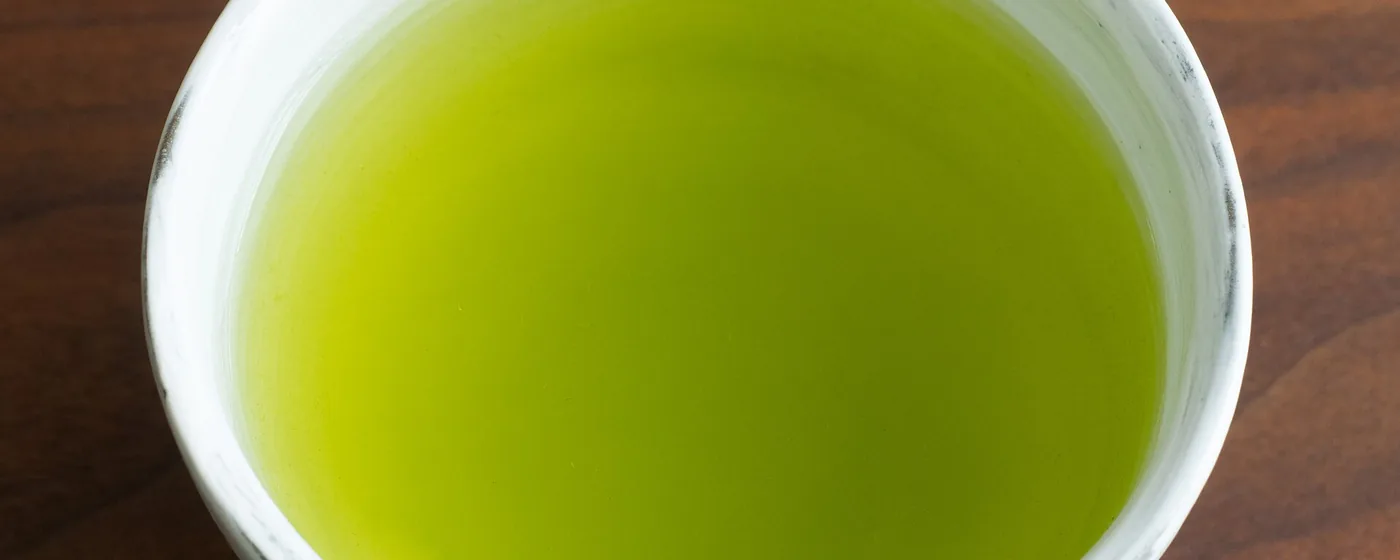
Photo: 2017 Kagoshima sencha - second infusion.jpg by Difference engine — CC BY-SA 4.0. Cropped and re-encoded.
Frequently asked questions
Why does my green tea taste bitter even when I time it correctly?
Usually the water, not the clock. Boiling water strips out astringent catechins within seconds, and green tea has no roast to hide behind. Drop to 175°F, or 160°F for a delicate sencha. Two other culprits: too much leaf for the volume of water, and leaving the leaves sitting in the cup after the timer goes off. Strain completely, or lift the infuser out.
How long should you cold brew green tea?
Six to twelve hours in the refrigerator is the usual range; one laboratory optimization study used 12 hours at 20°C, which is room temperature rather than fridge temperature. Cold water extracts far more slowly and preferentially pulls the non-gallated catechins over the astringent gallated ones, which may be part of why cold brew tastes sweeter and thinner than the same leaf brewed hot. Refrigerate it rather than leaving it on the counter.
How many times can you re-steep green tea leaves?
Two or three infusions for most loose leaf. Sencha wants only 20 to 30 seconds on the second steep because the leaf has already opened; Dragonwell can take an extra 15 to 30 seconds per round. In one bagged-tea study, caffeine and catechins declined with each successive steep once the water was 85°C or hotter, so later infusions are lighter in both flavor and caffeine. Tea bags rarely give a good second cup.
Does steeping green tea longer increase the caffeine?
Yes. In bagged teas steeped at 70, 85 and 100°C, caffeine rose progressively with steeping time and with water temperature. If caffeine is the problem, a shorter, cooler steep is the first lever to pull. It is also worth moving tea earlier in the day: in a double-blind trial, 400 mg of caffeine taken six hours before bedtime still measurably disrupted sleep, though a cup of green tea delivers far less than that.
How much green tea leaf should you use per cup?
About 1 teaspoon, or 2 grams, per 8 ounces of water for sencha and Dragonwell. Matcha is different: roughly 1 teaspoon of sifted powder whisked into just 2 to 3 ounces of water. Using more leaf and steeping briefly gives a rounder cup than using less leaf and steeping long, because you are not pushing extraction into the harsh phase.
Can you drink green tea that has been sitting out overnight?
We would not. In one study, tea infusions held at 25°C for 36 hours showed an appreciable decrease in every catechin measured and a rise in gallic acid, while caffeine was unchanged; the same infusions kept at 4°C showed no evident change. That is a chemistry finding, not a food-safety study, and brewed tea left at room temperature for many hours is a microbiological question nobody has answered for you. Refrigerate leftover tea and drink it within a day.
References
- Effects of different brewing conditions on catechin content and sensory acceptance in Turkish green tea infusions.. Journal of food science and technology, 2015. PubMed 26396411 · doi:10.1007/s13197-015-1746-y
- Effects of different steeping methods and storage on caffeine, catechins and gallic acid in bag tea infusions.. Journal of chromatography. A, 2006. PubMed 17161409 · doi:10.1016/j.chroma.2006.11.088
- Optimizing brewing conditions for low-temperature green tea infusions: Insights into functional and nutritional properties.. Food chemistry, 2025. PubMed 39933355 · doi:10.1016/j.foodchem.2025.143241
- Effect of brewing time and temperature on antioxidant capacity and phenols of white tea: Relationship with sensory properties.. Food chemistry, 2017. PubMed 29329833 · doi:10.1016/j.foodchem.2017.12.056
- Molecular definition of black tea taste by means of quantitative studies, taste reconstitution, and omission experiments.. Journal of agricultural and food chemistry, 2005. PubMed 15969522 · doi:10.1021/jf050294d
- Application of metabolomics profiling in the analysis of metabolites and taste quality in different subtypes of white tea.. Food research international (Ottawa, Ont.), 2018. PubMed 29580004 · doi:10.1016/j.foodres.2018.01.069
- Matcha Does Not Affect Electroencephalography during Sleep but May Enhance Mental Well-Being: A Randomized Placebo-Controlled Clinical Trial.. Nutrients, 2024. PubMed 39275223 · doi:10.3390/nu16172907
- Effect of green tea consumption on blood lipids: a systematic review and meta-analysis of randomized controlled trials.. Nutrition journal, 2020. PubMed 32434539 · doi:10.1186/s12937-020-00557-5
- Green tea (Camellia sinensis) for the prevention of cancer.. The Cochrane database of systematic reviews, 2020. PubMed 32118296 · doi:10.1002/14651858.CD005004.pub3
- United States Pharmacopeia (USP) comprehensive review of the hepatotoxicity of green tea extracts.. Toxicology reports, 2020. PubMed 32140423 · doi:10.1016/j.toxrep.2020.02.008
- Systematic review of the potential adverse effects of caffeine consumption in healthy adults, pregnant women, adolescents, and children.. Food and chemical toxicology, 2017. PubMed 28438661 · doi:10.1016/j.fct.2017.04.002
- Caffeine effects on sleep taken 0, 3, or 6 hours before going to bed.. Journal of clinical sleep medicine : JCSM, 2013. PubMed 24235903 · doi:10.5664/jcsm.3170
- Tea Consumption Reduces Iron Bioavailability from NaFeEDTA in Nonanemic Women and Women with Iron Deficiency Anemia: Stable Iron Isotope Studies in Morocco.. The Journal of nutrition, 2021. PubMed 34038558 · doi:10.1093/jn/nxab159
- A prospective study of tea drinking temperature and risk of esophageal squamous cell carcinoma.. International journal of cancer, 2019. PubMed 30891750 · doi:10.1002/ijc.32220
- Hot Tea Consumption and Its Interactions With Alcohol and Tobacco Use on the Risk for Esophageal Cancer: A Population-Based Cohort Study.. Annals of internal medicine, 2018. PubMed 29404576 · doi:10.7326/M17-2000
Last reviewed and updated . HelperTea is written by an enthusiast, not a clinician, and is not medically reviewed. How we research and rate evidence. Found an error? Tell us — safety corrections get priority.