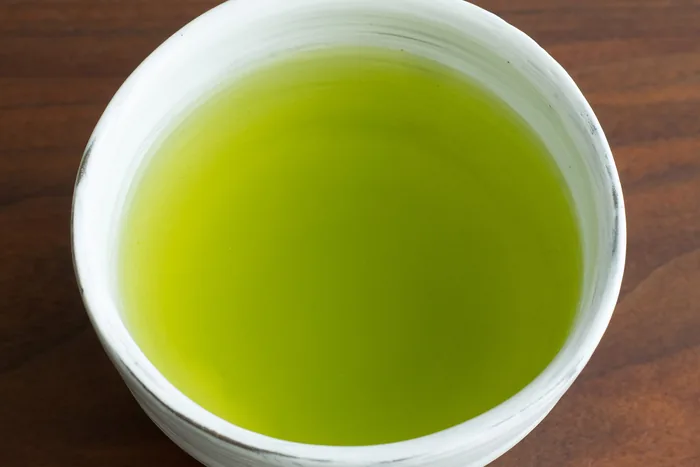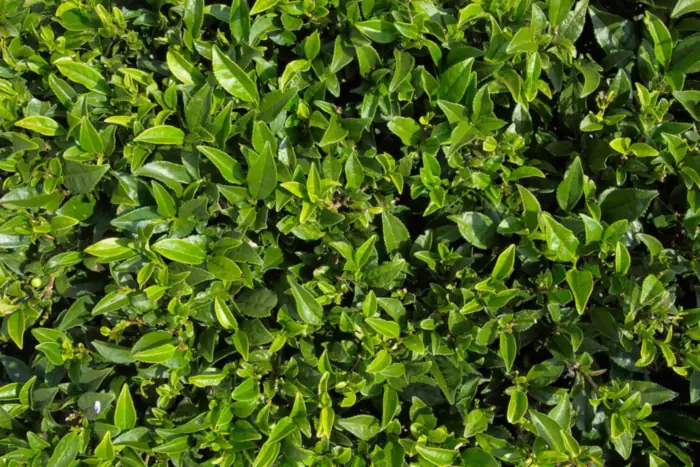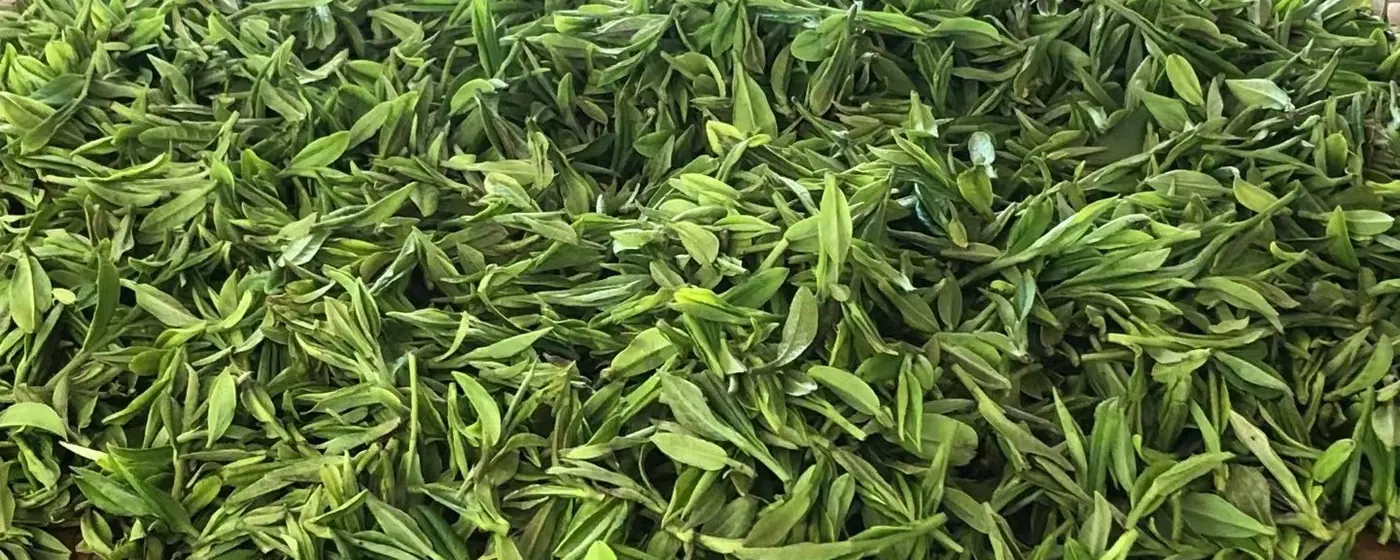
Dragonwell, or Longjing, is a pan-fired green tea from the hills around West Lake in Hangzhou, China. It comes from Camellia sinensis, the same plant that gives us black tea, oolong and white tea. What makes it green is timing: the picked leaves are heated in a wok within hours of harvest, halting the enzymes that would otherwise darken them. They are pressed flat against the wok as they dry, which is why finished Longjing looks like small smooth blades.
The flavor is why people come back to it. Good Dragonwell tastes of toasted chestnut, with a clean sweetness and little of the seaweed-and-grass character of steamed Japanese greens like sencha. It is forgiving enough to be pleasant when brewed carelessly, with one exception: boiling water turns it bitter and mouth-drying within seconds.
As for what it does, be careful what you read. We could find no published clinical trial that tested Longjing on its own. Nearly everything we know concerns green tea as a broad category, and much of that research used concentrated extracts rather than a brewed cup. That work points to small but consistent reductions in LDL cholesterol and blood pressure, and the caffeine is a real stimulant. Claims that green tea burns fat or prevents cancer run well ahead of the evidence.
Two distinctions matter more than any benefit here. Brewed tea and green tea extract capsules are not the same product: the beverage has a long record of safe use, while the extracts are a well-established cause of liver injury, including fatal cases. And whatever you brew, let the cup cool before you drink it. Drinking any beverage while it is scalding hot is itself linked to esophageal cancer.
Photo: Longjing tea 14.jpg by Jessie csz — CC BY-SA 4.0. Cropped and re-encoded.
What the evidence says
Green tea produces a small reduction in total and LDL cholesterol.
Meta-analyses of randomized trials agree on a small effect. Poolings of 14 trials (1,136 people), 20 trials (1,415) and 31 trials (3,321) each found total cholesterol down roughly 5 to 7 mg/dL and LDL down 2 to 5 mg/dL, with HDL and triglycerides unchanged. A separate blood-pressure meta-analysis found the same direction for lipids as a secondary outcome. Two caveats keep this in perspective: most of these trials used green tea extracts or catechin capsules rather than brewed tea, and none of them measured heart attacks or strokes. Catechins are thought to reduce cholesterol absorption in the gut.
Green tea may lower blood pressure slightly, mainly in people whose pressure is already elevated.
Catechins seem to help blood vessels dilate. A meta-analysis of 13 randomized trials (1,367 people) found drops near 2.0 mmHg systolic and 1.9 diastolic; another of 24 trials (1,697 people) found about 1.2 mmHg on each. A third reported the largest reductions in people starting above 130 mmHg. A broader pooling of 145 trials of flavan-3-ols — the catechin family found in tea, but also in cocoa, grapes and apples — found similar reductions plus better vessel dilation, though its authors graded the strength of evidence only 'moderate' because results varied widely between studies. No trial has shown that tea prevents heart attacks or strokes.
The caffeine and L-theanine in tea may give a mild lift in attention.
L-theanine is an amino acid found mostly in tea. In one crossover trial, 250 mg theanine with 150 mg caffeine improved several speed and accuracy measures — but caffeine alone accounted for much of that, and theanine on its own increased headache ratings and worsened a mental-arithmetic task. A second trial (97 mg theanine, 40 mg caffeine) improved task-switching accuracy but not alertness or intersensory attention. Both were small, single-dose studies using more theanine than a cup of tea provides.
There is not enough good evidence to say that green tea prevents cancer.
Catechins slow cancer cells in laboratory dishes. But the 2020 Cochrane review pooled 142 studies — 11 randomized trials of green tea extract (1,795 people) and 131 observational studies covering over 1.1 million — and rated the evidence low-certainty and inconsistent, with no association between green tea and cancer mortality. The reviewers also noted side effects at high intakes, and that most of the observational data came from Asian populations who drink far more green tea than is typical elsewhere.
Sources: [10]
Drinking tea while it is very hot is linked to a higher risk of esophageal cancer.
This is about temperature, not about tea. In a cohort of 50,045 adults in Iran followed a median of 10 years, drinking tea measured at 60°C or hotter carried about a 41% higher rate of esophageal squamous cell cancer than drinking it cooler, and those drinking 700 mL a day or more that hot had roughly 90% higher risk. In a Chinese cohort of 456,155 adults, burning-hot tea raised risk chiefly among people who also smoked or drank alcohol heavily; on its own it showed little independent effect. Both studies are observational, so they cannot prove cause. The practical response is simple and free: let the cup cool for a few minutes.
Green tea adds little, if anything, to weight loss.
A 2024 meta-analysis of 10 randomized trials compared exercise plus green tea catechins against exercise plus placebo in adults with overweight or obesity. Extra effects on weight, BMI and fat mass were small (standardized mean differences near -0.3), with no added benefit for cholesterol or triglycerides. The trials used catechin supplements rather than brewed tea.
Sources: [13]
Drinking green tea with a meal sharply reduces absorption of non-heme iron.
Tea polyphenols bind iron in the gut. In a randomized crossover study of 46 Moroccan women — 21 without anemia and 25 with iron-deficiency anemia — green tea taken with an iron-fortified wheat meal cut absorption by more than 85% in both groups: from a median 36.7% to 4.1% in the anemic women, and 16.7% to 1.4% in the others. The iron was given as NaFeEDTA, a fortificant chosen partly because it usually resists absorption inhibitors. Tea blocked it anyway.
Sources: [14]
Longjing is traditionally drunk as a spring tea and after rich or fried food.
Longjing has been made around West Lake for centuries; the pre-Qingming first flush is prized above later harvests. Traditional Chinese thinking classes green teas as cooling, often taken after heavy meals. No controlled trial has tested Longjing specifically.
No published human clinical trials found for this use.
How to brew Dragonwell
Heat water to about 175°F, or boil it and let it stand three to five minutes. Pour over the leaves, steep two to three minutes, then decant. Boiling water scorches these young leaves.
- Let the poured cup stand a few minutes before you drink. Aim to sip below about 140°F (60°C) — that is the threshold above which hot drinks have been tied to esophageal cancer.
- Expect two or three infusions. Add fifteen to thirty seconds to each later steep; the second is often sweetest.
- If your iron is low, drink it away from meals and iron supplements.
- Store leaves sealed, cool and dark. Green tea fades within a year.
Safety, side effects & who should avoid it
Brewed Dragonwell is safe for most healthy adults, and NCCIH reports no safety concerns for green tea consumed as a beverage by adults. That is not the same as risk-free: the caffeine, a sharp effect on iron absorption, a handful of real drug interactions, and the temperature you drink it at all matter. Green tea extract capsules are a different product and a well-established cause of liver injury.
Who should avoid it
- Anyone with liver disease or a past liver reaction to green tea; avoid extracts entirely.
- People taking nadolol, whose absorption green tea substantially reduces.
- People with iron-deficiency anemia, who should not drink it with meals or iron supplements.
- Anyone whose arrhythmia, high blood pressure, anxiety or insomnia is worsened by caffeine.
- Children; green tea is caffeinated and no safe intake is established.
Possible side effects
- Caffeine effects: jitteriness, faster heartbeat, headache, disrupted sleep.
- Nausea, constipation or abdominal discomfort, especially when brewed strong or drunk fasting.
- In extract trials: gastrointestinal upset, elevated liver enzymes, raised blood pressure, insomnia, skin reactions.
- Rare but serious: acute liver injury, usually appearing one to six months after starting a product (median around six weeks) and presenting like acute hepatitis. More than 100 cases of clinically apparent injury have been published; in one prospective registry about 8% of green tea cases needed a liver transplant, and fatal liver failure has occurred. It typically resolves on stopping. Almost all cases involve extracts; a small number followed heavy intake of brewed infusions.
- Susceptibility to that liver injury appears partly genetic. The HLA-B*35:01 variant turns up in roughly 72% of green tea liver-injury cases versus 11 to 15% of comparison groups, and NCCIH estimates 5 to 15% of Americans carry it. Nobody is screened for it, so there is no way to know in advance.
- See a doctor for unexplained fatigue, nausea, right-upper-abdominal pain, dark urine, or yellowing skin or eyes.
Medication interactions
- Nadolol: in a randomized crossover trial of 10 volunteers, green tea for two weeks cut peak nadolol levels 85% and blunted its blood-pressure effect (intestinal OATP1A2 inhibition).
- Atorvastatin and raloxifene: NCCIH reports green tea extract reduces blood levels of both.
- Other drugs using intestinal OATP transporters may be affected; tell your pharmacist.
- Iron supplements and iron-fortified foods: space these an hour or two from tea.
- Bortezomib (used in multiple myeloma): in laboratory cell studies, green tea polyphenols including EGCG blocked the drug's activity at concentrations reachable by drinking tea. This has not been tested in people, but the study's authors advise patients on bortezomib to cut back on polyphenol-rich foods. Ask your oncologist.
- Caffeine-related interactions: fluvoxamine and ciprofloxacin slow caffeine's breakdown and can amplify its effects, and caffeine competes with theophylline and clozapine for the same liver enzyme. Other caffeine sources and stimulants are additive.
- Warfarin: tea leaves contain vitamin K, but it barely extracts into water, so brewed tea contributes little. Mention any large change to whoever manages your INR.
Pregnancy & breastfeeding
Brewed green tea is generally considered compatible with pregnancy if total daily caffeine stays within the roughly 200 mg most obstetric guidance allows. Extract supplements are not recommended. Tea also blocks iron absorption, which matters more in pregnancy — drink it between meals and away from any prenatal iron. Caffeine passes into breast milk and can make infants fussy and wakeful, though NCCIH notes that breastfed infants usually do fine when the mother's intake is low to moderate. Evidence is thin — talk to your doctor or midwife.
How much is too much
No upper limit is established for the brewed beverage; trials typically used the equivalent of three to six cups a day. Caffeine sets the practical ceiling: at roughly 25 to 45 mg per 8 oz cup, five or six cups keeps most adults under the commonly cited 400 mg limit. For extracts, a US Pharmacopeia review found liver-injury case reports spanning EGCG intakes of about 140 to 1,000 mg daily, with substantial differences between individuals in who reacts; taking a large dose while fasting markedly raises catechin blood levels. European regulators have flagged 800 mg of EGCG a day or more as enough to raise liver enzymes.
Taste & pairing
Tasting notes: Nutty, Roasted, Sweet, Smooth.
Pairs well with: Chinese cuisine, Light desserts, Nuts.
Best time to drink: Morning or afternoon.
Frequently asked questions
How long should you steep Dragonwell, and why not use boiling water?
Two to three minutes at about 175°F. Boiling water over-extracts the catechins and tannins that give the tea its structure, turning a chestnut-sweet cup bitter within seconds. Let a boiled kettle stand three to five minutes first.
Is it bad to drink tea very hot?
It appears to be, though the culprit is heat rather than tea. Two large observational studies — one in Iran, one in China — link drinking tea at or above about 60°C (140°F) to more esophageal cancer, with the clearest signal in people who also smoke or drink alcohol. The World Health Organization's cancer agency classifies very hot beverages as probably carcinogenic. Letting the cup sit a few minutes costs nothing.
How much caffeine is in Dragonwell, and can you drink it in the evening?
Roughly 25 to 45 mg per 8 oz cup, between a quarter and a half of a cup of drip coffee. Caffeine's half-life is about five hours, so a late-afternoon cup can still be in your system at bedtime. A 30-second rinse does not reliably decaffeinate tea.
Is Dragonwell healthier than matcha or sencha?
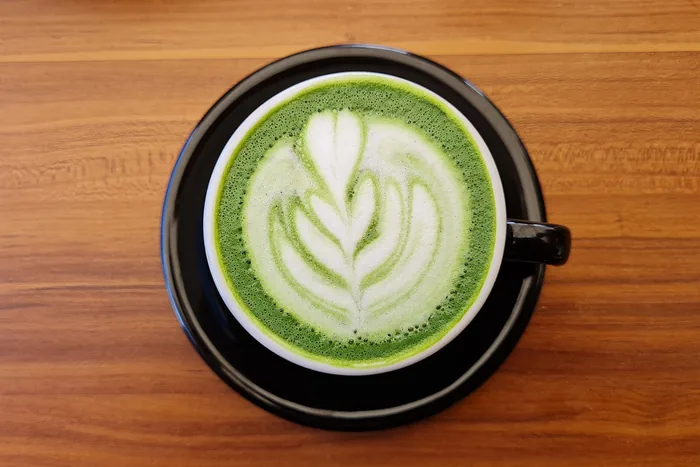
No good evidence ranks green teas against each other for health outcomes. Matcha is whisked whole leaf, so a serving carries more catechins and caffeine; sencha is steamed, making it grassier. Nearly all research studies green tea generically, with no head-to-head trials.
Can you drink Dragonwell on an empty stomach?
Many people do without trouble, though some get nausea, especially with strong tea. Catechins absorbed while fasting reach much higher blood levels — the pattern implicated in liver injury from extracts. Brewed tea's risk is far lower.
How many cups of Dragonwell a day is reasonable?
Trials generally used the equivalent of three to six cups daily; no formal limit exists. Caffeine is the practical ceiling: five or six cups keeps most adults under 400 mg a day. Drink it between meals if your iron is low.
References
- Green tea intake lowers fasting serum total and LDL cholesterol in adults: a meta-analysis of 14 randomized controlled trials.. The American journal of clinical nutrition, 2011. PubMed 21715508 · doi:10.3945/ajcn.110.010926
- Green tea catechins decrease total and low-density lipoprotein cholesterol: a systematic review and meta-analysis.. Journal of the American Dietetic Association, 2011. PubMed 22027055 · doi:10.1016/j.jada.2011.08.009
- Effect of green tea consumption on blood lipids: a systematic review and meta-analysis of randomized controlled trials.. Nutrition journal, 2020. PubMed 32434539 · doi:10.1186/s12937-020-00557-5
- Green tea catechins and blood pressure: a systematic review and meta-analysis of randomised controlled trials.. European journal of nutrition, 2014. PubMed 24861099 · doi:10.1007/s00394-014-0720-1
- Effect of green tea consumption on blood pressure: a meta-analysis of 13 randomized controlled trials.. Scientific reports, 2014. PubMed 25176280 · doi:10.1038/srep06251
- Effect of green tea supplementation on blood pressure: A systematic review and meta-analysis of randomized controlled trials.. Medicine, 2020. PubMed 32028419 · doi:10.1097/MD.0000000000019047
- Impact of flavan-3-ols on blood pressure and endothelial function in diverse populations: a systematic review and meta-analysis of randomized controlled trials.. European journal of preventive cardiology, 2025. PubMed 40126033 · doi:10.1093/eurjpc/zwaf173
- The effects of L-theanine, caffeine and their combination on cognition and mood.. Biological psychology, 2007. PubMed 18006208 · doi:10.1016/j.biopsycho.2007.09.008
- L-theanine and caffeine improve task switching but not intersensory attention or subjective alertness.. Appetite, 2010. PubMed 20079786 · doi:10.1016/j.appet.2010.01.003
- Green tea (Camellia sinensis) for the prevention of cancer.. The Cochrane database of systematic reviews, 2020. PubMed 32118296 · doi:10.1002/14651858.CD005004.pub3
- A prospective study of tea drinking temperature and risk of esophageal squamous cell carcinoma.. International journal of cancer, 2019. PubMed 30891750 · doi:10.1002/ijc.32220
- Hot Tea Consumption and Its Interactions With Alcohol and Tobacco Use on the Risk for Esophageal Cancer: A Population-Based Cohort Study.. Annals of internal medicine, 2018. PubMed 29404576 · doi:10.7326/M17-2000
- Does green tea catechin enhance weight-loss effect of exercise training in overweight and obese individuals? a systematic review and meta-analysis of randomized trials.. Journal of the International Society of Sports Nutrition, 2024. PubMed 39350601 · doi:10.1080/15502783.2024.2411029
- Tea Consumption Reduces Iron Bioavailability from NaFeEDTA in Nonanemic Women and Women with Iron Deficiency Anemia: Stable Iron Isotope Studies in Morocco.. The Journal of nutrition, 2021. PubMed 34038558 · doi:10.1093/jn/nxab159
- United States Pharmacopeia (USP) comprehensive review of the hepatotoxicity of green tea extracts.. Toxicology reports, 2020. PubMed 32140423 · doi:10.1016/j.toxrep.2020.02.008
- Green tea ingestion greatly reduces plasma concentrations of nadolol in healthy subjects.. Clinical pharmacology and therapeutics, 2014. PubMed 24419562 · doi:10.1038/clpt.2013.241
- The SAR analysis of dietary polyphenols and their antagonistic effects on bortezomib at physiological concentrations.. Frontiers in pharmacology, 2024. PubMed 39119616 · doi:10.3389/fphar.2024.1403424
Last reviewed and updated . HelperTea is written by an enthusiast, not a clinician, and is not medically reviewed. How we research and rate evidence. Found an error? Tell us — safety corrections get priority.