Sencha is the everyday green tea of Japan — poured at kitchen tables, in offices, and after meals. It comes from Camellia sinensis, the same plant behind black tea and oolong. What makes it green is timing: within hours of picking, the leaves are steamed. Steaming shuts down the enzymes that would otherwise brown the leaf, so sencha keeps its color, its fresh-cut aroma, and most of its catechins.
In the cup it tastes grassy and vegetal, with a savory depth the Japanese call umami and a clean, slightly sweet finish. It is also the least forgiving tea on most people's shelves. Water too hot, or a steep thirty seconds too long, pulls hard on the leaf's tannins and turns a delicate cup harsh. Brewed properly — around 175°F for a minute or two — sencha should taste sweet before it tastes green.
People reach for sencha for many reasons, and the honest ones are modest. It carries less caffeine than coffee, plus an amino acid called L-theanine that seems to soften caffeine's edge. Trials show small drops in LDL cholesterol among green tea drinkers, and large observational studies link regular drinking to modestly lower cardiovascular death rates. But those effects are small, much of the research used concentrated extracts rather than a brewed cup, and green tea has not been shown to prevent cancer or produce meaningful weight loss. Sencha is a good drink with a few real, modest benefits — not a medicine. The extract sold in capsules is a well-established cause of liver injury; brewed tea has only rarely been implicated. And whatever you drink, let it cool below scalding before it reaches your throat.
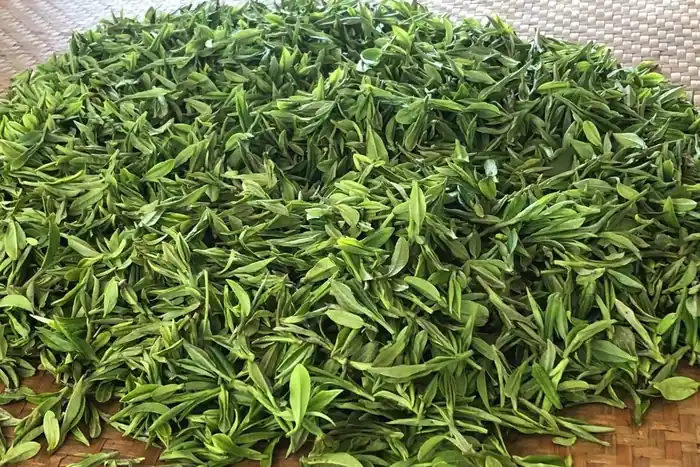
Photo: 2017 Kagoshima sencha - second infusion.jpg by Difference engine — CC BY-SA 4.0. Cropped and re-encoded.
What the evidence says
May produce a small reduction in total and LDL cholesterol.
Three meta-analyses pooling 14, 20 and 31 randomized trials (roughly 5,800 people between them) each found green tea or its catechins lowered total and LDL cholesterol, with no change in HDL. A fourth meta-analysis, of 13 trials, reported the same direction. The effect is small — LDL fell by roughly 2 to 5 mg/dL — and many of the trials used extract or supplements rather than a brewed cup.
May lower blood pressure slightly, mainly if readings are already high.
A 2014 meta-analysis of 13 trials found drops of about 2 mmHg systolic and 1.7 mmHg diastolic, with a larger reduction in people whose baseline systolic pressure was 130 mmHg or above. A 2023 meta-analysis of 11 trials in 613 overweight and obese adults found no significant effect on blood pressure at all. Sencha is not a substitute for blood pressure medication.
The caffeine and L-theanine in tea may improve attention on demanding tasks, though this has not been tested with brewed sencha.
L-theanine appears to modulate caffeine's stimulant effect. Three small placebo-controlled trials in healthy adults (27 and 44 participants in the two that reported numbers) found the combination improved speed or accuracy on demanding attention tasks compared with placebo. How much the theanine adds is less clear: the trials mostly compared the combination against placebo rather than against caffeine on its own. The theanine doses used (97 to 250 mg) are well above what a cup of sencha delivers, two of the three trials were run by researchers at a beverage company, and none of them tested brewed sencha.
Regular drinking is linked to lower cardiovascular death rates, observationally.
Among 40,530 Japanese adults followed up to 11 years, five or more cups daily was linked to about 12% lower all-cause mortality in men and 23% in women, with a stronger association for cardiovascular death; cancer mortality was unchanged. Pooled cohort data point the same way — one meta-analysis of 18 prospective cohorts estimated roughly a third lower cardiovascular mortality in the heaviest green tea drinkers, and another, pooling 39 cohort publications, found about 4% lower cardiovascular mortality per extra daily cup while rating the overall strength of evidence only low to moderate. This is association, not proof: people who drink a lot of green tea also differ in diet, smoking and income, and studies at higher risk of bias tended to report bigger effects.
Unlikely to produce meaningful weight loss, and it does not appear to improve blood sugar control.
Adding green tea catechins to exercise training gave only a small extra reduction in weight, BMI and body fat across 10 randomized trials — a 'quite minimal' additive benefit, in the authors' own words. Fasting glucose fell by just 1.44 mg/dL across 27 trials, with no change in HbA1c, and a meta-analysis of 14 trials in people with type 2 diabetes found no effect on fasting glucose, insulin or HbA1c.
Green tea has not been shown to prevent cancer.
A 2020 Cochrane review pooled 142 studies: 11 randomized trials that gave green tea extract to 1,795 people, plus 131 non-randomized studies covering over 1.1 million participants. Results were inconsistent, cohort and case-control studies disagreed, and cancer mortality was unchanged. For a few sites — including the esophagus, prostate and urinary tract — cohort studies actually showed a higher risk in the heaviest drinkers. The reviewers also recorded side effects of extract, including gastrointestinal upset, elevated liver enzymes and, less often, insomnia and raised blood pressure.
Sources: [15]
Traditionally drunk after meals in Japan to cleanse the palate.
Sencha became Japan's household tea after leaf-steaming spread in the 18th century, and a cup after eating is standard hospitality. The custom is culinary, not medical, and we found no clinical trial testing whether it aids digestion.
No published human clinical trials found for this use.
How to brew Green Tea
Boil the water, let it stand three to four minutes until it drops to about 175°F, then pour over the leaf. Steep one to two minutes and strain completely — leaves left sitting turn bitter. Then let the cup itself cool for a few minutes before you drink.
- Bitterness usually means water too hot or steep too long. Try 160°F for 90 seconds.
- Sencha is perishable: buy small amounts, keep it sealed from light and heat.
- Sencha gives a second infusion: steep it only 20 to 30 seconds, since the leaf is already open.
- Drink it warm, not scalding. Habitually drinking beverages at about 140°F (60°C) or hotter is linked to esophageal cancer — a freshly poured cup is well above that.
- Keep tea an hour away from iron pills and iron-rich meals if you have anemia.
Safety, side effects & who should avoid it
Brewed sencha is safe for most healthy adults, and caffeine is the main day-to-day watch-out. Concentrated green tea extract supplements are a different matter: NIH's LiverTox rates green tea a well-established cause of clinically apparent liver injury, and some cases have progressed to acute liver failure, urgent transplant or death. A small number of similar cases have also been reported after drinking green tea infusions rather than taking capsules, so the brewed leaf is not entirely without risk. Separately, drinking any beverage very hot is associated with esophageal cancer — let the cup cool.
Who should avoid it
- Anyone with active liver disease, unexplained raised liver enzymes, or a past liver injury linked to green tea extract; on re-exposure, liver enzymes tend to climb again, and faster.
- People taking bortezomib (Velcade) or another boronic-acid proteasome inhibitor. The evidence is preclinical, but the potential harm — losing the effect of cancer treatment — is serious enough to avoid green tea and its extracts during therapy unless your oncologist says otherwise.
- People taking nadolol, atorvastatin or raloxifene, or another narrow-therapeutic-index drug, without asking a pharmacist first.
- People being treated for iron-deficiency anemia, at least at meals and around iron tablets.
- Anyone taking extract capsules on an empty stomach or in a 'fat burner' blend — the pattern most often reported in green tea liver injury.
- Children should not take green tea extract supplements, and brewed sencha is a caffeinated drink, so keep their intake low or skip it.
- Adults with caffeine sensitivity, arrhythmias, poorly controlled anxiety or insomnia.
Possible side effects
- Caffeine effects: jitteriness, racing heart, headache, disrupted sleep, especially after mid-afternoon.
- Nausea, stomach ache or reflux from strong tea on an empty stomach; the tannins are astringent.
- Reduced iron absorption from plant foods and from iron tablets taken with tea.
- Nausea, constipation, abdominal discomfort and increased blood pressure, reported with green tea supplements (NCCIH).
- Rare but serious: liver injury — jaundice, dark urine, right-upper-abdominal pain, unusual fatigue — usually appearing one to six months after starting an extract. Most people recover after stopping, but acute liver failure, urgent liver transplant and death have all been reported. Stop the product and seek medical care promptly. Susceptibility varies between people and appears partly genetic.
- Drinking any hot beverage at about 140°F (60°C) or above, habitually, is associated with a higher risk of esophageal squamous cell carcinoma in large prospective cohorts. This is about temperature, not about tea.
Medication interactions
- Nadolol (Corgard): in a randomized crossover study in 13 healthy volunteers, a single dose of green tea extract cut nadolol exposure by 28% (low dose) to 40% (high dose); EGCG inhibited the OATP1A2 transporter in cell experiments. NCCIH also lists atorvastatin and raloxifene as drugs green tea can interfere with.
- Bortezomib (Velcade): green tea polyphenols reacted directly with the drug and blocked its anticancer effect in cell and mouse experiments. This is preclinical evidence only, but it is a reason for caution during treatment.
- Warfarin (Coumadin): a 1999 case report describes a man whose INR fell from 3.79 to 1.14 while he was drinking half a gallon to a gallon of green tea a day, then recovered to 2.55 after he stopped. The authors attributed it to vitamin K in the tea. That is a single case at an extreme intake — ordinary cups are unlikely to matter — but tell your anticoagulation clinic about any big change in tea habits.
- Oral iron: in 46 Moroccan women, green tea taken with an iron-fortified meal cut iron absorption by more than 85%. A separate case report describes iron-deficiency anemia that did not respond to oral iron until the patient stopped drinking large amounts of tea.
- Other drugs: laboratory work shows green tea extract can inhibit P-glycoprotein and several OATP transporters, though the few clinical studies available suggest it does not inhibit the major cytochrome P450 enzymes. If you take a drug with a narrow margin between effective and toxic, ask a pharmacist.
- Caffeine stacks: count sencha alongside coffee, energy drinks and stimulant medications.
Pregnancy & breastfeeding
Modest amounts of brewed sencha are generally considered compatible with pregnancy, because the caffeine load is low: common obstetric guidance keeps total caffeine under about 200 mg a day, and a cup contributes roughly 25 to 45 mg. NCCIH advises keeping caffeine intake moderate during pregnancy, and notes that caffeine passes into breast milk, where high maternal intake can make infants fussy and disturb their sleep. Two further points: tea taken with meals reduces iron absorption, which matters more in pregnancy, and green tea extract supplements are not recommended in pregnancy or breastfeeding. Evidence is thin — ask your doctor or midwife.
How much is too much
No official upper limit exists for brewed sencha. The Japanese cohorts reporting benefits recorded intakes of five or more cups a day. A practical ceiling for healthy adults is total caffeine under roughly 400 mg daily — around 9 to 16 cups of sencha, before you count coffee. Extract is a different product. A U.S. Pharmacopeia safety review found published liver-injury case reports at EGCG intakes ranging from about 140 mg to roughly 1,000 mg a day, with substantial differences between individuals that may be partly genetic. High doses have caused trouble in trials: a phase II study giving 800 mg of EGCG daily was halted after 5 of 7 participants developed abnormal liver tests, and in a 12-month trial of 843 mg EGCG a day in postmenopausal women, ALT rose sharply in carriers of certain genotypes.
Taste & pairing
Tasting notes: Grassy, Vegetal, Slightly sweet, Fresh.
Pairs well with: Light desserts, Seafood, Rice dishes, Fruit.
Best time to drink: Morning or early afternoon.
Frequently asked questions
How long should I steep sencha, and why does mine taste bitter?
One to two minutes at about 175°F (80°C). Bitterness in sencha is nearly always a brewing problem: boiling water strips tannins out fast, and a delicate steamed tea has no roast to hide behind. Lower the temperature first. Then give the poured cup a few minutes to cool — habitually drinking beverages above about 140°F (60°C) is linked to esophageal cancer.
How much caffeine is in sencha, and how many cups a day is reasonable?
Roughly 25 to 45 mg per cup, against about 95 mg for drip coffee. Three to five cups a day is an ordinary intake for a healthy adult, inside the range studied in Japanese cohorts.
Is sencha or matcha better for you?
We are not aware of any study comparing them head to head, so nobody can honestly say. Matcha gives more catechins and caffeine per serving because you swallow the powdered leaf rather than an infusion. That is a difference in dose, not kind — and more is not automatically better.
Can I drink green tea on an empty stomach?
Many people do; others find it makes them queasy, because sencha's tannins are astringent. Fasting also increases how much catechin your body absorbs, and taking green tea extract fasted, at high doses, is the pattern most often seen in liver-injury reports. That concern is about capsules, not about a cup of tea before breakfast.
Are green tea extract pills the same as drinking sencha?
No. Extracts deliver many times the EGCG of a brewed cup, and NIH's LiverTox gives green tea a likelihood score of 'A' — its top category, meaning a well-established cause of clinically apparent liver injury. Injury usually appears one to six months after starting, and while most people recover after stopping, some cases have ended in acute liver failure, transplant or death. If you take an extract anyway, take it with food, and watch for jaundice, dark urine, unusual fatigue or right-sided abdominal pain.
References
- Green tea intake lowers fasting serum total and LDL cholesterol in adults: a meta-analysis of 14 randomized controlled trials.. The American journal of clinical nutrition, 2011. PubMed 21715508 · doi:10.3945/ajcn.110.010926
- Green tea catechins decrease total and low-density lipoprotein cholesterol: a systematic review and meta-analysis.. Journal of the American Dietetic Association, 2011. PubMed 22027055 · doi:10.1016/j.jada.2011.08.009
- Effect of green tea consumption on blood lipids: a systematic review and meta-analysis of randomized controlled trials.. Nutrition journal, 2020. PubMed 32434539 · doi:10.1186/s12937-020-00557-5
- Green tea catechins and blood pressure: a systematic review and meta-analysis of randomised controlled trials.. European journal of nutrition, 2014. PubMed 24861099 · doi:10.1007/s00394-014-0720-1
- Effects of green tea catechin on the blood pressure and lipids in overweight and obese population-a meta-analysis.. Heliyon, 2023. PubMed 38034724 · doi:10.1016/j.heliyon.2023.e21228
- The combined effects of L-theanine and caffeine on cognitive performance and mood.. Nutritional neuroscience, 2008. PubMed 18681988 · doi:10.1179/147683008X301513
- The combination of L-theanine and caffeine improves cognitive performance and increases subjective alertness.. Nutritional neuroscience, 2010. PubMed 21040626 · doi:10.1179/147683010X12611460764840
- The effects of L-theanine, caffeine and their combination on cognition and mood.. Biological psychology, 2007. PubMed 18006208 · doi:10.1016/j.biopsycho.2007.09.008
- Green tea consumption and mortality due to cardiovascular disease, cancer, and all causes in Japan: the Ohsaki study.. JAMA, 2006. PubMed 16968850 · doi:10.1001/jama.296.10.1255
- Tea consumption and mortality of all cancers, CVD and all causes: a meta-analysis of eighteen prospective cohort studies.. The British journal of nutrition, 2015. PubMed 26202661 · doi:10.1017/S0007114515002329
- Dose-Response Relation between Tea Consumption and Risk of Cardiovascular Disease and All-Cause Mortality: A Systematic Review and Meta-Analysis of Population-Based Studies.. Advances in nutrition (Bethesda, Md.), 2020. PubMed 32073596 · doi:10.1093/advances/nmaa010
- Does green tea catechin enhance weight-loss effect of exercise training in overweight and obese individuals? a systematic review and meta-analysis of randomized trials.. Journal of the International Society of Sports Nutrition, 2024. PubMed 39350601 · doi:10.1080/15502783.2024.2411029
- Effects of green tea consumption on glycemic control: a systematic review and meta-analysis of randomized controlled trials.. Nutrition & metabolism, 2020. PubMed 32670385 · doi:10.1186/s12986-020-00469-5
- Effect of green tea on glycemic control in patients with type 2 diabetes mellitus: A systematic review and meta-analysis.. Diabetes & metabolic syndrome, 2020. PubMed 33285391 · doi:10.1016/j.dsx.2020.11.004
- Green tea (Camellia sinensis) for the prevention of cancer.. The Cochrane database of systematic reviews, 2020. PubMed 32118296 · doi:10.1002/14651858.CD005004.pub3
- United States Pharmacopeia (USP) comprehensive review of the hepatotoxicity of green tea extracts.. Toxicology reports, 2020. PubMed 32140423 · doi:10.1016/j.toxrep.2020.02.008
- Hepatotoxicity with High-Dose Green Tea Extract: Effect ofGenotypes.. Journal of dietary supplements, 2022. PubMed 36178169 · doi:10.1080/19390211.2022.2128501
- Polyphenon E, non-futile at neuroprotection in multiple sclerosis but unpredictably hepatotoxic: Phase I single group and phase II randomized placebo-controlled studies.. Journal of the neurological sciences, 2015. PubMed 26298797 · doi:10.1016/j.jns.2015.08.006
- Role of (-)-epigallocatechin gallate in the pharmacokinetic interaction between nadolol and green tea in healthy volunteers.. European journal of clinical pharmacology, 2018. PubMed 29480324 · doi:10.1007/s00228-018-2436-2
- An Appraisal of Drug-Drug Interactions with Green Tea (Camellia sinensis).. Planta medica, 2017. PubMed 28118673 · doi:10.1055/s-0043-100934
- Green tea polyphenols block the anticancer effects of bortezomib and other boronic acid-based proteasome inhibitors.. Blood, 2009. PubMed 19190249 · doi:10.1182/blood-2008-07-171389
- Probable antagonism of warfarin by green tea.. The Annals of pharmacotherapy, 1999. PubMed 10332534 · doi:10.1345/aph.18238
- Tea Consumption Reduces Iron Bioavailability from NaFeEDTA in Nonanemic Women and Women with Iron Deficiency Anemia: Stable Iron Isotope Studies in Morocco.. The Journal of nutrition, 2021. PubMed 34038558 · doi:10.1093/jn/nxab159
- Excessive tea consumption can inhibit the efficacy of oral iron treatment in iron-deficiency anemia.. Haematologica, 1995. PubMed 8647516
- A prospective study of tea drinking temperature and risk of esophageal squamous cell carcinoma.. International journal of cancer, 2019. PubMed 30891750 · doi:10.1002/ijc.32220
- Hot beverage intake and oesophageal cancer in the UK Biobank: prospective cohort study.. British journal of cancer, 2025. PubMed 39972189 · doi:10.1038/s41416-025-02953-2
Last reviewed and updated . HelperTea is written by an enthusiast, not a clinician, and is not medically reviewed. How we research and rate evidence. Found an error? Tell us — safety corrections get priority.