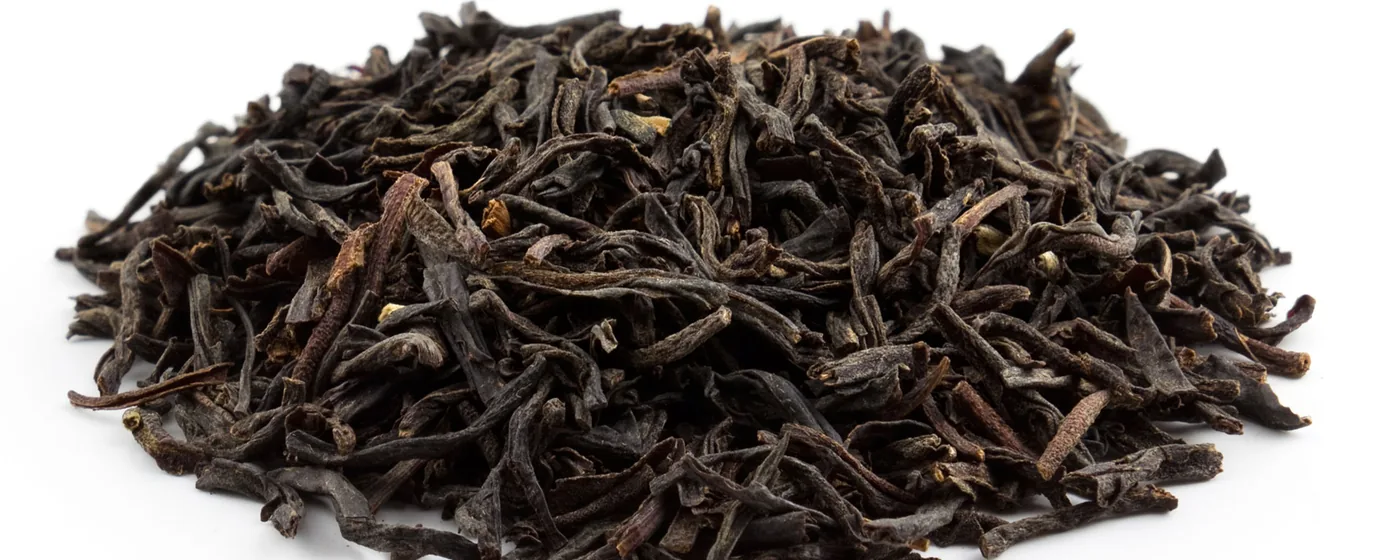
Assam is a black tea from the Brahmaputra Valley in northeast India, made from Camellia sinensis var. assamica, a large-leafed variety that grows wild there. That makes Assam one of the few places on earth where tea is native rather than introduced. The leaves are fully oxidized after picking, turning most of the plant's catechins into darker compounds called theaflavins and thearubigins, which give the brewed liquor its deep copper color and most of its character.
In the cup it is malty and full-bodied, with a brisk edge that people either love or find harsh. It is the backbone of English and Irish Breakfast blends and the usual base for masala chai, largely because it is one of the few teas robust enough to still taste like something after milk and sugar. Over-steep it and the astringency turns flatly bitter.
Most people drink Assam for the taste and the caffeine, roughly 40 to 70 milligrams a cup. The health research is real but modest, and nearly all of it studies black tea in general rather than Assam specifically. Trials show a small average drop in blood pressure. One very large cohort study links regular tea drinking with slightly lower cardiovascular death rates, though that kind of study cannot show cause and effect. Cholesterol findings are mixed, and the positive ones came from concentrated extracts, not brewed tea. None of this makes Assam a treatment for anything. Its most reliable effects are the ones you can feel or measure: it wakes you up, and it meaningfully reduces how much iron you absorb from plant foods eaten alongside it.
Photo: Assam-Tee SFTGFOP1.jpg by soultea.de/André Helbig — CC BY-SA 3.0. Cropped and re-encoded.
What the evidence says
May increase alertness and focus, mostly because of caffeine.
A cup supplies roughly 40 to 70 mg of caffeine plus a smaller amount of L-theanine. Caffeine's alerting effect is well replicated, appearing at doses as low as 40 mg. Randomized, placebo-controlled trials found caffeine and L-theanine together improved accuracy on attention-switching tasks, though gains were small and inconsistent: one of them found no improvement in subjective alertness at all. Those trials also gave isolated compounds in capsules to a few dozen young adults, not brewed Assam.
May lower blood pressure by a small amount.
A dose-response meta-analysis of 13 randomized black tea trials found average reductions of about 1.0 mmHg systolic and 0.6 mmHg diastolic versus control: real, but too small to notice in one reading. Meta-analyses pooling green and black tea in people with elevated blood pressure found larger drops, roughly 2 to 5 mmHg systolic, with bigger reductions in trials running three months or longer. Green tea outperformed black, and trials were small and heterogeneous. This is not a substitute for blood pressure medication.
May improve flow-mediated dilation, a laboratory marker of blood vessel function.
Flow-mediated dilation, a surrogate marker rather than a health outcome, measures how well an artery relaxes. In a randomized crossover trial of 19 healthy men, black tea raised it dose-dependently, from 7.8% on control to 10.3% at the top flavonoid dose. An earlier crossover trial in 50 people with coronary artery disease who completed the protocol found black tea improved it, while a matched 200 mg dose of plain caffeine did not. Both trials were small, and the implications for actual heart disease are unknown.
Cholesterol effects are unclear, and the positive findings used supplements rather than brewed tea.
A 12-week randomized trial in 240 adults with mild-to-moderate high cholesterol found a theaflavin-enriched green tea extract capsule lowered LDL cholesterol by about 16% from baseline, while the placebo group did not change significantly. A later 11-week trial in 102 people, using purified black tea theaflavins alone or with catechins, found no significant effect versus placebo. Drinking Assam is not the same as swallowing a standardized extract, and there is no good evidence ordinary tea drinking moves your lipid panel.
Regular tea drinking is associated with slightly lower cardiovascular mortality, but the data are observational.
In the UK Biobank, where black tea dominates, 498,043 adults were followed a median of 11.2 years. Those drinking two or more cups daily had roughly 9% to 13% lower all-cause mortality than non-drinkers, with similar inverse associations for cardiovascular, ischemic heart disease, and stroke deaths, even at ten or more cups. But this is a cohort study: tea drinkers differ from non-drinkers in many ways, and the authors note that portion size and brew strength went unmeasured. It supports the idea that tea fits a healthy diet, not that tea extends life.
Sources: [14]
Reduces how much iron your body absorbs from plant foods.
Black tea polyphenols bind non-heme iron, the form in beans, lentils, and fortified cereals, cutting absorption; heme iron from meat is affected far less. A UK review that assessed 35 references concluded the effect on absorption is clear, but was careful about what follows from it: its conclusions on actual iron status rest on 12 observational studies, and no intervention trial has tested iron status directly. It advised no restriction for healthy people who are not at risk of deficiency, and drinking tea between meals for those who are. One case report describes iron-deficiency anemia in a man drinking very large amounts of green tea, with anemia returning on rechallenge; no comparable case series exists for black tea.
Traditionally drunk as a daily restorative and after rich meals across Assam and northern India.
Strong black tea with milk and spices is drunk throughout the day across northern India, offered as hospitality and often taken after heavy food. Household tradition frames it as warming and reviving rather than medicinal. No clinical trials have tested Assam tea for digestion, and there is little reason to expect an effect beyond what any warm, caffeinated drink provides.
No published human clinical trials found for this use.
How to brew Assam
Bring water to a full rolling boil and pour it straight over the leaves; unlike green tea, Assam wants the heat. Steep 3 minutes for a brighter cup or 5 for the malty body that holds up to milk.
- Steep time drives both strength and caffeine. If the tea is bitter, shorten the steep before cutting back on leaf.
- Tea bags are cut finer than loose leaf and extract more caffeine from the same weight, so a bagged Assam is often stronger than it looks.
- Assam gives a poor second infusion. Treat the leaves as one-and-done.
- Let the cup cool a few minutes before drinking. Habitually drinking beverages at 140°F (60°C) or hotter is linked to higher esophageal cancer risk.
- If you are watching your iron intake, save this tea for between meals rather than with them.
Safety, side effects & who should avoid it
Brewed Assam appears safe for most healthy adults. In one large cohort study, even high intakes were not linked to excess mortality, though an observational study cannot prove the absence of harm. Three things are worth knowing: it is high in caffeine, it cuts iron absorption from plant foods, and like all black tea it is a fluoride-rich drink, which only matters at extreme, long-term intakes.
Who should avoid it
- Anyone told by a doctor to avoid caffeine, including people with poorly controlled arrhythmias, panic disorder, or chronic insomnia.
- People with iron-deficiency anemia should avoid drinking Assam with meals or near an iron supplement. Tea between meals is generally fine.
- People at high risk of low iron, including those who are pregnant, have heavy periods, or eat a mostly plant-based diet, should keep tea away from iron-rich meals.
- Children and adolescents, for whom no safe caffeine intake has been established.
- People with GERD or frequent heartburn, who often find strong black tea worsens symptoms.
- People with advanced kidney disease, who clear both caffeine and fluoride less efficiently. Ask your care team what daily amount is reasonable for you.
- Anyone scheduled for an adenosine, regadenoson, or dipyridamole cardiac stress test should hold all caffeine, including tea, for at least 12 hours beforehand or as their clinic instructs.
Possible side effects
- Jitteriness, tremor, racing heart, or anxiety, especially past a few cups.
- Trouble falling asleep, particularly from tea drunk after mid-afternoon.
- Headache on days you skip your usual tea, which is ordinary caffeine withdrawal.
- Nausea or stomach discomfort from strong tea on an empty stomach. Caffeine also relaxes the lower esophageal sphincter, which can worsen reflux.
- More frequent urination, and surface staining of teeth over years of daily drinking.
- Tea plants concentrate fluoride from the soil, and black tea infusions carry more of it than most drinks: one analysis measured 0.32 to 4.54 mg per liter, rising with longer steeping. At ordinary intakes this is not a concern. But skeletal fluorosis, a painful bone disorder, has been reported in people who drank extreme amounts of black tea daily for years, and in children whose adult teeth are still forming, high total fluoride intake from any source can mottle developing enamel.
- Repeatedly drinking tea scalding hot, at or above 140°F (60°C), is associated with higher esophageal cancer risk. That is a temperature problem, not a tea problem.
Medication interactions
- Iron supplements and iron-rich meals: tea polyphenols bind non-heme iron. Separate tea from iron pills and iron-rich food by at least an hour.
- Drugs and conditions that slow caffeine breakdown via CYP1A2, including fluvoxamine, ciprofloxacin and other fluoroquinolones, cimetidine, estrogen-containing oral contraceptives, and pregnancy itself, can make a normal amount of tea feel like far more caffeine.
- Theophylline, used in asthma, is chemically related to caffeine. Together they can add to jitteriness, tremor, and rapid heart rate.
- Clozapine is cleared by the same enzyme as caffeine, and caffeine can raise clozapine blood levels. Do not make large changes to your tea habit without telling your prescriber.
- Lithium has a narrow safety margin, and caffeine speeds up how fast the kidneys clear it. Suddenly quitting or sharply cutting back on tea can therefore push lithium levels up; case reports describe lithium tremor worsening after people stopped their caffeine. Keep your intake steady and tell your prescriber before you change it.
- Stimulants, including ADHD medications, pseudoephedrine, and energy drinks, add to caffeine's effects. Adenosine, regadenoson, and dipyridamole used in cardiac stress testing are blunted by it.
- NCCIH reports that high doses of green tea reduced blood levels and effectiveness of the beta blocker nadolol, and that green tea extract can lower blood levels of atorvastatin, with a further interaction reported for raloxifene. Whether black tea does the same has not been tested. Mention your tea habit to your pharmacist.
Pregnancy & breastfeeding
Brewed black tea is not considered dangerous in pregnancy, but caffeine crosses the placenta and most obstetric guidance advises keeping total caffeine under about 200 mg a day, roughly two to three cups of Assam. Pregnancy also slows caffeine clearance, so the same cup lingers longer. Tea reduces iron absorption exactly when iron needs are highest, so drink it between meals. Caffeine passes into breast milk and can make some infants fussy or wakeful. Evidence on tea specifically in pregnancy is thin, so talk to your doctor.
How much is too much
No upper limit has been established for brewed black tea; in the UK Biobank cohort, people drinking ten or more cups a day showed no excess mortality, though that is a single observational study and brew strength was never measured. The practical ceiling is caffeine: NIH's MedlinePlus states that for most people it is not harmful to consume up to 400 mg of caffeine a day, roughly six to eight cups of average-strength Assam. Fluoride is a second, softer ceiling, since tea is a fluoride-rich beverage and skeletal fluorosis has been reported after many years of extreme black tea intake. On the liver: the documented injuries linked to Camellia sinensis overwhelmingly involve concentrated green tea extract capsules rather than brewed tea. NIH LiverTox states that drinking green tea has not been associated with liver injury, while noting that a small number of cases have been reported after drinking green tea infusions.
Taste & pairing
Tasting notes: Malty, Rich, Full-bodied, Brisk.
Pairs well with: Milk, Breakfast foods, Rich desserts.
Best time to drink: Morning.
Frequently asked questions
How long should I steep Assam tea?
Three to five minutes in water at a full boil (212°F / 100°C). Three minutes gives a lighter, brighter cup; five gives the malty, tannic body that stands up to milk. Past five minutes you are mostly adding bitterness, and more caffeine.
How much caffeine is in a cup of Assam, and when should I drink it?
Usually 40 to 70 mg per 8 oz cup. Black teas hold more caffeine per gram than green teas, tea bags extract more than whole leaf, and longer brewing extracts more still. Caffeine's half-life is about five hours in most adults, so a 4 p.m. cup can still be working at bedtime. Morning and early afternoon are safer windows.
Does Assam tea block iron absorption?
It reduces absorption of non-heme iron, the kind in plants, which is well documented. Whether it matters depends on you: with normal iron stores and meat in your diet, it is a non-issue. If you are iron-deficient, pregnant, vegetarian or vegan, or taking an iron supplement, drink Assam between meals instead, waiting about an hour after eating. Vitamin C with the meal helps offset the effect.
What's the difference between Assam, Darjeeling, and English Breakfast?
Assam and Darjeeling are both Indian black teas, but not the same plant or place. Assam is Camellia sinensis var. assamica from a hot lowland valley: malty, dark, brisk, higher in caffeine, built for milk. Darjeeling is usually the small-leafed var. sinensis from Himalayan foothills, lighter and floral, normally drunk plain. English Breakfast is not one tea at all: it is a blend, and Assam is very often its main component.
How many cups of Assam a day is too many?
No upper limit is established for brewed black tea, and in a cohort of nearly half a million UK adults, even ten or more cups a day carried no excess mortality risk. Caffeine sets the practical limit: MedlinePlus notes that up to 400 mg a day is not harmful for most healthy adults, roughly six to eight average cups. Sustained very heavy intake, well beyond that, has been linked in case reports to fluoride-related bone problems. Cut back if you brew strong, also drink coffee, are pregnant, or feel jittery.
Is it bad to drink Assam very hot?
Yes, if very hot means scalding. In a prospective study of about 50,000 adults in northeastern Iran, drinking tea at a measured 60°C (140°F) or above was associated with a 41% higher risk of esophageal squamous cell carcinoma, and 700 mL or more daily at that temperature with roughly 90% higher risk. A systematic review of 59 studies found the same pattern across hot beverages. Let the cup sit a few minutes.
References
- Total phenol, catechin, and caffeine contents of teas commonly consumed in the United kingdom.. Journal of agricultural and food chemistry, 2002. PubMed 11804530 · doi:10.1021/jf010153l
- Determination of L-Theanine and Caffeine Contents in Tea Infusions with Different Fermentation Degrees and Brewing Conditions Using the Chromatographic Method.. Foods (Basel, Switzerland), 2025. PubMed 40647065 · doi:10.3390/foods14132313
- Effect of Green Tea Phytochemicals on Mood and Cognition.. Current pharmaceutical design, 2017. PubMed 28056735 · doi:10.2174/1381612823666170105151800
- The combination of L-theanine and caffeine improves cognitive performance and increases subjective alertness.. Nutritional neuroscience, 2010. PubMed 21040626 · doi:10.1179/147683010X12611460764840
- L-theanine and caffeine improve task switching but not intersensory attention or subjective alertness.. Appetite, 2010. PubMed 20079786 · doi:10.1016/j.appet.2010.01.003
- The effects of L-theanine, caffeine and their combination on cognition and mood.. Biological psychology, 2007. PubMed 18006208 · doi:10.1016/j.biopsycho.2007.09.008
- The effect of black tea supplementation on blood pressure: a systematic review and dose-response meta-analysis of randomized controlled trials.. Food & function, 2020. PubMed 33237083 · doi:10.1039/d0fo02122a
- Effect of tea on blood pressure for secondary prevention of cardiovascular disease: a systematic review and meta-analysis of randomized controlled trials.. Nutrition reviews, 2015. PubMed 26024546 · doi:10.1093/nutrit/nuv001
- The effects of regular consumption of green or black tea beverage on blood pressure in those with elevated blood pressure or hypertension: A systematic review and meta-analysis.. Complementary therapies in medicine, 2020. PubMed 32507441 · doi:10.1016/j.ctim.2020.102430
- Black tea consumption dose-dependently improves flow-mediated dilation in healthy males.. Journal of hypertension, 2009. PubMed 19516176 · doi:10.1097/HJH.0b013e328326066c
- Short- and long-term black tea consumption reverses endothelial dysfunction in patients with coronary artery disease.. Circulation, 2001. PubMed 11447078 · doi:10.1161/01.cir.104.2.151
- Cholesterol-lowering effect of a theaflavin-enriched green tea extract: a randomized controlled trial.. Archives of internal medicine, 2003. PubMed 12824094 · doi:10.1001/archinte.163.12.1448
- Purified black tea theaflavins and theaflavins/catechin supplements did not affect serum lipids in healthy individuals with mildly to moderately elevated cholesterol concentrations.. European journal of nutrition, 2009. PubMed 19639377 · doi:10.1007/s00394-009-0045-7
- Tea Consumption and All-Cause and Cause-Specific Mortality in the UK Biobank : A Prospective Cohort Study.. Annals of internal medicine, 2022. PubMed 36037472 · doi:10.7326/M22-0041
- Impact of tea drinking on iron status in the UK: a review.. Journal of human nutrition and dietetics : the official journal of the British Dietetic Association, 2004. PubMed 14718031 · doi:10.1046/j.1365-277x.2003.00497.x
- Iron deficiency anemia due to excessive green tea drinking.. Clinical case reports, 2016. PubMed 27830072 · doi:10.1002/ccr3.707
- Assessment of fluoride concentration and daily intake by human from tea and herbal infusions.. Food and chemical toxicology : an international journal published for the British Industrial Biological Research Association, 2007. PubMed 18078704 · doi:10.1016/j.fct.2007.10.039
- Non-endemic skeletal fluorosis: Causes and associated secondary hyperparathyroidism (case report and literature review).. Bone, 2021. PubMed 33418099 · doi:10.1016/j.bone.2021.115839
- A prospective study of tea drinking temperature and risk of esophageal squamous cell carcinoma.. International journal of cancer, 2019. PubMed 30891750 · doi:10.1002/ijc.32220
- High-temperature beverages and foods and esophageal cancer risk--a systematic review.. International journal of cancer, 2009. PubMed 19415743 · doi:10.1002/ijc.24445
Last reviewed and updated . HelperTea is written by an enthusiast, not a clinician, and is not medically reviewed. How we research and rate evidence. Found an error? Tell us — safety corrections get priority.