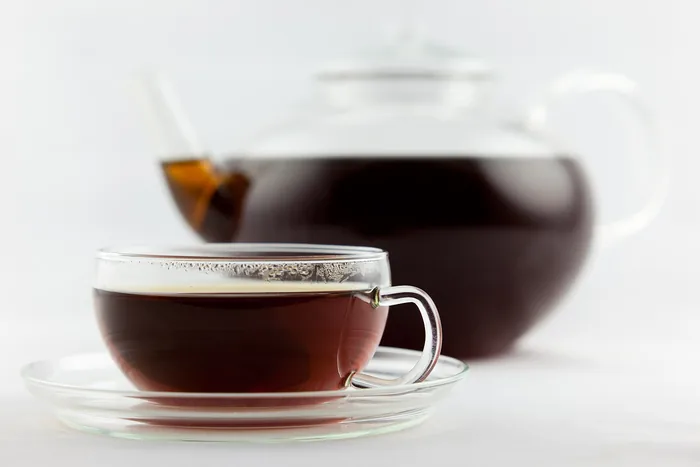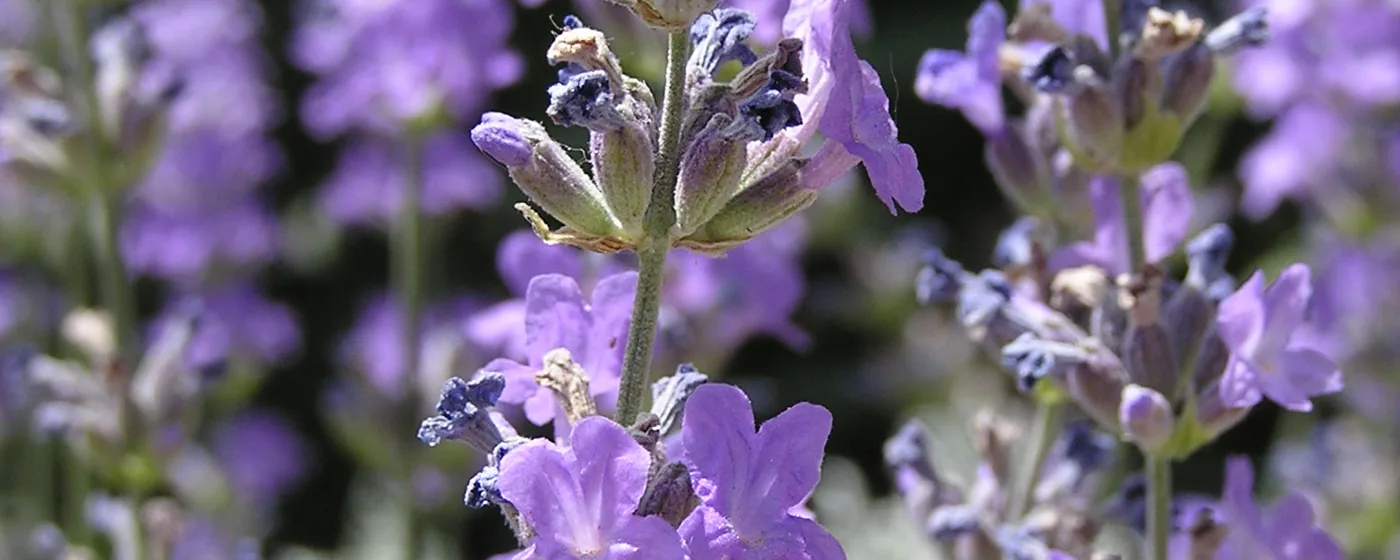
Lavender tea is an infusion of the dried flower buds of Lavandula angustifolia, the Mediterranean shrub known as English or "true" lavender. It isn't tea in the botanical sense: no Camellia sinensis, no caffeine. The buds hold a generous amount of volatile aromatic oil, mostly linalool and linalyl acetate — the molecules behind the smell, the flavor, and whatever pharmacology lavender actually has. Steeped, it yields a pale gold cup that smells like a warm hedgerow in July.
The taste is floral and faintly perfumed, with a soft sweetness and a dry, almost resinous finish. It is also easy to ruin: too many buds or too long a steep, and the cup swings from fragrant to bitter and soapy. Most people prefer it under-brewed, or blended with chamomile or lemon balm. A tea bag works, though loose buds let you control the strength. It takes honey and lemon well, and pairs traditionally with shortbread.
People reach for lavender in the evening, to wind down or ease toward sleep — an old and widespread use. The science is messier than most websites admit. The much-cited anxiety research on lavender used a standardized essential oil capsule, not a beverage, and that capsule delivers something no teacup can match. The drink itself has been tested in one small study, which was neither blinded nor randomized. Lavender tea is a pleasant, low-risk evening ritual with real traditional standing behind it. It is not a treatment for an anxiety disorder or for insomnia, and this page won't pretend otherwise.
Photo: Lavandula angustifolia in Sedovo 1.jpg by Andrey Butko — CC BY-SA 3.0. Cropped and re-encoded.
What the evidence says
In trials of a standardized lavender oil capsule (Silexan, 80 mg/day), anxiety symptoms improved more than on placebo
A meta-analysis pooled all five double-blind, placebo-controlled Silexan trials: 1,213 adults with subthreshold anxiety, generalized anxiety disorder, or mixed anxiety and depressive disorder, treated for ten weeks. Anxiety scores fell further than on placebo, with about 1.34 times as many responders; a companion meta-analysis found insomnia complaints and fatigue also improved. Two things keep this short of strong evidence. Every one of those trials was run with the manufacturer's involvement and none has been independently replicated — NCCIH specifically flags the lack of independent funding. And Silexan is 80 mg of concentrated distilled oil in a capsule, while a cup of tea delivers a small, unmeasured fraction of that.
In those same capsule trials, depressive symptoms occurring alongside anxiety also improved
A re-analysis of the same five manufacturer-run trials found Silexan beat placebo on depression ratings, with larger gains in people who were more depressed at baseline. But depression was a secondary outcome in trials designed to measure anxiety, and no participant had a primary depressive disorder. Again, this was the capsule, not tea. Treat it as a signal worth studying, not as a reason to drink lavender tea for depression.
Sources: [3]
Drinking lavender tea may modestly ease fatigue and low mood in the first weeks after childbirth
This is the only published study of the beverage itself. Eighty postnatal Taiwanese women with poor sleep were assigned — systematically, not randomly — either to drink one cup daily for two weeks or to receive usual postpartum care. The tea group reported less fatigue and depression, but there was no placebo tea and no blinding, and every difference had vanished by the four-week follow-up. A later meta-analysis of nonpharmacological treatments for postpartum fatigue folded this study into a broader "drinking tea" comparison, found a benefit, and concluded that rigorous randomized trials of tea drinking are still needed.
Inhaling lavender aroma may improve sleep, though the evidence is weak
A meta-analysis of 14 randomized trials in 1,043 people found inhaled aromatic oils improved insomnia overall, but on subgroup analysis lavender's effect was less pronounced than rose or bitter orange. A network meta-analysis in critically ill patients placed lavender oil on its own at the bottom of the ranking, below plain sunflower oil, and rated the overall certainty of the evidence low. Aroma trials are nearly impossible to blind. NCCIH says it is unclear whether lavender aromatherapy benefits sleep quality or insomnia. And none of this involves drinking tea.
Inhaled lavender oil may reduce pain during a migraine already underway
Forty-seven people inhaled lavender oil or liquid paraffin for 15 minutes during a migraine. Pain fell further with lavender. But the trial was single-blind, the control smelled nothing like lavender so participants likely knew their group, and a later systematic review of randomized herbal migraine trials did not count lavender among the herbs with even preliminary supportive evidence, noting a high risk of bias across much of this literature. This was inhaled oil, not tea.
Lavender tea is traditionally used to settle the stomach, ease tension headaches, and relax before bed
These uses recur across European herbal traditions and fill most lavender marketing. They rest on centuries of practice, not controlled trials: we found no human study testing lavender tea for indigestion, bloating, or headache. Warmth, aroma, and a deliberate pause are calming in themselves, apart from the plant.
No published human clinical trials found for this use.
How to brew Lavender Tea
Boil the water, then let it stand a minute so it settles near 200°F. Pour over the buds, cover the cup so the aromatic oils don't escape with the steam, and steep 5 to 7 minutes. Strain well; stray buds turn the cup bitter.
- Start with half a teaspoon. Adding buds beats rescuing a soapy cup.
- Keep it covered. The compounds you want are volatile and otherwise escape.
- Buy culinary Lavandula angustifolia. Garden-center plants may carry pesticides never meant for food.
- Blend it. One part lavender to three parts chamomile or lemon balm keeps the aroma, drops the bitterness.
- Never add lavender essential oil to tea. It is far more concentrated than an infusion and isn't a food ingredient.
Safety, side effects & who should avoid it
For most adults a cup or two of lavender tea is low-risk: the plant is common in food and the infusion is dilute. NIH's LiverTox database reports that lavender has not been convincingly linked to liver injury. The real cautions concern concentrated lavender essential oil — a completely different product from the tea — and sedating medications.
Who should avoid it
- Anyone allergic to lavender, and anyone who has reacted to other mint-family (Lamiaceae) plants such as sage, rosemary, or thyme should introduce it cautiously.
- Children, where concentrated lavender products are concerned. Case reports describe breast growth in prepubertal boys using topical lavender and tea tree oil products; it resolved when use stopped, and the oils showed estrogen-like activity in cells. Later reviews called causation unproven, and follow-up toxicology studies did not reproduce it — unresolved rather than disproven. NCCIH likewise says it is unclear whether lavender was responsible.
- Anyone on sedatives, sleeping pills, or other central nervous system depressants, without asking a pharmacist first.
- People scheduled for surgery, who should tell their anesthesia team about any lavender product.
- Everyone, when it comes to swallowing lavender essential oil. The oil is not the tea. MedlinePlus notes that lavender oil can cause a reaction in children who swallow even small amounts, with vomiting, confusion, decreased consciousness, and difficulty breathing among the reported symptoms; swallowed oils can also be choked into the lungs. Keep the bottle away from children, and in the US call Poison Help at 1-800-222-1222 if any is swallowed.
Possible side effects
- Drowsiness, especially in the evening or alongside other sedating substances. NIH's LiverTox notes lavender may add to sleepiness caused by other agents — don't drive or operate machinery if a cup makes you sleepy.
- Oral lavender oil capsules, at doses far above anything in tea, most often caused belching and a lavender aftertaste, plus headache, nausea, and diarrhea. LiverTox also lists constipation and indigestion among the rare effects of lavender.
- Allergic contact dermatitis from lavender oil applied to the skin. In a French series of 42 people sensitized to their own essential oils, lavender was among the most commonly implicated, and eight of the 42 required hospital care. This is a reaction to the concentrated oil, not to a cup of tea.
- Nothing serious has been reported from lavender tea itself — but the beverage has never been studied for safety beyond one cup a day for two weeks, so absence of reports isn't much reassurance.
Medication interactions
- Sedatives and CNS depressants: benzodiazepines (diazepam, lorazepam), "z-drugs" like zolpidem, opioids, barbiturates, sedating antihistamines, alcohol. NCCIH notes theoretical reasons to suspect lavender adds to their effect, and NIH's LiverTox says lavender may potentiate the somnolence caused by other agents.
- Other sedating herbs and supplements: valerian, kava, passionflower, chamomile, melatonin.
- Anesthesia. NCCIH singles out upcoming surgery as a reason to be careful with lavender, and clinicians commonly ask patients to stop sedating herbal products roughly two weeks beforehand.
- No rigorous drug-interaction studies exist for lavender tea. This list is plausible, not measured — absence of reports isn't evidence of safety.
Pregnancy & breastfeeding
There isn't enough evidence to say whether lavender tea is safe in pregnancy or while breastfeeding; NCCIH says little is known about lavender's safety in either. The one study of the beverage enrolled postpartum women but reported no infant safety outcomes. Ask your doctor or midwife.
How much is too much
No established limit. The only study of the beverage used one cup a day for two weeks. Oral lavender oil trials used 80 mg of concentrated oil in capsules — no guide to tea. One to three cups daily is typical, but no ceiling has been set and none has been tested.
Taste & pairing
Tasting notes: Floral, Perfumed, Slightly sweet, Herbaceous.
Pairs well with: Honey, Lemon, Shortbread cookies, Chocolate.
Best time to drink: Evening or during stressful periods.
Frequently asked questions
How long should I steep lavender tea?
Five to seven minutes in water around 200°F, covered. Most of what you want lives in the volatile oil and comes out fast; past eight minutes you are mainly pulling tannins and bitterness. If your cup is too strong, use fewer buds, not a shorter steep.
Is lavender tea the same as the lavender capsules used in anxiety studies?
No — and this is the most important thing to understand about lavender. Those trials used Silexan, a standardized 80 mg dose of distilled essential oil in a capsule, and all of them were run with the manufacturer's involvement. Tea holds a small, variable, unmeasured amount of that oil. Don't assume the results transfer to your mug.
How many cups of lavender tea can I drink in a day?
No established limit, and no established effective dose either. Most people drink one to two cups in the evening; the only published study used one cup daily for two weeks. If you take any sedating medication, ask a pharmacist first.
Does lavender tea have side effects?
Drowsiness is the main one, which is often the point — so don't drive if a cup makes you sleepy. Trials of much stronger oral lavender oil reported belching, a lavender aftertaste, headache, nausea, and diarrhea. Lavender oil applied to the skin also causes allergic contact dermatitis, so anyone allergic to lavender, or to other mint-family plants, should be cautious.
Is lavender tea or chamomile tea better for sleep?
Neither has convincing evidence, so pick the one you'd rather drink. Lavender's sleep research comes almost entirely from inhaling the oil, and a 2024 meta-analysis found its effect on insomnia less pronounced than rose or bitter orange. Chamomile's evidence is also thin. Both give you a warm, caffeine-free cup before bed.
References
- Efficacy of Silexan in patients with anxiety disorders: a meta-analysis of randomized, placebo-controlled trials.. European archives of psychiatry and clinical neuroscience, 2023. PubMed 36717399 · doi:10.1007/s00406-022-01547-w
- Therapeutic effects of Silexan on somatic symptoms and physical health in patients with anxiety disorders: A meta-analysis.. Brain and behavior, 2021. PubMed 33638614 · doi:10.1002/brb3.1997
- Beneficial effects of Silexan on co-occurring depressive symptoms in patients with subthreshold anxiety and anxiety disorders: randomized, placebo-controlled trials revisited.. European archives of psychiatry and clinical neuroscience, 2022. PubMed 35262795 · doi:10.1007/s00406-022-01390-z
- Effects of Lavender Tea on Fatigue, Depression, and Maternal-Infant Attachment in Sleep-Disturbed Postnatal Women.. Worldviews on evidence-based nursing, 2015. PubMed 26523950 · doi:10.1111/wvn.12122
- Effectiveness of nonpharmacological interventions for reducing postpartum fatigue: a meta-analysis.. BMC pregnancy and childbirth, 2021. PubMed 34521386 · doi:10.1186/s12884-021-04096-7
- The effectiveness of aromatic extract on insomnia: a meta-analysis.. Sleep & breathing = Schlaf & Atmung, 2024. PubMed 39615005 · doi:10.1007/s11325-024-03215-w
- Effect of inhaled aromatherapy on sleep quality in critically ill patients: A systematic review and network meta-analysis.. Journal of clinical nursing, 2024. PubMed 39041491 · doi:10.1111/jocn.17368
- Lavender essential oil in the treatment of migraine headache: a placebo-controlled clinical trial.. European neurology, 2012. PubMed 22517298 · doi:10.1159/000335249
- Herbal treatments for migraine: A systematic review of randomised-controlled studies.. Phytotherapy research : PTR, 2020. PubMed 32310327 · doi:10.1002/ptr.6701
- Prepubertal gynecomastia linked to lavender and tea tree oils.. The New England journal of medicine, 2007. PubMed 17267908 · doi:10.1056/NEJMoa064725
- The relationship between lavender and tea tree essential oils and pediatric endocrine disorders: A systematic review of the literature.. Complementary therapies in medicine, 2019. PubMed 32147050 · doi:10.1016/j.ctim.2019.102288
- Are Prepubertal Gynaecomastia and Premature Thelarche Linked to Topical Lavender and Tea Tree Oil Use?. TouchREVIEWS in endocrinology, 2023. PubMed 38187077 · doi:10.17925/EE.2023.19.2.9
- Critical assessment of the endocrine potential of Linalool and Linalyl acetate: proactive testing strategy assessing estrogenic and androgenic activity of Lavender oil main components.. Archives of toxicology, 2023. PubMed 37906319 · doi:10.1007/s00204-023-03623-z
- Allergic contact dermatitis from essential oil in consumer products: Mode of uses and value of patch tests with an essential oil series. Results of a French study of the DAG (Dermato-Allergology group of the French Society of Dermatology).. Contact dermatitis, 2023. PubMed 37403438 · doi:10.1111/cod.14377
Last reviewed and updated . HelperTea is written by an enthusiast, not a clinician, and is not medically reviewed. How we research and rate evidence. Found an error? Tell us — safety corrections get priority.