Passionflower tea is an infusion of the dried above-ground parts — leaves, stems, tendrils, and flowers — of Passiflora incarnata, a vine native to the Americas and, specifically, to the southeastern United States, where it is also called maypop. Despite the name, it is not the plant behind the passion fruit sold at the grocery store, and the tea contains no fruit. It is naturally caffeine-free. What you buy loose or in tea bags is mostly chopped leaf and stem, with a scattering of recognizable flower.
In the cup it is pale gold and unassuming. The flavor is mild and grassy, closer to hay or dried garden herbs than to anything sweet, with a thin body and a faint bitterness at the finish. Anyone expecting the fruity punch of passion fruit will be disappointed. It takes honey and lemon well, and it blends easily with chamomile, lemon balm, or valerian, which is why it rarely appears on its own in supermarket sleep blends.
Passionflower has a long history as a folk sedative for restlessness and nerves, and there is real clinical research here — though less of it, and less of it about tea, than the shelf labels suggest. Several randomized trials found that a concentrated passionflower extract taken before dental or minor surgery eased anxiety roughly as much as oral midazolam, a sedative. One 2025 trial found no difference between passionflower, midazolam, and placebo. None of that work used tea, and the extract doses far exceed what a cup delivers. The single trial that brewed actual passionflower tea found a small improvement in how people rated their sleep, with no matching change in the ten participants who spent a night in a sleep lab.
Passionflower can also cause drowsiness, dizziness, and confusion, and it is generally expected to add to the effects of alcohol, sedatives, and anesthesia. Modest evidence, real cautions — worth trying, worth respecting.
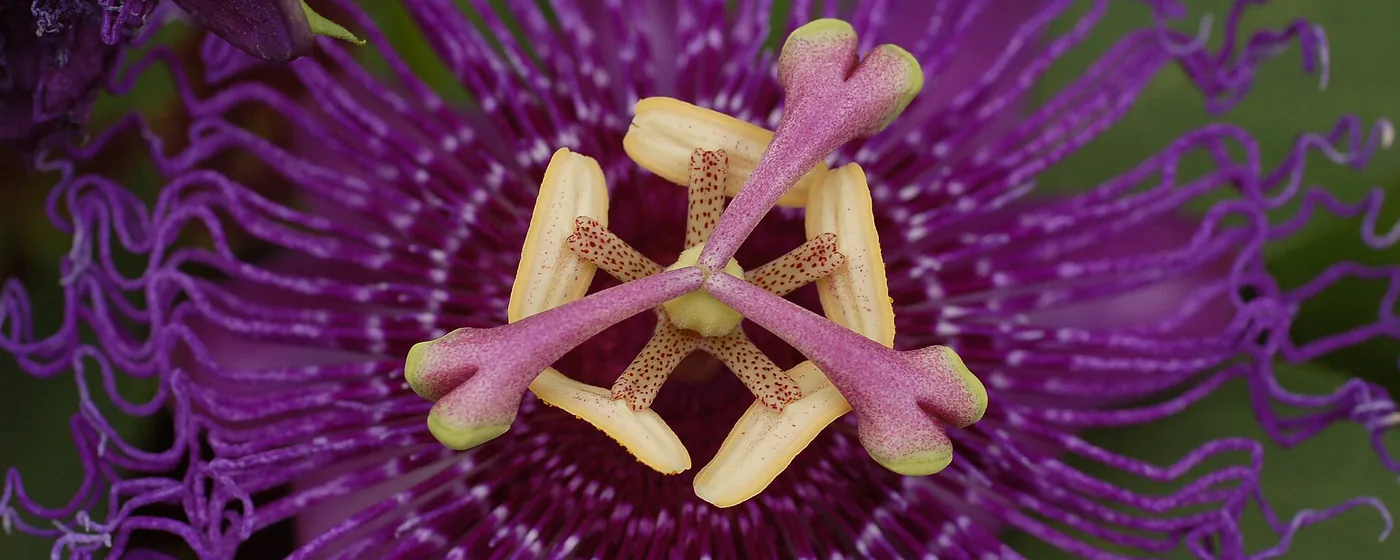
Photo: Passion Flower Passiflora Flower 3008px.jpg by Photo by and (c)2007 Derek Ramsey (Ram-Man). Co-attribution must be given to the Chanticleer Garden. Both parties have shared, contractual copyright control. — CC BY-SA 3.0. Cropped and re-encoded.
What the evidence says
A single dose of concentrated passionflower extract may reduce anxiety before dental or minor surgery, roughly as much as oral midazolam did in the trials that compared them.
Five randomized trials gave 260 to 500 mg of concentrated extract 30 to 90 minutes before dental extraction, ambulatory surgery, or spinal anesthesia, in groups of 30 to 200 people. Two placebo-controlled trials found lower anxiety scores with passionflower and no added sedation. Three trials included oral midazolam 15 mg as a comparator: two found passionflower reduced anxiety about as much as midazolam, and one of those found it interfered less with memory formation. The third, a 2025 trial in 30 patients, found no difference in anxiety scores between passionflower, midazolam, and placebo, though salivary cortisol fell with both active treatments. A 2026 systematic review of preoperative anxiolysis summarized the picture the same way — comparable to midazolam, better than placebo — while noting the trials are small and methodologically varied. None of this research used tea, and the doses are far above what a cup delivers.
For diagnosed generalized anxiety disorder, the evidence is too thin to draw conclusions.
The main study is a 2001 pilot trial in 36 outpatients comparing a passionflower liquid extract, 45 drops a day, with the benzodiazepine oxazepam. Both reduced anxiety over four weeks with no significant difference between them, but there was no placebo group, so the trial cannot separate a drug effect from natural improvement. A Cochrane review found only two eligible trials totaling 198 participants and concluded that the evidence was too sparse to permit any conclusion.
Passionflower may modestly improve sleep, but the effects reported so far are small, and the one tea trial found a change only in how people rated their sleep.
In a crossover trial, 41 healthy adults drank passionflower or placebo tea nightly for a week. Self-rated sleep quality — one of six diary measures analyzed — improved; the other five did not, and the authors reported no corresponding change in the ten people who also underwent overnight polysomnography. In 110 adults with DSM-5 insomnia disorder, two weeks of passionflower extract added about 23 minutes of total sleep versus placebo, barely clearing statistical significance (p = 0.049); sleep efficiency improved within the passionflower group but not compared with placebo. A 30-day trial in 65 people reported better sleep and stress scores, but it tested a proprietary extract and two of its authors worked for the company that makes it.
Calming herbal blends containing passionflower have not clearly beaten placebo for everyday stress.
Among 210 patients awaiting elective surgery, a calming herbal tea containing passionflower did not lower anxiety scores more than a lemon-flavored placebo tea. In 72 healthy men, four days of a fixed valerian, passionflower, lemon balm, and butterbur combination reduced self-reported anxiety during a lab stress test compared with placebo, but left the cortisol response unchanged. Neither study isolates passionflower's own contribution.
Passionflower appears to interact with the brain's GABA system, but the popular claim that it 'raises GABA levels' is not what the lab work shows.
In rat brain tissue, a passionflower extract blocked GABA reuptake and bound both GABA-A and GABA-B receptors, behaving as a GABA-B antagonist while leaving the benzodiazepine binding site untouched. In mice, its anti-seizure effect was reversed by both a benzodiazepine blocker and an opioid blocker, which points to more than one pathway and does not sit neatly with the receptor-binding work. Chrysin, the flavonoid that does bind the benzodiazepine site, was identified in a different species, Passiflora caerulea. All of this is in-vitro and animal work; none of it establishes what a cup of tea does in a person.
Passionflower has been used traditionally for restlessness, nervous tension, and trouble winding down.
Passiflora incarnata was taken up by North American herbalists as a nervine — something to settle agitation and ease the slide into sleep — and passed from there into European herbal practice. Folk use also covers neuralgia, muscle spasm, and menstrual discomfort. These uses rest on long-standing practice rather than clinical evidence; we found no controlled human trials of passionflower tea for any of them.
No published human clinical trials found for this use.
How to brew Passionflower Tea
Bring water to a full boil and pour it over the dried herb. Keep the cup or pot covered for the whole steep — the aromatics leave with the steam, and a lid holds the heat needed to draw compounds out of the tougher stem pieces. Strain and drink warm.
- Give it the full 5 to 10 minutes. Passionflower is mostly chopped leaf and stem, and a two-minute dunk yields little more than grassy hot water.
- Start at 5 minutes; pushing toward 10 pulls out more of the bitter, hay-like finish.
- Drink it 30 to 60 minutes before bed rather than at lights-out, so any effect has time to develop. No trial has tested the timing of the tea directly.
- Honey and lemon round off the bitterness. Skip the tea on any night you might need to drive.
Safety, side effects & who should avoid it
Passionflower tea is generally well tolerated, and the NIH LiverTox database rates it an unlikely cause of liver injury. But it is not just a pleasant drink. Three cautions matter most: it can cause drowsiness, dizziness, and confusion; it is expected to add to the effects of alcohol, sedatives, and anesthesia; and NCCIH advises against it in pregnancy. It is also not a treatment for a diagnosed anxiety disorder or for insomnia. If either is a real problem for you, see a clinician rather than reaching for a stronger cup.
Who should avoid it
- Pregnant people. NCCIH advises against passionflower in pregnancy because it may induce uterine contractions.
- Anyone with surgery, a colonoscopy, or sedated dental work coming up. NCCIH warns that passionflower taken with anesthesia may slow the nervous system too much, and advises talking to your health care provider if you are taking passionflower within two weeks of a scheduled procedure. The simplest course is to stop it and tell your anesthesiologist.
- Anyone about to drive, operate machinery, or do anything else needing full alertness.
- People taking prescription sedatives, sleep medications, opioids, or muscle relaxants, unless a prescriber has approved it.
- People who are breastfeeding, and children. There is essentially no safety data for either group.
- People with a long QT interval, a history of serious heart-rhythm problems, or who take QT-prolonging medications. One case report described prolonged QTc and nonsustained ventricular tachycardia in a 34-year-old woman taking passionflower at ordinary doses, and passionflower's pharmacologic profile has raised concern about QT prolongation at large doses. A single case leaves the risk unquantified, but raise it with your cardiologist or pharmacist.
- Anyone with a known allergy to Passiflora species.
Possible side effects
- Drowsiness. NCCIH lists it as a possible effect, though two surgical trials that measured sedation directly, at doses well above a cup of tea, did not find it.
- Dizziness.
- Confusion or impaired thinking.
- Unsteadiness and poor coordination (ataxia).
- Nausea and vomiting, described in a case report at ordinary doses.
- Altered consciousness. Five people in Norway were hospitalized after taking Relaxir, a concentrated commercial passionflower preparation rather than a tea, which the report describes as intoxicating and open to misuse.
- Heart-rhythm changes, including a slowed or irregular heartbeat and QT-interval prolongation. Described in a single case report, and raised as a theoretical concern at large doses. How often this happens is unknown.
- Allergic reactions, including rash.
Medication interactions
- Alcohol: additive sedation.
- Benzodiazepines (lorazepam, alprazolam, diazepam, clonazepam) and Z-drug sleep medications (zolpidem, eszopiclone, zaleplon): additive sedation and impaired coordination.
- Opioids, barbiturates, gabapentin, pregabalin, muscle relaxants, and sedating antihistamines such as diphenhydramine: additive sedation.
- Anesthesia and perioperative medications: NCCIH flags this combination as potentially slowing the nervous system too much, and advises against passionflower before surgery unless your provider recommends it.
- Medications that prolong the QT interval — some antiarrhythmics, methadone, certain antipsychotics, and antibiotics such as azithromycin. Passionflower's pharmacologic profile has raised concern about QT prolongation at large doses, and one case report describes prolonged QTc at ordinary doses. Whether tea-strength doses add any cardiac risk is unknown. Ask your pharmacist.
- Other sedating herbs and supplements — valerian, kava, hops, chamomile, lemon balm, melatonin, CBD. Effects are expected to stack, and commercial sleep teas often contain several at once.
- Blood pressure medications: most trials found no effect of passionflower on blood pressure, and a 2025 surgical trial found slightly higher diastolic pressure in the passionflower group. Don't assume it lowers blood pressure, and don't adjust medication around it.
- Warfarin and other blood thinners: passionflower is sometimes described as containing coumarin-type compounds. There is no good human evidence of a clinically important interaction, but tell your prescriber if you drink it regularly.
- MAO inhibitors (phenelzine, tranylcypromine, selegiline) and linezolid: passionflower has been reported to contain trace harmala alkaloids, which inhibit monoamine oxidase in the laboratory. How much is present in commercial Passiflora incarnata is debated, and whether tea-strength doses matter clinically is unknown. Ask your pharmacist first.
Pregnancy & breastfeeding
Don't drink passionflower tea while pregnant. NCCIH advises against it because it may induce uterine contractions, and no trial has tested whether that concern holds at tea-strength doses. For breastfeeding there is almost no data at all — not reassuring data, simply none — so avoid it, or talk to your doctor first.
How much is too much
No established upper limit. NCCIH says passionflower may be safe as a tea for up to about seven nights, and that daily use of passionflower extract may be safe for up to eight weeks; beyond that, nobody has studied it. The one positive tea trial used a single cup per night for one week. One evening cup is a reasonable ceiling — and needing it every night is a reason to see a doctor about your sleep, not to drink more tea. Bear in mind, too, that herbal sleep products are loosely regulated: a 2026 review of sedative herbal supplements identified adulteration and undeclared ingredients as a genuine risk in this category, and the most serious harms reported in the literature involved concentrated preparations, not tea.
Taste & pairing
Tasting notes: Mild, Floral, Slightly grassy.
Pairs well with: Honey, Lemon.
Best time to drink: Evening or during periods of anxiety.
Frequently asked questions
How long should I steep passionflower tea?
Five to ten minutes, covered. It's sold mostly as chopped leaf and stem rather than delicate flower, and those pieces give up their compounds slowly. A two-minute steep leaves you with grassy hot water; ten minutes pulls out more bitterness. Start at five.
When should I drink passionflower tea for sleep?
About 30 to 60 minutes before you want to be asleep is the common suggestion, though no trial has tested the timing of the tea. The tea trial had people drink a cup in the evening; the surgical trials gave extract 30 to 90 minutes ahead. Drinking it at lights-out mostly buys you a trip to the bathroom.
How many cups of passionflower tea a day is safe?
Nobody has set a limit, which isn't the same as there not being one. NCCIH says the tea may be safe for up to about seven nights. The one positive trial used one cup a night for a week. One evening cup is a sensible ceiling, and because drowsiness is dose-related, daytime cups are a bad idea if you need to function.
Can I drink passionflower tea with my anxiety medication, a sleeping pill, or a glass of wine?
Ask your prescriber before mixing it with medication, and skip the wine. Passionflower is expected to add to the sedating effects of alcohol, benzodiazepines like lorazepam, sleep drugs like zolpidem, opioids, and sedating antihistamines. NCCIH also advises against using it before surgery unless your provider says otherwise, and suggests talking to them if you've taken it within two weeks of a scheduled procedure.
Passionflower vs. valerian vs. chamomile: is one better for sleep?
No one has run the head-to-head trial that would answer this. All three are modestly studied, and none has convincing evidence of a large effect. Passionflower and valerian are the two more often associated with drowsiness, so people tend to keep them to the evening; chamomile is commonly drunk during the day. The choice mostly comes down to taste and tolerance.
Does passionflower tea have caffeine, and can it become habit-forming?
It's naturally caffeine-free; it isn't made from the tea plant at all. Whether passionflower causes physical dependence hasn't been studied, and no one has followed people through months of continuous use, so nobody can promise it doesn't. A Norwegian case series did describe people misusing a concentrated passionflower product for its intoxicating effect — a reason to treat the herb with some respect. If you can't sleep without it, tell a doctor.
References
- Preoperative oral Passiflora incarnata reduces anxiety in ambulatory surgery patients: a double-blind, placebo-controlled study.. Anesthesia and analgesia, 2008. PubMed 18499602 · doi:10.1213/ane.0b013e318172c3f9
- Passiflora incarnata Linneaus as an anxiolytic before spinal anesthesia.. Journal of anesthesia, 2011. PubMed 22048283 · doi:10.1007/s00540-011-1265-6
- Effects of passiflora incarnata and midazolam for control of anxiety in patients undergoing dental extraction.. Medicina oral, patologia oral y cirugia bucal, 2017. PubMed 27918731 · doi:10.4317/medoral.21140
- Herbal medicines as anxiolytics prior to third molar surgical extraction. A randomized controlled clinical trial.. Clinical oral investigations, 2020. PubMed 32951121 · doi:10.1007/s00784-020-03468-1
- Effects of Passiflora incarnata on salivary biomarkers and anxiety in patients undergoing third molar extraction surgery.. Scientific reports, 2025. PubMed 41381570 · doi:10.1038/s41598-025-27468-x
- Preoperative Anxiolysis in Surgical Care Without Sedation or General Anesthesia: A Systematic Review.. Dentistry journal, 2026. PubMed 42345918 · doi:10.3390/dj14060327
- Passionflower in the treatment of generalized anxiety: a pilot double-blind randomized controlled trial with oxazepam.. Journal of clinical pharmacy and therapeutics, 2001. PubMed 11679026 · doi:10.1046/j.1365-2710.2001.00367.x
- Passiflora for anxiety disorder.. The Cochrane database of systematic reviews, 2007. PubMed 17253512 · doi:10.1002/14651858.CD004518.pub2
- A double-blind, placebo-controlled investigation of the effects of Passiflora incarnata (passionflower) herbal tea on subjective sleep quality.. Phytotherapy research : PTR, 2011. PubMed 21294203 · doi:10.1002/ptr.3400
- Effects of Passiflora incarnata Linnaeus on polysomnographic sleep parameters in subjects with insomnia disorder: a double-blind randomized placebo-controlled study.. International clinical psychopharmacology, 2020. PubMed 31714321 · doi:10.1097/YIC.0000000000000291
- Randomized, Double-Blind, Placebo-Controlled, Clinical Study of Passiflora incarnata in Participants With Stress and Sleep Problems.. Cureus, 2024. PubMed 38646244 · doi:10.7759/cureus.56530
- Exploring the Effects of a Calming Herbal Tea Blend on Perioperative Anxiety: A Randomized Clinical Trial.. Journal of medicinal food, 2024. PubMed 39514279 · doi:10.1089/jmf.2024.0170
- Effects of a fixed herbal drug combination (Ze 185) to an experimental acute stress setting in healthy men - An explorative randomized placebo-controlled double-blind study.. Phytomedicine : international journal of phytotherapy and phytopharmacology, 2017. PubMed 29433687 · doi:10.1016/j.phymed.2017.12.005
- Modulation of the γ-aminobutyric acid (GABA) system by Passiflora incarnata L.. Phytotherapy research : PTR, 2010. PubMed 21089181 · doi:10.1002/ptr.3352
- Anticonvulsant effects of aerial parts of Passiflora incarnata extract in mice: involvement of benzodiazepine and opioid receptors.. BMC complementary and alternative medicine, 2007. PubMed 17686156 · doi:10.1186/1472-6882-7-26
- Chrysin (5,7-di-OH-flavone), a naturally-occurring ligand for benzodiazepine receptors, with anticonvulsant properties.. Biochemical pharmacology, 1990. PubMed 2173925 · doi:10.1016/0006-2952(90)90716-x
- Toxicity of Passiflora incarnata L.. Journal of toxicology. Clinical toxicology, 2000. PubMed 10696928 · doi:10.1081/clt-100100919
- [Nature medicine as intoxicant].. Tidsskrift for den Norske laegeforening : tidsskrift for praktisk medicin, ny raekke, 1997. PubMed 9148484
- Efficacy and Safety of Herbal Supplements with Anxiolytic, Antidepressant, and Sedative Action: A Review of Clinical Data and Toxicological Risks.. Pharmaceuticals (Basel, Switzerland), 2026. PubMed 41901246 · doi:10.3390/ph19030399
Last reviewed and updated . HelperTea is written by an enthusiast, not a clinician, and is not medically reviewed. How we research and rate evidence. Found an error? Tell us — safety corrections get priority.