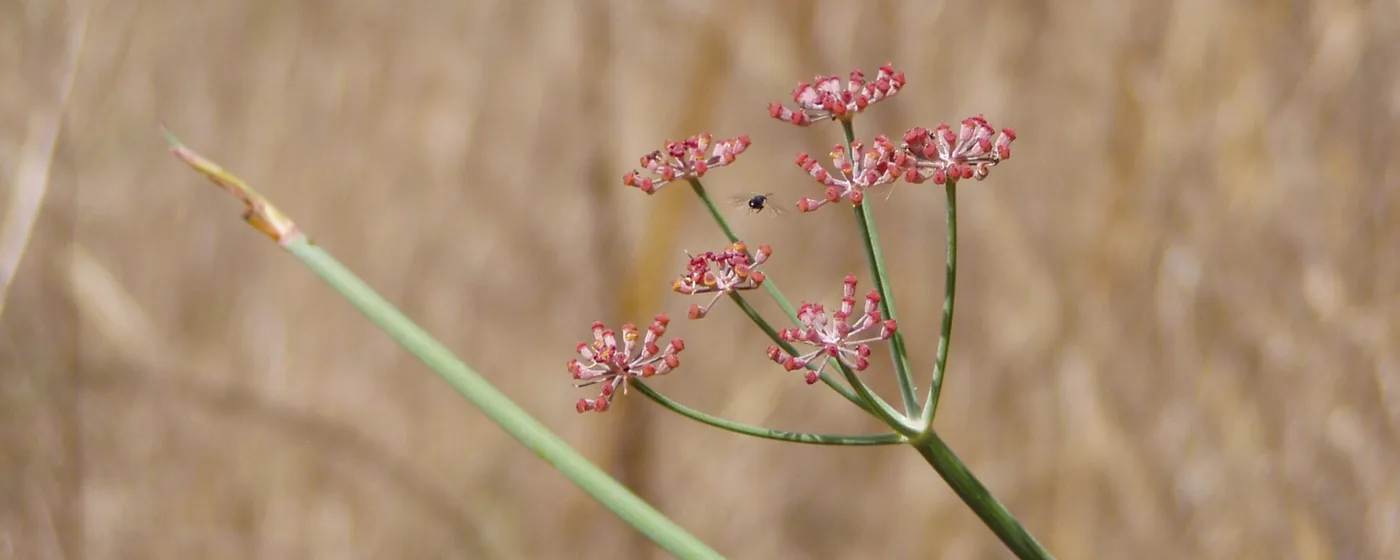
Fennel tea is an infusion of the dried seeds of Foeniculum vulgare, a feathery plant in the carrot family that grows wild around the Mediterranean and has naturalized on roadsides worldwide. Botanically the seeds are tiny fruits, the same ones you find in Italian sausage and in the bowl of mukhwas at an Indian restaurant. The tea is naturally caffeine-free.
The flavor arrives first: sweet, warm, unmistakably licorice-like, with a clean anise finish and almost no bitterness. That comes mostly from anethole, the aromatic compound fennel shares with anise and star anise. Fennel is not related to licorice root, though, and contains no glycyrrhizin, the compound behind licorice root's effects on blood pressure and potassium. Whole seeds give a thin, pale cup; crushing them first is what makes the difference. Fennel also takes a long steep without turning bitter, which is unusual.
Traditionally fennel is a carminative, an after-dinner herb for gas, bloating, and a heavy stomach, and that is still why most people reach for it. The research is more modest than the marketing. The best-studied use is period pain, where small randomized trials and two meta-analyses suggest fennel preparations may reduce cramp intensity, though a Cochrane review judged that evidence low quality and most trials used capsules rather than tea. For bloating itself, the case is essentially traditional: plausible mechanism, no good human trial. Fennel also contains estragole, which is genotoxic in rodents, a good reason to treat fennel tea as an occasional pleasure rather than an all-day habit, and to keep it away from babies unless a pediatrician says otherwise.
Photo: Foeniculum vulgare seeds.jpg by Júlio Reis (Tintazul) — CC BY-SA 2.5. Cropped and re-encoded.
What the evidence says
Fennel preparations may reduce the pain of primary dysmenorrhea (period cramps)
A 2020 meta-analysis of 12 randomized trials found fennel relieved menstrual pain about as well as conventional drug therapy (7 trials, 502 women), and better than placebo, though that comparison was extremely heterogeneous with likely publication bias. A Cochrane review rated this evidence low or very low quality, finding no consistent fennel benefit over placebo in the one small trial (43 women) it analyzed. Nearly all of these trials were conducted in Iran, in students or adolescents, and they mostly used concentrated capsules or extracts, not brewed tea.
A standardized fennel seed oil emulsion reduced infant colic in one trial
In a randomized placebo-controlled trial of 125 infants aged 2 to 12 weeks, a fennel seed oil emulsion eliminated colic by Wessel criteria in 65% of treated infants versus 24% on placebo. An overview of 16 systematic reviews called fennel promising for colic, but most underlying reviews had a high or unclear risk of bias. This was a dosed, manufactured emulsion, not homemade tea. See the safety section before giving fennel in any form to a baby.
A capsule combining curcumin and fennel essential oil improved IBS symptoms in one trial
In a 30-day double-blind trial, 121 adults with mild-to-moderate IBS took curcumin plus fennel essential oil or placebo; symptom severity fell about 50% versus 26%, and more became symptom-free (25.9% vs 6.8%). A systematic review noted this combination has one positive rigorous trial and has never been replicated. The capsule contained curcumin too, so it says nothing about fennel tea alone.
Fennel extract may ease menopausal symptoms, based on small, short trials of capsules
In a triple-blind trial, 90 postmenopausal women in Tehran took 100 mg fennel capsules twice daily or placebo for eight weeks, and Menopause Rating Scale scores fell significantly in the fennel group. A phytoestrogen meta-analysis listed fennel among plants linked to improved sexual function, drawing on very few trials. These are small single-region studies of capsules, and fennel's estrogen-like activity is why hormone-sensitive conditions warrant a doctor's input.
Fennel tea is traditionally taken after meals for gas, bloating, and a heavy stomach
Fennel is a classic carminative in Mediterranean, European, and Persian herbal traditions, and reviews of its traditional and modern use catalog that history, including fennel infusions given for flatulence and colic spasm. The usual mechanistic explanation is that anethole and related compounds calm gut smooth muscle, which has been described in laboratory and animal work rather than in people. No good human trial has tested plain fennel tea for bloating or functional dyspepsia.
Fennel is traditionally used to increase breast milk supply, but human evidence is thin and inconsistent
NIH's LactMed database summarizes small studies with conflicting results. Some report modest increases in milk volume or in serum prolactin; others find no difference from placebo, and a survey of nursing women found most were not convinced it helped. A double-blind trial of a nursing tea containing fennel, anise, coriander, and fenugreek enrolled 60 breastfeeding women who were not short of milk; it was designed to test safety rather than milk production, and found no adverse effects in mothers or infants.
Sources: [12]
How to brew Fennel Tea
Crush the seeds with the back of a spoon so the oil glands break open. Pour fully boiling water over them, cover the cup, and steep 5 to 10 minutes. Strain and drink warm.
- Crush, don't pulverize. Coarsely broken seeds give a rounder cup; powder makes it silty.
- Keep a lid on while it steeps. Anethole is volatile and leaves with the steam.
- Use water at a full boil, not merely hot. Dried seeds are a raw agricultural product and are not sterile.
- Fennel essential oil is far more concentrated than tea and isn't meant to be swallowed. Swallowing it has been linked to a seizure in a person with epilepsy. Brew the seeds.
Safety, side effects & who should avoid it
For most healthy adults, an occasional cup of fennel tea is well tolerated. The real cautions are its mild estrogen-like activity, carrot-family allergy, estragole, and the fact that dried seeds are not a sterile product.
Who should avoid it
- Infants and young children, unless a pediatrician says otherwise. Case reports describe premature breast development in girls under two given fennel regularly; it regressed after stopping. Separately, an outbreak investigation traced Salmonella Senftenberg infections in infants to fennel seed tea.
- Anyone allergic to the carrot family (Apiaceae): celery, carrot, anise, caraway, coriander, dill. Mugwort or birch pollen allergy raises the risk.
- People with hormone-sensitive conditions, such as estrogen-receptor-positive breast cancer, endometriosis, or uterine fibroids, because anethole has weak estrogenic activity.
- People with epilepsy or a seizure disorder should avoid fennel essential oil. A case report describes a generalized tonic-clonic seizure in a woman whose epilepsy had been well controlled, after she ate cakes made with fennel essential oil; the authors recommended people with epilepsy avoid the oil. Nothing similar has been reported for brewed tea, which is far more dilute, but the oil is worth steering clear of.
- People who are pregnant should avoid medicinal amounts of fennel tea.
Possible side effects
- Allergic reactions, from itchy mouth and hives to, rarely, anaphylaxis.
- Skin and photosensitivity reactions. Fennel contains 5-methoxypsoralen (bergapten), a psoralen, and psoralens as a class can make skin more sensitive to sunlight. Reports are uncommon and mostly involve concentrated preparations or handling the plant rather than drinking tea.
- Nausea or stomach upset, particularly from strong infusions.
- Foodborne illness. Dried fennel seed is not sterile; an outbreak investigation in Serbia linked Salmonella Senftenberg infections in infants to fennel seed tea. Brewing with fully boiling water reduces this risk but is one more reason not to give fennel tea to babies.
- Through breast milk: a 1994 case report described two newborns, 15 and 20 days old, who became lethargic and floppy, vomited, and fed poorly after their mothers drank more than two liters a day of a herbal tea. That tea contained licorice, fennel, anise, and goat's rue, so fennel cannot be singled out as the cause. Both infants recovered within 24 to 36 hours once the tea and breastfeeding were stopped.
Medication interactions
- Ciprofloxacin, and possibly other fluoroquinolones: in rats, fennel extract cut peak ciprofloxacin levels by 83%. The likely mechanism is mineral chelation, since the fennel extract was rich in metal cations. There is no human data; separate tea and antibiotic by a couple of hours.
- Drugs cleared by CYP3A4: 5-methoxypsoralen isolated from fennel inactivates CYP3A4 in human liver microsomes, so fennel could in theory raise levels of some statins, calcium channel blockers, and immunosuppressants. This has not been shown in people at tea doses.
- Antiseizure medicines: fennel essential oil has been linked to a breakthrough seizure in someone whose epilepsy was otherwise controlled on treatment. Avoid the oil, and mention the tea to your neurologist.
- Tamoxifen, aromatase inhibitors, and hormone therapy: theoretical interference from fennel's weak estrogenic activity. Ask your oncologist.
- Anticoagulants and antiplatelet drugs: reviews report antithrombotic activity in the lab, nothing clinical. Tell your prescriber.
Pregnancy & breastfeeding
Medicinal amounts during pregnancy have not been studied, and fennel has weak estrogen-like activity, so reviews advise against it; talk to your doctor. While breastfeeding, a controlled trial of a fennel-containing nursing tea found no adverse effects, but the newborn case report above means moderation matters. LactMed also advises nursing mothers to avoid fennel if they or their infants are allergic to carrot, celery, or other plants in the Apiaceae family.
How much is too much
No established limit. Trials used concentrated capsules, not tea. One to three cups a day is a common traditional amount for adults. Because fennel contains estragole, which is genotoxic and carcinogenic in rodents, and estragole-related hemoglobin adducts rise in volunteers drinking fennel tea for four weeks, treat it as an occasional drink, not a lifelong daily habit. Some reviewers push back, arguing that other compounds in a whole fennel decoction blunt estragole's activity and that the risk from ordinary tea has been overstated. That argument is not settled either way.
Taste & pairing
Tasting notes: Licorice-like, Sweet, Aromatic.
Pairs well with: Mediterranean dishes, Light desserts, Honey.
Best time to drink: After meals or when experiencing digestive discomfort.
Frequently asked questions
How long should I steep fennel tea?
Five to ten minutes in freshly boiled water, with a lid on the cup. The flavor lives in volatile oils locked inside the seed, so crush the seeds first. Fennel doesn't turn harsh with a long steep, so if a cup tastes thin, steep longer rather than adding seeds.
When is the best time to drink fennel tea?
Traditionally twenty to thirty minutes after a meal, the classic carminative pattern. It's caffeine-free, so an evening cup won't keep you up. This rests on custom, not trials.
How many cups of fennel tea can I drink a day?
No established safe limit; one to three cups a day is a common traditional amount for adults. But fennel contains estragole, which is genotoxic and carcinogenic in rodents. In volunteers who drank fennel tea, researchers could measure estragole-related hemoglobin adducts in blood and a reactive estragole metabolite in urine. Nobody has shown this harms people at tea doses, and nobody has shown it doesn't.
Can I give fennel tea to my baby for colic?
Not on your own. One randomized trial found a standardized fennel seed oil emulsion reduced colic, but that was a measured, manufactured dose. Separately, pediatricians have reported babies developing breast tissue after months of regular fennel tea, which regressed once stopped, and an outbreak investigation linked Salmonella infections in infants to fennel seed tea. Ask your pediatrician.
Fennel tea or peppermint tea for bloating?
Peppermint has the better evidence: enteric-coated peppermint oil has been tested in repeated randomized trials in IBS and holds up in meta-analysis, which puts it in a small group of herbal preparations, alongside aloe vera and asafoetida, whose positive trials have been replicated. Fennel's use for gas is largely traditional. Peppermint does worsen heartburn in some people, so if reflux is your main problem fennel may sit better, though the two have never been compared head to head.
References
- Fennel for Reducing Pain in Primary Dysmenorrhea: A Systematic Review and Meta-Analysis of Randomized Controlled Trials.. Nutrients, 2020. PubMed 33182553 · doi:10.3390/nu12113438
- Dietary supplements for dysmenorrhoea.. The Cochrane database of systematic reviews, 2016. PubMed 27000311 · doi:10.1002/14651858.CD002124.pub2
- Efficacy of herbal medicine (cinnamon/fennel/ginger) for primary dysmenorrhea: a systematic review and meta-analysis of randomized controlled trials.. The Journal of international medical research, 2020. PubMed 32603204 · doi:10.1177/0300060520936179
- Comparison of the effectiveness of fennel and mefenamic acid on pain intensity in dysmenorrhoea.. Eastern Mediterranean health journal, 2006. PubMed 17037712
- The effect of fennel (Foeniculum Vulgare) seed oil emulsion in infantile colic: a randomized, placebo-controlled study.. Alternative therapies in health and medicine, 2003. PubMed 12868253
- An overview of systematic reviews of complementary and alternative therapies for infantile colic.. Systematic reviews, 2019. PubMed 31711532 · doi:10.1186/s13643-019-1191-5
- Curcumin and Fennel Essential Oil Improve Symptoms and Quality of Life in Patients with Irritable Bowel Syndrome.. Journal of gastrointestinal and liver diseases : JGLD, 2016. PubMed 27308645 · doi:10.15403/jgld.2014.1121.252.ccm
- Western herbal medicines in the treatment of irritable bowel syndrome: A systematic review and meta-analysis.. Complementary therapies in medicine, 2019. PubMed 31987249 · doi:10.1016/j.ctim.2019.102233
- Effect of Foeniculum vulgare Mill. (fennel) on menopausal symptoms in postmenopausal women: a randomized, triple-blind, placebo-controlled trial.. Menopause (New York, N.Y.), 2017. PubMed 28509813 · doi:10.1097/GME.0000000000000881
- Effect of phytoestrogens on sexual function in menopausal women: a systematic review and meta-analysis.. Climacteric : the journal of the International Menopause Society, 2018. PubMed 30156931 · doi:10.1080/13697137.2018.1472566
- Medicinal properties of Foeniculum vulgare Mill. in traditional Iranian medicine and modern phytotherapy.. Chinese journal of integrative medicine, 2012. PubMed 23275017 · doi:10.1007/s11655-013-1327-0
- The Safety of Mother's Milk® Tea: Results of a Randomized Double-Blind, Controlled Study in Fully Breastfeeding Mothers and Their Infants.. Journal of human lactation, 2018. PubMed 30005170 · doi:10.1177/0890334418787474
- A striking and frequent cause of premature thelarche in children: Foeniculum vulgare.. Journal of pediatric surgery, 2008. PubMed 18970951 · doi:10.1016/j.jpedsurg.2008.07.027
- Premature thelarche related to fennel tea consumption?. Journal of pediatric endocrinology & metabolism : JPEM, 2014. PubMed 24030028 · doi:10.1515/jpem-2013-0308
- Toxic effects of a herbal tea mixture in two newborns.. Acta paediatrica (Oslo, Norway : 1992), 1994. PubMed 7919774 · doi:10.1111/j.1651-2227.1994.tb13115.x
- Bioactivation of estragole and anethole leads to common adducts in DNA and hemoglobin.. Food and chemical toxicology, 2021. PubMed 34015424 · doi:10.1016/j.fct.2021.112253
- Detection of-Acetyl--[3'-(4-methoxyphenyl)allyl]-l-Cys (AMPAC) in Human Urine Samples after Controlled Exposure to Fennel Tea: A New Metabolite of Estragole and-Anethole.. Chemical research in toxicology, 2019. PubMed 31565931 · doi:10.1021/acs.chemrestox.9b00287
- Alkenylbenzenes in Foods: Aspects Impeding the Evaluation of Adverse Health Effects.. Foods (Basel, Switzerland), 2021. PubMed 34574258 · doi:10.3390/foods10092139
- Can estragole in fennel seed decoctions really be considered a danger for human health? A fennel safety update.. Evidence-based complementary and alternative medicine : eCAM, 2012. PubMed 22899959 · doi:10.1155/2012/860542
- Effect of oral administration of fennel (Foeniculum vulgare) on ciprofloxacin absorption and disposition in the rat.. The Journal of pharmacy and pharmacology, 1999. PubMed 10678493 · doi:10.1211/0022357991777218
- Inhibition on human liver cytochrome P450 3A4 by constituents of fennel (Foeniculum vulgare): identification and characterization of a mechanism-based inactivator.. Journal of agricultural and food chemistry, 2007. PubMed 17988092 · doi:10.1021/jf0713253
- Epileptic seizure induced by fennel essential oil.. Epileptic disorders : international epilepsy journal with videotape, 2011. PubMed 21865126 · doi:10.1684/epd.2011.0451
- Salmonella Senftenberg infections and fennel seed tea, Serbia.. Emerging infectious diseases, 2010. PubMed 20409401 · doi:10.3201/eid1605.091555
- Food allergy and IgE sensitization caused by spices: CICBAA data (based on 589 cases of food allergy).. Allergie et immunologie, 2002. PubMed 12078423
- Spices, herbs and allergic reactions in children: myth or reality - a narrative review with scoping elements.. Frontiers in allergy, 2025. PubMed 41306764 · doi:10.3389/falgy.2025.1698559
Last reviewed and updated . HelperTea is written by an enthusiast, not a clinician, and is not medically reviewed. How we research and rate evidence. Found an error? Tell us — safety corrections get priority.