Short answer
Grate about 1 teaspoon of fresh ginger, or slice 3 to 4 thin coins, per 8 ounces of water. Pour boiling water over it, cover the cup, steep 5 to 10 minutes, then strain. No peeling needed. Honest caveat: no trial has tested brewed ginger tea for bloating, and capsule trials eased no symptoms.
Ginger tea is easy to get right, because the details recipe sites argue over — fresh root versus powder, simmer versus steep, peel or don't — change the flavor far more than anything else. What deserves your attention is the part those sites skip: what ginger does to a bloated gut, and how little of that has been tested as tea.
What does ginger actually do for bloating?
The mechanism everyone cites is prokinetic: ginger appears to speed the stomach's emptying and stimulate the antral contractions that push food out. That has been measured in people, though not many. In a randomized, double-blind crossover trial of 24 healthy volunteers, 1.2 grams of ginger in capsules cut gastric half-emptying time from about 27 minutes to 13 (PubMed). A companion trial in 11 people with functional dyspepsia agreed: roughly 16 minutes down to 12 (PubMed).
Here is the sentence a supplement page will not write. In both trials, the participants' symptoms did not improve. Ginger moved their stomachs; it did not make them feel better. And an older crossover trial in 16 volunteers, using a different measurement method, found 1 gram of powdered ginger did not change gastric emptying at all (PubMed). The evidence here is limited.
Nor is it obvious that emptying faster fixes bloating. In 161 patients with functional dyspepsia, emptying rate did correlate with bloating scores, and those with delayed emptying reported more bloating — but the correlation was weak, r = 0.21 (PubMed). An association in one clinic population is not a lever you can pull.
A fourth study gets quoted a lot: a pilot crossover in 11 healthy volunteers where an artichoke-plus-ginger capsule left the stomach about 24 percent smaller on ultrasound an hour after a meal than placebo (PubMed). That is a measurement of gastric area, not of how bloated anyone felt. It says little about ginger tea either: two herbs, healthy people rather than bloated ones, eleven participants, and a corresponding author whose contact address belongs to the company selling the product.
Above all, every ginger trial named here used capsules, not tea. No published randomized trial has tested brewed ginger tea for bloating, and a cup delivers an unmeasured, probably smaller amount. That is why ginger sits second rather than first among the teas ranked for bloating, and why the ginger tea page rates the gastric-emptying evidence limited.
Fresh ginger root, ground powder, or a tea bag?
For flavor, the three are genuinely different. For bloating, nobody has compared them head to head, in any form.
| Form | Amount per 8 oz | Tastes like | What's known |
|---|---|---|---|
| Fresh rhizome | 1 tsp grated, or 3–4 thin coins | Bright, juicy, hot at the back of the throat | Highest in gingerols. Untested as tea. |
| Ground dried powder | 1/2 tsp | Hotter, flatter, a little dusty | Closest to what trials used, but they used weighed capsules. |
| Tea bag | 1 bag | Mild, sometimes barely gingery | A small, usually unlabeled quantity of ginger. |
The chemistry behind the taste difference is documented. Fresh ginger is dominated by gingerols; drying converts some into shogaols, which are sharper. An analysis of commercially processed dry ginger found gingerols slightly reduced and shogaols increased relative to fresh (PubMed). A study of three cultivars found ordinary drying changed the profile only modestly, while heat processing altered many more compounds (PubMed). None of that is evidence about bloating. It is evidence about molecules.
How much ginger root do you need per cup?
About a teaspoon of freshly grated ginger, or three to four thin coins, per 8 ounces of water. Half a teaspoon of dried powder. One bag.
Do not try to reverse-engineer a research dose. The trials used 1 to 1.2 grams of standardized powder in capsules, weighed on a scale. Piling more root into a mug does not turn tea into a capsule; it turns it into something spicier. Heartburn is one of ginger's most commonly reported side effects — a strange irony for a drink taken to settle the stomach.
Should you simmer the ginger or just steep it?
Steeping is the default. Bring water to a full boil, pour it over the ginger, cover the cup, and leave it 5 to 10 minutes before straining. The lid matters: the aromatic oils are volatile and otherwise drift off with the steam.
Simmering slices for 10 to 15 minutes gives a stronger, spicier cup. It does not give a more medicinal one, and nobody has measured whether it does. What has been measured is that heat drives the gingerol-to-shogaol conversion: in a laboratory extraction study, drying and extracting ginger at 80 °C produced roughly seven times more 6-shogaol than freeze-drying and extracting at room temperature (PubMed). That was a lab solvent extraction, not a saucepan, and nobody has shown a shogaol-heavier cup does more for a bloated stomach. Simmer because you like it stronger.
Do you have to peel ginger for tea?
No. Scrub it and slice it thin. Thin slicing matters more than peeling, because cut surface is what the water extracts from. Peel it if the skin is thick, shriveled, or grubby. There is no health argument either way.
Should you add lemon and honey?
Lemon cuts the burn. Honey rounds it out. Neither has been shown to do anything for bloating.
One honest caution: honey may be working against you. It is high in free fructose, and fructose intolerance is common in exactly this group. Among 763 patients evaluated for unexplained gas, bloating, and abdominal pain, 34 percent had a positive fructose breath test (PubMed). If your tea leaves you gassier, try it plain before blaming the ginger. Separately: never give honey to a baby under one year old, per MedlinePlus's botulism guidance.
Ginger tea or peppermint tea for bloating?
If you had to bet on one, bet on peppermint. Bet small.
| Ginger tea | Peppermint tea | |
|---|---|---|
| What the evidence supports | Limited. Capsules sped gastric emptying in two small trials but improved no symptoms; a third found no effect at all. The tea is untested. | Limited for tea. Peppermint oil capsules, usually enteric-coated, beat placebo for IBS symptoms in two meta-analyses (PubMed, PubMed). Those trials measured IBS symptoms, not bloating alone, and the tea is untested. |
| How fast it acts | Unstudied. Capsule trials dosed ginger an hour before a meal. | Unstudied. Responders typically describe relief within 20 to 40 minutes. Habit, not trial data. |
| Taste | Hot, peppery, warming | Cooling, clean, slightly sweet |
| Caffeine | None | None |
| Who should avoid it | Anyone on an anticoagulant or antiplatelet drug, or with a bleeding disorder, without asking a prescriber; people with gallstones; anyone whose reflux flares with spicy food; anyone facing surgery | People with GERD, frequent heartburn, or a hiatal hernia — peppermint relaxes the lower esophageal sphincter, and heartburn was the most commonly reported adverse event in the oil trials (PubMed); anyone allergic to mint |
Two footnotes. Peppermint's advantage rests on oil capsules, not a bag in a mug, and a 2025 umbrella review graded even the capsule evidence low to very low certainty (PubMed). And fennel tea, the classic after-dinner carminative, has no direct trial support either: its best positive study combined fennel essential oil with curcumin in a capsule (PubMed).
When ginger tea is the wrong choice
NCCIH lists abdominal discomfort, heartburn, diarrhea, and mouth and throat irritation among ginger's side effects when it is taken by mouth; bloating and gas are commonly reported too. A drink taken to settle the gut can unsettle it. If reflux or gastritis flares with spicy food, ginger is a poor first pick — and peppermint tea a poor second, because peppermint relaxes the lower esophageal sphincter, the valve that keeps stomach acid out of the esophagus. Heartburn was the most commonly reported adverse event in the peppermint oil trials.
Fennel or chamomile sit better with a sour stomach, with two caveats of their own. Chamomile is in the same plant family as ragweed, chrysanthemums, marigolds, and daisies, and NCCIH notes that people allergic to those are more likely to react to it; rare anaphylaxis has been reported. And interactions between chamomile and warfarin have been reported, so if you are avoiding ginger because of a blood thinner, chamomile is not an automatic substitute — ask the same prescriber.
Talk to your prescriber before drinking ginger tea daily if you take warfarin or another anticoagulant. A randomized crossover trial in 12 healthy men found recommended ginger doses left INR and platelet aggregation unchanged (PubMed), but a case report describes an INR of 10, with nosebleeds, in a woman on phenprocoumon who had started ginger products (PubMed). The same conversation is worth having if you take an antiplatelet drug such as aspirin or clopidogrel, take a direct oral anticoagulant, or have a bleeding disorder: ginger constituents inhibit platelet aggregation in laboratory studies, so an additive bleeding risk is plausible but unproven. An occasional cup is very unlikely to matter. A daily habit deserves a conversation, as does the run-up to surgery or dental work.
In pregnancy, ginger's best-supported use is nausea, not bloating: a network meta-analysis rated the evidence for ginger in pregnancy nausea moderate quality, the only intervention it graded that highly (PubMed). Those trials generally used about a gram of powdered ginger a day, not tea. Raise it with your doctor or midwife rather than self-treating.
Finally, do not quietly drink tea for months while something goes unexamined. Bloating is common — in one community survey of 177 adults on the US–Mexico border, about half reported bloating or distension (PubMed) — but bloating on most days for three weeks or more needs prompt evaluation, especially in women over 50, and especially with pelvic pain, early fullness, or urinary changes. Bloating with abdominal pain, blood in the stool, vomiting, fever, or weight loss is a doctor's problem, not a kettle's.
The bottom line
Grate a teaspoon of fresh ginger into a mug, pour boiling water over it, put a lid on, wait five to ten minutes, strain. Skip the peeler. Add lemon; think twice about honey. Simmer longer if you want it hotter, not because it works better. Drink it because a spicy, caffeine-free cup after dinner is pleasant — not because anyone has shown it deflates a bloated stomach. Nobody has.
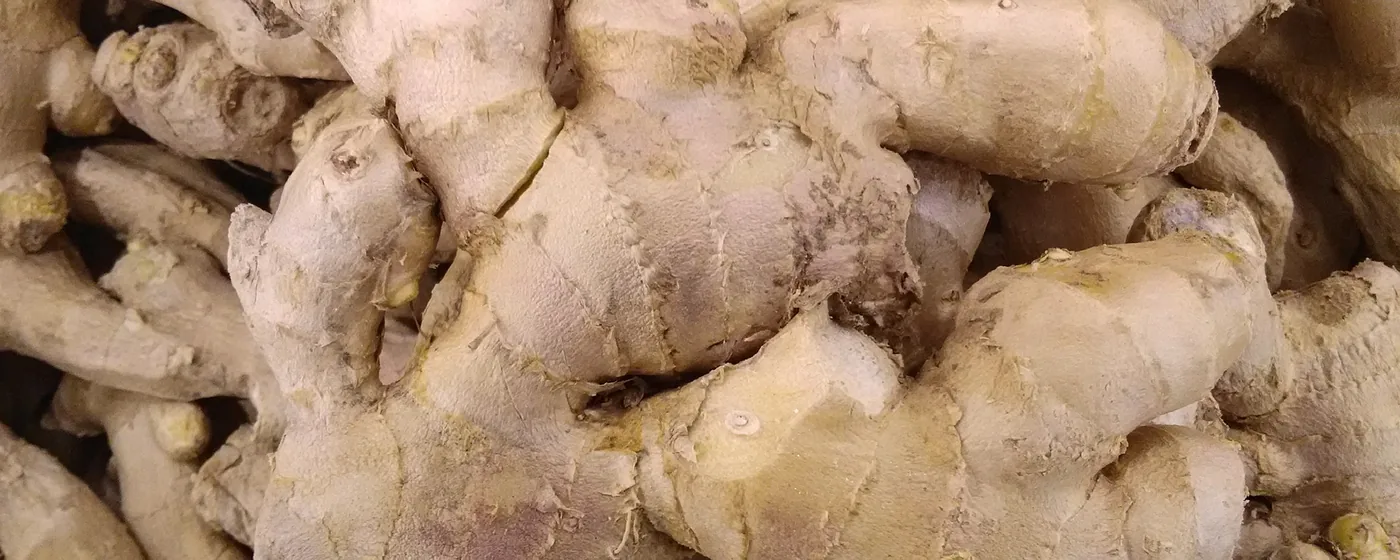
Photo: Zingiber officinale (Zingiberaceae).jpg by Filo gèn' — CC BY-SA 4.0. Cropped and re-encoded.
Frequently asked questions
How long does ginger tea take to work for bloating?
Nobody has measured it, because no trial has tested the tea. In the capsule studies, ginger was swallowed about an hour before a meal and the stomach was tracked for the following 90 minutes. If a cup is going to do anything noticeable for you, expect it inside an hour. If a week or two of trying changes nothing, the cause of your bloating is probably not something tea can reach.
Should you drink ginger tea before or after a meal?
The trials dosed ginger roughly an hour before food, which is when a prokinetic effect would matter most. Traditional carminative practice is the opposite: a cup twenty to thirty minutes after eating. No study has compared the two, so pick whichever you will actually do. If you are prone to reflux, avoid drinking it right before lying down.
Can you reuse ginger slices for a second cup of tea?
Yes, and the second cup will be weaker. Fresh coins still hold plenty after a five-minute steep, so a second infusion, or a longer simmer, pulls more out. There is no health consequence either way. Don't leave a wet infusion sitting on the counter all day; strain it and refrigerate the tea instead.
Can you make a batch of ginger tea and refrigerate it?
Yes. Simmer sliced ginger in a pot of water, strain, cool it promptly, and keep it covered in the fridge for a few days, the same way you would treat any cooked food. Reheat it or drink it cold. Chilled ginger tea is worth knowing about if the smell of a hot mug makes you feel more nauseated, which some people find.
Can ginger tea cause bloating and gas?
It can. Abdominal discomfort, bloating, and gas sit on ginger's documented side-effect list, alongside heartburn, diarrhea, and mouth or throat irritation. A strong brew is genuinely spicy. If a cup reliably makes things worse, dilute it, drink it with food, or stop. Check whether the honey is the culprit before you blame the ginger.
Is it safe to drink ginger tea every day?
There is no established limit, and nobody has studied ginger by the cup; research used 0.5 to 2 grams of powder daily, most often about 1 gram. Two or three cups a day is an ordinary habit, unlikely to trouble a healthy adult. Heartburn, loose stools, or mouth irritation are the signal to cut back. Ask a clinician first if you take an anticoagulant or antiplatelet drug, have a bleeding disorder or gallstones, or have surgery coming up.
References
- Effects of ginger on gastric emptying and motility in healthy humans.. European journal of gastroenterology & hepatology, 2008. PubMed 18403946 · doi:10.1097/MEG.0b013e3282f4b224
- Effect of ginger on gastric motility and symptoms of functional dyspepsia.. World journal of gastroenterology, 2011. PubMed 21218090 · doi:10.3748/wjg.v17.i1.105
- Zingiber officinale does not affect gastric emptying rate. A randomised, placebo-controlled, crossover trial.. Anaesthesia, 1993. PubMed 8317647 · doi:10.1111/j.1365-2044.1993.tb07011.x
- Relationship between symptom pattern, assessed by the PAGI-SYM questionnaire, and gastric sensorimotor dysfunction in functional dyspepsia.. Neurogastroenterology and motility, 2009. PubMed 19663903 · doi:10.1111/j.1365-2982.2009.01374.x
- The effect of ginger (Zingiber officinalis) and artichoke (Cynara cardunculus) extract supplementation on gastric motility: a pilot randomized study in healthy volunteers.. European review for medical and pharmacological sciences, 2016. PubMed 26813467
- Commercially processed dry ginger (Zingiber officinale): composition and effects on LPS-stimulated PGE2 production.. Phytochemistry, 2005. PubMed 15996695 · doi:10.1016/j.phytochem.2005.05.007
- Effect of drying and processing on diterpenes and other chemical constituents of ginger.. Journal of natural medicines, 2022. PubMed 36209453 · doi:10.1007/s11418-022-01652-z
- Optimization of Extraction Conditions for the 6-Shogaol-rich Extract from Ginger (Zingiber officinale Roscoe).. Preventive nutrition and food science, 2012. PubMed 24471079 · doi:10.3746/pnf.2012.17.2.166
- Diagnostic Utility of Carbohydrate Breath Tests for SIBO, Fructose, and Lactose Intolerance.. Digestive diseases and sciences, 2019. PubMed 31617133 · doi:10.1007/s10620-019-05889-9
- The impact of peppermint oil on the irritable bowel syndrome: a meta-analysis of the pooled clinical data.. BMC complementary and alternative medicine, 2019. PubMed 30654773 · doi:10.1186/s12906-018-2409-0
- Peppermint oil for the treatment of irritable bowel syndrome: a systematic review and meta-analysis.. Journal of clinical gastroenterology, 2014. PubMed 24100754 · doi:10.1097/MCG.0b013e3182a88357
- Nutritional Interventions in Adult Patients With Irritable Bowel Syndrome: An Umbrella Review of Systematic Reviews and Meta-analyses of Randomized Clinical Trials.. Nutrition reviews, 2025. PubMed 39110917 · doi:10.1093/nutrit/nuae107
- Curcumin and Fennel Essential Oil Improve Symptoms and Quality of Life in Patients with Irritable Bowel Syndrome.. Journal of gastrointestinal and liver diseases : JGLD, 2016. PubMed 27308645 · doi:10.15403/jgld.2014.1121.252.ccm
- Effect of ginkgo and ginger on the pharmacokinetics and pharmacodynamics of warfarin in healthy subjects.. British journal of clinical pharmacology, 2005. PubMed 15801937 · doi:10.1111/j.1365-2125.2005.02322.x
- Ginger-associated overanticoagulation by phenprocoumon.. The Annals of pharmacotherapy, 2003. PubMed 14742762 · doi:10.1345/aph.1D225
- Interventions for treating nausea and vomiting in pregnancy: a network meta-analysis and trial sequential analysis of randomized clinical trials.. Expert review of clinical pharmacology, 2018. PubMed 30261764 · doi:10.1080/17512433.2018.1530108
- Disorders of Gut-brain Interaction on the US-Mexico Border: A Survey Using Rome IV Criteria.. Journal of clinical gastroenterology, 2024. PubMed 37267460 · doi:10.1097/MCG.0000000000001858
Last reviewed and updated . HelperTea is written by an enthusiast, not a clinician, and is not medically reviewed. How we research and rate evidence. Found an error? Tell us — safety corrections get priority.