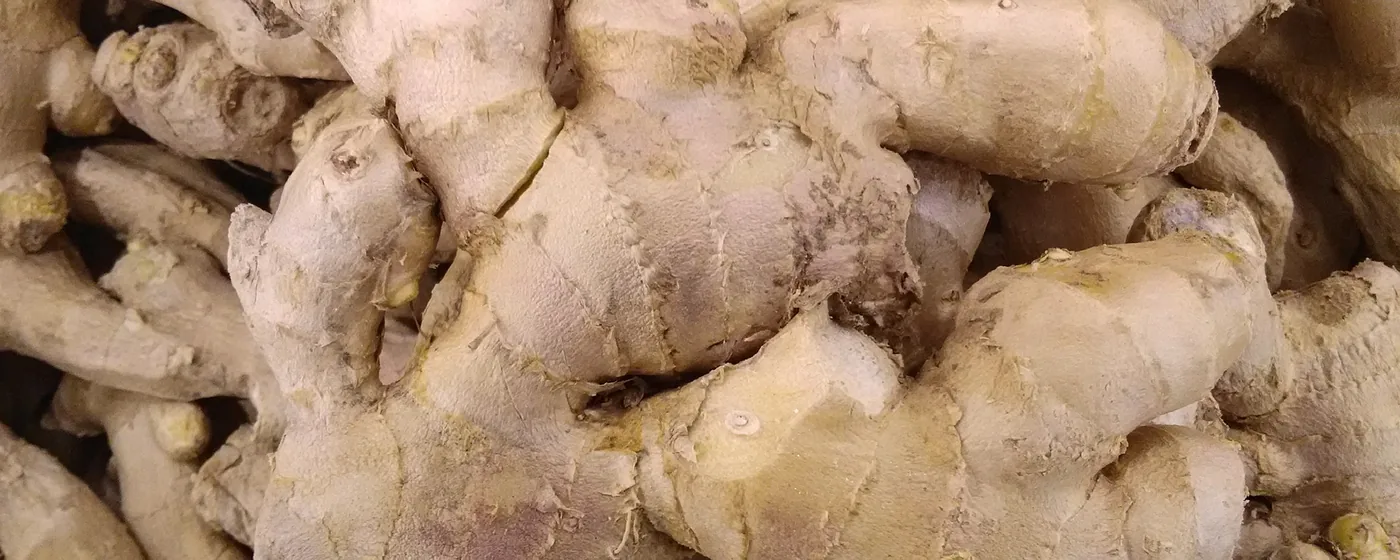
Ginger tea is an infusion made from the knobby underground stem of Zingiber officinale, a plant native to Southeast Asia that has traveled trade routes for thousands of years. Botanically it is a rhizome, not a root, though almost everyone calls it ginger root. You can brew it from a fresh knob, from dried slices, from ground powder, or from a tea bag. All are caffeine-free, and all taste noticeably different from one another.
The flavor is unmistakable: hot and peppery at the back of the throat, warming rather than sharp, with a faint sweetness underneath. Most of that heat comes from gingerols in the fresh rhizome. Drying or cooking converts some gingerols into shogaols, which are more pungent, which is why powdered ginger tea often tastes more aggressive than tea made from a fresh knob. Lemon cuts the burn, honey rounds it out, and it stands up well to spicy food and Asian cooking.
People reach for ginger tea for a long list of reasons, and the evidence behind those reasons is uneven. Nausea is where it holds up best: reviews of randomized trials suggest ginger may ease nausea in early pregnancy, though its effect on vomiting is less consistent. There is supportive trial evidence for menstrual cramps, but those trials are mostly small and carry a meaningful risk of bias. For chemotherapy nausea, post-surgical nausea, motion sickness, and joint pain, the studies are smaller, mixed, or poorly designed. One caveat applies to all of it. Almost every trial used capsules of standardized ginger powder, usually half a gram to two grams a day, not tea. A brewed cup delivers an unmeasured and probably smaller amount. So it is fair to say ginger tea may help with nausea. It is not fair to say anyone has established how many cups that would take.
Photo: Zingiber officinale (Zingiberaceae).jpg by Filo gèn' — CC BY-SA 4.0. Cropped and re-encoded.
What the evidence says
Ginger may reduce nausea and vomiting in early pregnancy
A network meta-analysis of 42 randomized trials found ginger lowered nausea scores versus placebo and improved vomiting control, grading the ginger evidence moderate quality, the only intervention rated that highly. A Cochrane review of 37 trials in 5,049 women was more cautious, calling the ginger data limited and inconsistent. A 2023 meta-analysis agreed ginger beat placebo on nausea ratings but not on vomiting. Trials used roughly 1 gram of powdered ginger daily, not tea.
Ginger may modestly ease nausea after surgery or during chemotherapy, but it does not replace prescribed anti-nausea medicine
Two 2021 meta-analyses, pooling 14 trials each (1,506 and 1,417 patients), both found ginger lowered postoperative nausea scores compared with placebo. They disagreed on rescue anti-emetic use: one found less of it, the other found no difference. Neither found a clear reduction in vomiting. A Cochrane review of cesarean sections concluded it is uncertain whether ginger makes any difference at all, rating that evidence very low certainty. For chemotherapy, a review of 23 randomized trials found no overall effect on nausea, and only one subgroup, taking no more than 1 gram daily for more than four days, had less acute vomiting. A smaller meta-analysis of five trials in breast cancer patients did report reduced chemotherapy nausea and vomiting.
Ginger may help with menstrual cramps
A 2024 review pooled 12 trials and found ginger reduced period pain intensity more than placebo (standardized mean difference -1.13) and slightly shortened how long it lasted. Trials comparing ginger directly with NSAIDs found no statistically significant difference, but those comparisons were small and were not designed to show that ginger works as well, so they cannot establish that it does. Heterogeneity between trials was high (I-squared 81%), many carried a meaningful risk of bias, and safety data were rarely reported. The review's authors called the risk-benefit ratio unclear. All the trials used capsules, not tea.
Sources: [9]
Whether ginger prevents motion sickness is unresolved
In a double-blind crossover trial, 13 volunteers given 1 to 2 grams of ginger before a spinning visual stimulus had less nausea, a delayed onset, and blunted disturbances in stomach electrical rhythm. A later study of 184 travelers reported lower motion-sickness scores, but it was open-label with no control group. NCCIH's summary states that most studies of ginger for motion sickness have not shown it to be helpful.
Evidence that ginger relieves knee osteoarthritis pain is weak
Ginger compounds are described as anti-inflammatory in laboratory work, which is the usual rationale offered for joint pain. In people it barely registers: a 2020 meta-analysis of four trials found oral ginger beat placebo by roughly 8 mm on a 100 mm pain scale, and its authors called the evidence poor quality and insufficient. An earlier review of three trials found ibuprofen outperformed ginger.
One small trial found ginger sped up stomach emptying, though the people in it did not feel any better
In a randomized double-blind crossover study of 11 people with functional dyspepsia, 1.2 grams of ginger cut median gastric half-emptying time from about 16 minutes to about 12 minutes. It did not improve their symptoms or change gut hormone levels, and the study did not measure nausea. Eleven participants is very few, so treat this as a mechanism hint, not proof that ginger tea fixes indigestion, and not an explanation of how it might affect nausea.
Sources: [14]
Ginger tea is traditionally used for colds, sore throats, and feeling chilled
Ginger with lemon and honey is standard home cold care across many cultures, and both traditional Chinese medicine and Ayurveda class ginger as a warming herb. We found no good human clinical trials testing ginger tea against colds, flu, or immune function. Any hot drink soothes a raw throat on its own. Drink it because it makes you feel better, not because it will shorten a cold.
No published human clinical trials found for this use.
How to brew Ginger Tea
Bring water to a full boil and pour it straight over the ginger. Cover the cup while it steeps, since the aromatic oils are volatile and otherwise drift off with the steam. Steep 5 to 10 minutes, strain, and finish with lemon or honey.
- Fresh ginger brews brighter; dried and powdered ginger brews hotter, because drying converts some gingerols into sharper shogaols.
- Simmering slices for 10 to 15 minutes makes a spicier cup, not a more medicinal one. Nobody has measured that.
- Peeling is optional. Scrub, then slice thin: more cut surface means more extraction.
- A tea bag holds a small, usually unlabeled amount of ginger. Tea is a poor way to reproduce research doses.
Safety, side effects & who should avoid it
For most healthy adults, ginger tea is a low-risk drink. Ginger is generally recognized as safe (GRAS) for use as a food and spice, and NIH's LiverTox database found no reports of liver injury across more than 100 clinical trials, rating ginger an unlikely cause of liver damage. LiverTox does note one case, in Japan, of a woman who developed liver injury while taking a commercial botanical product said to contain ginger; the product was never analyzed, so what caused it is unknown. Two things are worth watching: heartburn, and a possible interaction with blood thinners. Keep in mind that GRAS status covers ginger as a food, not concentrated supplements, and that ginger supplements are not checked by the FDA for potency or purity before they are sold.
Who should avoid it
- Anyone taking warfarin, phenprocoumon, or another anticoagulant should avoid concentrated ginger supplements and clear daily ginger tea with their prescriber.
- People with a bleeding disorder, or on antiplatelet drugs such as aspirin or clopidogrel, until a clinician signs off.
- Anyone with surgery or dental work coming up. Many surgical teams ask patients to stop herbal supplements, ginger included, beforehand. Ask yours.
- People with gallstones or bile duct obstruction should ask a doctor first. Ginger is traditionally used to stimulate bile flow; this caution is precautionary rather than well studied.
- Anyone whose reflux or gastritis reliably flares with spicy food, and anyone who has reacted allergically to ginger.
- Anyone with severe, persistent, or newly unexplained nausea and vomiting should get it looked at rather than self-treat. In pregnancy, being unable to keep fluids down, losing weight, or vomiting many times a day can mean hyperemesis gravidarum, which needs medical care. Vomiting with severe abdominal or chest pain, blood in the vomit, a recent head injury, or signs of dehydration is an urgent problem, not a tea problem.
Possible side effects
- Heartburn and acid reflux, the most commonly reported effect
- Abdominal discomfort, bloating, and gas
- Diarrhea, and occasionally constipation
- Mouth and throat irritation, especially from strong or powdered brews
- In one open-label study of ginger extract capsules, about 13 percent of participants reported treatment-related adverse events, mostly gastrointestinal
Medication interactions
- Warfarin and other vitamin K antagonists: evidence conflicts. An open-label randomized crossover trial in 12 healthy men found recommended ginger doses left INR, platelet aggregation, warfarin clearance, and CYP2C9 activity unchanged. But a case report describes a 76-year-old woman on phenprocoumon whose INR climbed to 10, with nosebleeds, after she began ginger products; it normalized once she stopped. Tea-sized amounts are unlikely to matter, supplements might, and your prescriber should know either way.
- Antiplatelet drugs (aspirin, clopidogrel) and direct oral anticoagulants: no good human trials exist. Ginger constituents inhibit platelet aggregation in laboratory studies, so an additive bleeding risk is plausible but unproven.
- Nifedipine: a review of ginger drug interactions cites a human report that ginger plus nifedipine inhibited platelet aggregation more than either alone, which points toward more bleeding, not less. The finding has not been replicated. If you take a calcium channel blocker, mention regular ginger supplement use to your pharmacist.
- Diabetes medications: a meta-analysis of five randomized trials in type 2 diabetes found no significant pooled effect of ginger on fasting glucose or HbA1c, though two individual trials showed reductions. A dangerous drop in blood sugar therefore looks unlikely. Still, if you take insulin or a sulfonylurea, where low blood sugar is a real risk, tell your prescriber before you start taking ginger supplements daily, and keep monitoring as usual.
- Drugs cleared by CYP2C9 and CYP3A4: a molecular docking and modeling study predicted ginger components could inhibit these enzymes. That is a computer prediction, not a documented clinical interaction, but worth mentioning to a pharmacist.
Pregnancy & breastfeeding
Early-pregnancy nausea is ginger's best-supported use, and NCCIH states that ginger use during pregnancy may be safe. In a Norwegian cohort of 68,522 pregnancies, the 1,020 women who used ginger showed no increased risk of congenital malformations, stillbirth or perinatal death, preterm birth, low birth weight, or low Apgar score. That is reassuring, but an observational cohort is not a randomized safety trial. Pregnancy trials generally used about 1 gram of powdered ginger a day for a few days to a few weeks; larger amounts and longer use have not been studied. Very little is known about ginger while breastfeeding. Talk to your doctor or midwife before using it regularly, especially near your due date or if you take an anticoagulant. And if you cannot keep food or fluids down, are losing weight, or are vomiting many times a day, see a clinician instead of self-treating.
How much is too much
No established limit for ginger tea; no trial has tested it by the cup. Trials of powdered ginger generally used 0.5 to 2 grams a day, most often about 1 gram, for days to weeks. Two or three cups of tea daily is a common habit unlikely to harm a healthy adult, but that is a judgment about ordinary use, not a tested safe dose.
Taste & pairing
Tasting notes: Spicy, Warming, Slightly sweet, Pungent.
Pairs well with: Lemon, Honey, Asian cuisine, Spicy foods.
Best time to drink: Morning or when feeling nauseous.
Frequently asked questions
How long should I steep ginger tea?
Five to ten minutes in freshly boiled water, covered. Longer steeping pulls out more pungent compounds, so a ten-minute cup bites harder than a five-minute one. For something stronger, simmer the slices 10 to 15 minutes instead. Steep time is a matter of taste; no study ties it to a health outcome.
How many cups of ginger tea can I drink a day?
There is no established upper limit, and nobody has studied ginger by the cup. Research uses capsules, typically 0.5 to 2 grams of powder daily. Two or three cups is a common habit, unlikely to trouble a healthy adult. Heartburn, loose stools, or mouth irritation are your signal to cut back.
When is the best time to drink ginger tea for nausea or morning sickness?
Trials that found a benefit spread about a gram of ginger across the day rather than giving it all at once, so sipping small amounts through the day is more faithful to the evidence than one big mug. Some people with pregnancy nausea find the smell of hot tea is itself a trigger and do better with it cooled. If you are pregnant, raise it with your doctor or midwife rather than self-treating, and get medical help rather than reaching for tea if you cannot keep fluids down, are losing weight, or are vomiting many times a day.
Is fresh ginger tea better than powdered ginger or a tea bag?
Better tasting, arguably. Better for you, unknown, since no trial has compared them head to head for any health outcome. Fresh ginger is higher in gingerols and brews brighter; drying converts some into shogaols, so powdered tea tastes hotter. A tea bag holds a small, unlabeled amount.
Can I drink ginger tea if I take a blood thinner?
Ask your prescriber first. A randomized crossover trial in 12 healthy men found recommended ginger doses did not affect INR or platelet aggregation, but a published case report describes over-anticoagulation and nosebleeds on phenprocoumon after ginger was added. An occasional cup is very unlikely to matter; daily concentrated ginger deserves a conversation, as does the run-up to surgery.
Does ginger tea cause heartburn?
It can. Heartburn and reflux are the most commonly reported side effects, along with abdominal discomfort, bloating, gas, diarrhea, and mouth or throat irritation. That is an odd irony for a drink people take to settle the stomach, but a strong ginger brew is genuinely spicy. If it burns, dilute it, drink it with food, or stop.
References
- Interventions for treating nausea and vomiting in pregnancy: a network meta-analysis and trial sequential analysis of randomized clinical trials.. Expert review of clinical pharmacology, 2018. PubMed 30261764 · doi:10.1080/17512433.2018.1530108
- Interventions for nausea and vomiting in early pregnancy.. The Cochrane database of systematic reviews, 2014. PubMed 24659261 · doi:10.1002/14651858.CD007575.pub3
- The efficacy and safety of complementary and alternative medicine in the treatment of nausea and vomiting during pregnancy: A systematic review and meta-analysis.. Frontiers in public health, 2023. PubMed 36969661 · doi:10.3389/fpubh.2023.1108756
- The preventive and relieving effects of ginger on postoperative nausea and vomiting: A systematic review and meta-analysis of randomized controlled trials.. International journal of nursing studies, 2021. PubMed 34700257 · doi:10.1016/j.ijnurstu.2021.104094
- Efficacy of Ginger in Preventing Postoperative Nausea and Vomiting: A Systematic Review and Meta-Analysis.. Journal of nursing scholarship : an official publication of Sigma Theta Tau International Honor Society of Nursing, 2021. PubMed 34312974 · doi:10.1111/jnu.12691
- Interventions for preventing nausea and vomiting in women undergoing regional anaesthesia for caesarean section.. The Cochrane database of systematic reviews, 2021. PubMed 34002866 · doi:10.1002/14651858.CD007579.pub3
- Effects of Ginger Intake on Chemotherapy-Induced Nausea and Vomiting: A Systematic Review of Randomized Clinical Trials.. Nutrients, 2022. PubMed 36501010 · doi:10.3390/nu14234982
- Efficacy and Safety of Ginger on the Side Effects of Chemotherapy in Breast Cancer Patients: Systematic Review and Meta-Analysis.. International journal of molecular sciences, 2022. PubMed 36232567 · doi:10.3390/ijms231911267
- Ginger for Pain Management in Primary Dysmenorrhea: A Systematic Review and Meta-Analysis.. Journal of integrative and complementary medicine, 2024. PubMed 38770631 · doi:10.1089/jicm.2023.0799
- Effects of ginger on motion sickness and gastric slow-wave dysrhythmias induced by circular vection.. American journal of physiology. Gastrointestinal and liver physiology, 2003. PubMed 12576305 · doi:10.1152/ajpgi.00164.2002
- Clinical Evaluation of the Use of Ginger Extract in the Preventive Management of Motion Sickness.. Current therapeutic research, clinical and experimental, 2020. PubMed 32714473 · doi:10.1016/j.curtheres.2020.100591
- Effectiveness of Ginger on Pain and Function in Knee Osteoarthritis: A PRISMA Systematic Review and Meta-Analysis.. Pain physician, 2020. PubMed 32214292
- The clinical effectiveness of Ginger (Zingiber Officinale) in adults with osteoarthritis.. JBI library of systematic reviews, 2008. PubMed 27819836 · doi:10.11124/01938924-200806080-00001
- Effect of ginger on gastric motility and symptoms of functional dyspepsia.. World journal of gastroenterology, 2011. PubMed 21218090 · doi:10.3748/wjg.v17.i1.105
- Safety of ginger use in pregnancy: results from a large population-based cohort study.. European journal of clinical pharmacology, 2012. PubMed 22706624 · doi:10.1007/s00228-012-1331-5
- Effect of ginkgo and ginger on the pharmacokinetics and pharmacodynamics of warfarin in healthy subjects.. British journal of clinical pharmacology, 2005. PubMed 15801937 · doi:10.1111/j.1365-2125.2005.02322.x
- Ginger-associated overanticoagulation by phenprocoumon.. The Annals of pharmacotherapy, 2003. PubMed 14742762 · doi:10.1345/aph.1D225
- The effect of oral supplementation of ginger on glycemic control of patients with type 2 diabetes mellitus - A systematic review and meta-analysis.. Clinical nutrition ESPEN, 2024. PubMed 39053695 · doi:10.1016/j.clnesp.2024.07.011
- Estimation of the binding modes with important human cytochrome P450 enzymes, drug interaction potential, pharmacokinetics, and hepatotoxicity of ginger components using molecular docking, computational, and pharmacokinetic modeling studies.. Drug design, development and therapy, 2015. PubMed 25733806 · doi:10.2147/DDDT.S74669
Last reviewed and updated . HelperTea is written by an enthusiast, not a clinician, and is not medically reviewed. How we research and rate evidence. Found an error? Tell us — safety corrections get priority.