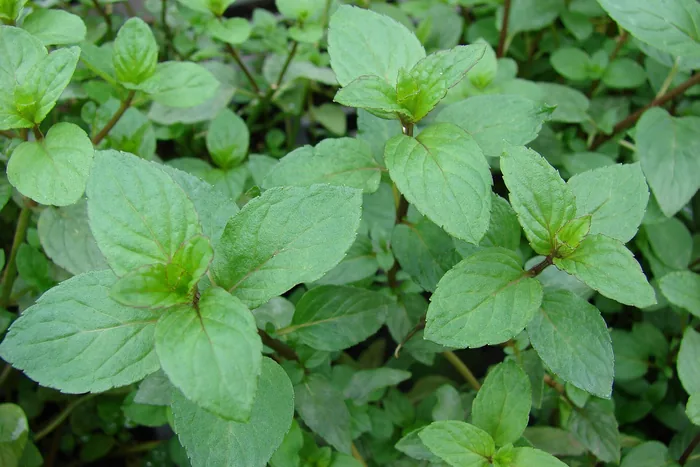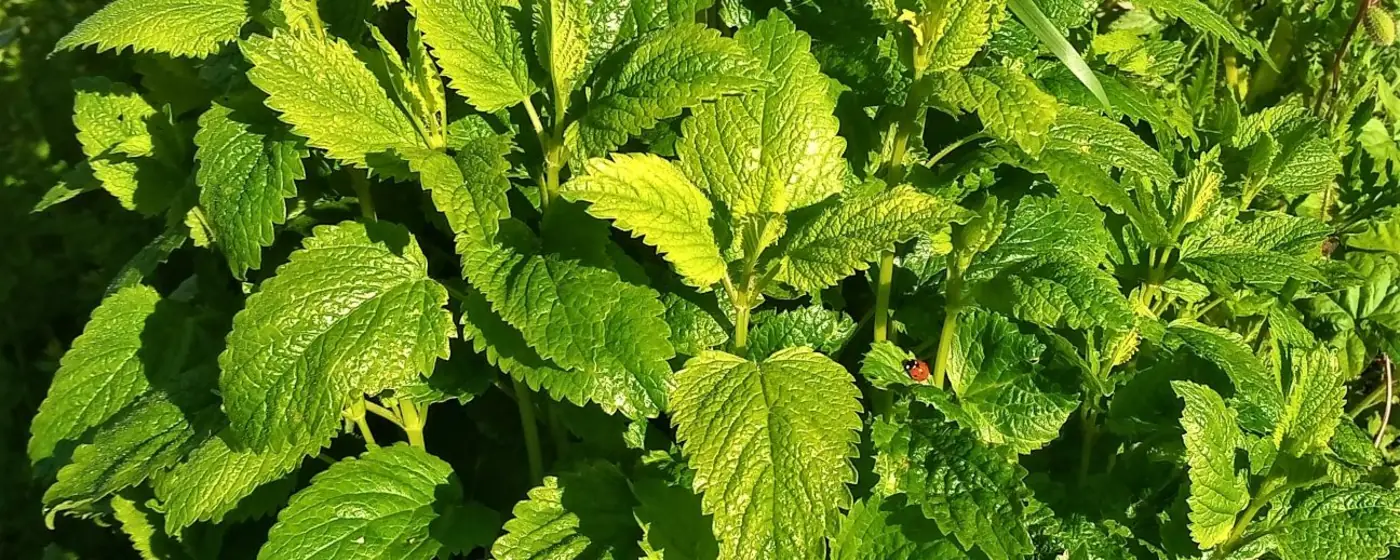
Lemon balm (Melissa officinalis) is a soft-leaved perennial in the mint family, grown around the Mediterranean and across Europe for well over a thousand years. Crush a leaf and it smells like lemon zest with something green underneath: citronellal, geranial, and neral, the aromatic compounds in its volatile oil. Brewed, it makes a pale gold cup that tastes gently lemony and faintly minty, without the sourness of real citrus or the cold bite of peppermint. It is caffeine-free, which is why it turns up in so many evening blends.
People reach for lemon balm to take the edge off. European herbalists have used it as a mild calming herb since at least the Middle Ages, mostly for nervousness, restlessness, trouble winding down, and an unsettled stomach. Modern research has found a signal, but the honest summary is narrower than most tea packaging suggests. Almost every trial used concentrated capsule extracts rather than tea, most enrolled fewer than a hundred people, and several came from the same handful of research centers. The clearest signal, and it is a modest one, is short-term calm.
What lemon balm tea is not is a sedative in the pharmaceutical sense, a treatment for an anxiety disorder, or a memory aid. One of the crossover trials most often cited for its calming effect also found that memory scores slipped at some doses. A cup delivers far less active compound than the capsules used in studies, so whatever you notice is likely to be mild. It suits most people, but it can make you drowsy and dull your alertness, and lab findings are a reason to talk to your doctor first if you have thyroid disease. Read the safety notes before you make it a habit.
Photo: Lemon balm plant.jpg by Amitchell125 — CC BY-SA 4.0. Cropped and re-encoded.
What the evidence says
A standardized lemon balm extract may produce a mild, short-lived sense of calm during stress.
Eighteen healthy volunteers, double-blind crossover: a single 600 mg dose raised self-rated calmness during a 20-minute lab stress task. An earlier crossover in 20 adults also saw calmness rise, but only at the lowest dose (300 mg), only at the earliest time points, and alongside lower scores on working and secondary memory. So the two trials point the same direction without agreeing on the dose. Both used concentrated extract, not tea. Rosmarinic acid isolated from lemon balm inhibits GABA transaminase in a test-tube assay, and an extract reduced anxiety-like behavior in mice. Suggestive, not proof.
Lemon balm supplements may modestly reduce self-reported anxiety and depressive symptoms in people with a chronic illness.
In 80 adults with chronic stable angina, 3 g daily for eight weeks lowered depression, anxiety, and stress scores versus placebo. In 60 adults with type 2 diabetes and depressive symptoms, 700 mg daily for 12 weeks improved depression and anxiety scores, though only 44 finished. Both were small, single-center trials resting on self-report questionnaires, and neither has been replicated.
Lemon balm may help with sleep, but the evidence is mixed and does not clearly apply to tea.
The results split. A placebo-controlled crossover of a high-bioavailability lemon balm phytosome cut Insomnia Severity Index scores by 2.9 points versus placebo. That formulation exists precisely because lemon balm's polyphenols absorb poorly, so ordinary tea may not deliver enough. The angina trial also reported less total sleep disturbance, while the 12-week diabetes trial found no change in sleep quality at all. No trial has tested the tea.
One small trial suggests a lemon balm extract may reduce the frequency of benign heart palpitations.
A double-blind trial gave 500 mg of freeze-dried leaf extract twice daily for 14 days; of 71 people recruited, 55 completed, and the extract group reported fewer episodes per week. One short single-center study, all outcomes self-reported, in people whose doctors had already told them their palpitations were harmless. Get palpitations checked by a doctor rather than treating them with tea.
Sources: [8]
Lemon balm capsules may ease premenstrual symptoms, on thin evidence.
One placebo-controlled trial randomized 100 high-school students; the 50 who took 1200 mg daily across three cycles saw mean symptom scores fall from 42.6 to 13.9. A small nursing journal, an unclear placebo trajectory, and no replication. Not a reason to expect relief.
Sources: [9]
Lemon balm is traditionally used for indigestion, gas, and mild stomach cramping.
One of the herb's oldest recorded uses, and why it appears in after-dinner blends with fennel and chamomile. Essentially no controlled trials test lemon balm alone for adult digestion. A Cochrane review found one 93-infant study of a combined fennel, chamomile, and lemon balm extract that cut daily crying time, but graded the evidence on infant colic diets very low certainty and declined to recommend any intervention. Never give an infant herbal tea without a pediatrician's approval.
Sources: [10]
How to brew Lemon Balm Tea
Boil the water, then let it stand a minute off the heat so it lands near 200°F rather than a scorching 212°F. Pour over the leaf and cover the cup right away: the aroma lives in volatile oils that leave with the steam. Steep 5 to 7 minutes, then strain.
- Cover it while it steeps; that keeps the aroma in the cup.
- Many people prefer fresh leaf to dried; bruise the leaves before pouring.
- If seven minutes tastes bitter, drop to four rather than adding sugar.
Safety, side effects & who should avoid it
Lemon balm tea suits most healthy adults, and short trials reported few side effects; NIH's LiverTox database rates it an unlikely cause of liver injury. The cautions that matter: drowsiness and dulled alertness, a lab-based thyroid concern, interactions with sedatives and diabetes drugs, and no pregnancy data at all.
Who should avoid it
- Anyone with thyroid disease: hypothyroidism, hyperthyroidism, or Graves'. Lab studies published in Endocrinology found freeze-dried lemon balm extracts blocked bovine thyroid-stimulating hormone (TSH) from binding to human thyroid membranes, and blunted the thyroid-stimulating antibodies found in Graves' disease. Those were test-tube experiments, and there is no human data on tea. Clear it with your doctor.
- People taking sedatives, sleep medications, or other CNS depressants, unless a clinician has cleared it.
- People taking insulin, sulfonylureas, or other blood-sugar-lowering drugs, unless your care team knows and is monitoring you.
- Anyone facing surgery or anesthesia. Tell your surgical team, and consider stopping two weeks beforehand.
- People allergic to mint-family (Lamiaceae) plants: mint, sage, oregano, basil.
- Infants and young children, unless a pediatrician approves. Pediatric dosing is not established.
- People who are pregnant or trying to conceive, pending a talk with a doctor.
- People with glaucoma should ask their eye doctor before using concentrated lemon balm products or its volatile oil. The concern is theoretical, traced to mid-century animal experiments on citral, one of lemon balm's aroma compounds, and human reports have not agreed. Nobody has studied the tea.
Possible side effects
- Drowsiness and reduced alertness. In one crossover trial, self-rated alertness fell significantly at every measured time point after a 900 mg extract dose.
- Dulled thinking. That same trial found working memory and secondary memory scores dropped at some doses. Do not drive or operate machinery until you know how lemon balm affects you, and especially not alongside alcohol or a sedative.
- Nausea, vomiting, abdominal pain, dizziness, and wheezing, reported occasionally per NIH LactMed.
- Headache, dizziness, and bloating in small trials, per NIH LiverTox, often at similar rates in the placebo groups.
- Allergic reactions, including rash, in people sensitive to mint-family plants.
- Most reported effects come from concentrated extracts taken for weeks, not occasional tea.
Medication interactions
- Sedatives and CNS depressants: benzodiazepines, zolpidem, barbiturates, opioids, alcohol. Lemon balm's mild sedative effect may add to theirs. This is the interaction most likely to affect you.
- Thyroid medications, including levothyroxine, methimazole, and propylthiouracil. The concern is theoretical and comes from in-vitro work using bovine TSH on human thyroid membranes, but interference with TSH binding could unsettle a titrated dose. Ask your prescriber.
- Diabetes medications, with a risk of blood sugar dropping too low. A 12-week trial in 62 people with type 2 diabetes found 700 mg daily of lemon balm extract lowered fasting blood sugar and HbA1c versus placebo; a second 12-week trial found no change in fasting blood sugar. Monitor your levels and tell your care team.
- Human interaction data are thin, and no cytochrome P450 interactions are documented in people. An absent interaction is not proof of safety.
Pregnancy & breastfeeding
There is no reliable human safety data on lemon balm in pregnancy, so nobody knows; avoid medicinal amounts until you talk to your doctor or midwife. For breastfeeding, NIH LactMed reports no data on whether any component passes into breast milk and no data on safety in nursing infants. It does note that lemon balm has been used in infants alongside other herbs without reported harm, and judges the amounts expected in milk at usual maternal doses unlikely to be harmful. That is a reasonable expectation, not evidence.
How much is too much
No established upper limit. Trials used concentrated extract capsules, not tea: 300 to 900 mg single doses, 500 mg twice daily for two weeks, 700 mg daily for 12 weeks, or 3 g daily for eight weeks. None ran beyond three months, so long-term safety is unstudied, and no trial has tested the tea at any dose. Most people drink one to three cups a day.
Taste & pairing
Tasting notes: Lemony, Light, Minty undertones, Refreshing.
Pairs well with: Honey, Lemon cookies, Light salads, Fish dishes.
Best time to drink: Evening or during periods of stress.
Frequently asked questions
How long should I steep lemon balm tea?
Five to seven minutes, covered, in water around 200°F (93°C). Covering matters more than exact timing: the lemon scent lives in volatile oils that escape with the steam.
When is the best time to drink lemon balm tea?
Evening, for most people. It is caffeine-free, and both the mild calming effect and the drowsiness reported in trials point to the end of the day. The stress trials gave a single dose and tracked effects over the following one to six hours, so an afternoon cup is fine too. Just don't plan on driving right after your first one.
How many cups of lemon balm tea can I drink a day?
One to three cups is customary, and no upper limit has been established. The trials that found effects used concentrated capsules delivering far more active compound than tea.
Does lemon balm tea make you sleepy?
It can. In a crossover study, self-rated alertness dropped significantly after a 900 mg dose of standardized extract. Tea contains far less, so the effect is subtle, but drowsiness adds to sedatives and alcohol.
Lemon balm or chamomile for sleep?
Neither has strong evidence for sleep, so the choice is mostly taste. Both have been studied mainly as concentrated extracts rather than as tea, which is what you would actually be drinking. Persistent insomnia deserves a doctor.
Is lemon balm tea safe if I have a thyroid condition or take levothyroxine?
Ask your doctor first. Lab studies in Endocrinology (1984, 1985) showed freeze-dried lemon balm extracts block bovine thyroid-stimulating hormone from binding to human thyroid membranes, and blunt the stimulating antibodies of Graves' disease. Those were test-tube experiments, and no human study shows tea changes thyroid hormone levels. Still, a titrated dose is not one to add variables to.
References
- Attenuation of laboratory-induced stress in humans after acute administration of Melissa officinalis (Lemon Balm).. Psychosomatic medicine, 2004. PubMed 15272110 · doi:10.1097/01.psy.0000132877.72833.71
- Modulation of mood and cognitive performance following acute administration of Melissa officinalis (lemon balm).. Pharmacology, biochemistry, and behavior, 2002. PubMed 12062586 · doi:10.1016/s0091-3057(02)00777-3
- Bioassay-guided fractionation of lemon balm (Melissa officinalis L.) using an in vitro measure of GABA transaminase activity.. Phytotherapy research : PTR, 2009. PubMed 19165747 · doi:10.1002/ptr.2712
- Effects of chronic administration of Melissa officinalis L. extract on anxiety-like reactivity and on circadian and exploratory activities in mice.. Phytomedicine : international journal of phytotherapy and phytopharmacology, 2010. PubMed 20171069 · doi:10.1016/j.phymed.2010.01.012
- The effects of Melissa officinalis supplementation on depression, anxiety, stress, and sleep disorder in patients with chronic stable angina.. Clinical nutrition ESPEN, 2018. PubMed 29908682 · doi:10.1016/j.clnesp.2018.04.015
- The effects of melissa officinalis on depression and anxiety in type 2 diabetes patients with depression: a randomized double-blinded placebo-controlled clinical trial.. BMC complementary medicine and therapies, 2023. PubMed 37131158 · doi:10.1186/s12906-023-03978-x
- Effects of Melissa officinalis Phytosome on Sleep Quality: Results of a Prospective, Double-Blind, Placebo-Controlled, and Cross-Over Study.. Nutrients, 2024. PubMed 39683592 · doi:10.3390/nu16234199
- Heart palpitation relief with Melissa officinalis leaf extract: double blind, randomized, placebo controlled trial of efficacy and safety.. Journal of ethnopharmacology, 2015. PubMed 25680840 · doi:10.1016/j.jep.2015.02.007
- Effect of Melissa officinalis Capsule on the Intensity of Premenstrual Syndrome Symptoms in High School Girl Students.. Nursing and midwifery studies, 2015. PubMed 26339667 · doi:10.17795/nmsjournal27001
- Dietary modifications for infantile colic.. The Cochrane database of systematic reviews, 2018. PubMed 30306546 · doi:10.1002/14651858.CD011029.pub2
- Efficacy of Melissa officinalis L. (lemon balm) extract on glycemic control and cardiovascular risk factors in individuals with type 2 diabetes: A randomized, double-blind, clinical trial.. Phytotherapy research : PTR, 2018. PubMed 30548118 · doi:10.1002/ptr.6254
- Inhibition by certain plant extracts of the binding and adenylate cyclase stimulatory effect of bovine thyrotropin in human thyroid membranes.. Endocrinology, 1984. PubMed 6745167 · doi:10.1210/endo-115-2-527
- Extracts and auto-oxidized constituents of certain plants inhibit the receptor-binding and the biological activity of Graves' immunoglobulins.. Endocrinology, 1985. PubMed 2985357 · doi:10.1210/endo-116-5-1687
Last reviewed and updated . HelperTea is written by an enthusiast, not a clinician, and is not medically reviewed. How we research and rate evidence. Found an error? Tell us — safety corrections get priority.