Short answer
Yes, it can. Peppermint is a widely reported heartburn trigger, and heartburn was the most commonly reported side effect in peppermint oil trials. No trial has tested the tea, so that evidence is indirect. If you get frequent reflux, skip it. Enteric-coated oil capsules are different: the coating carries the oil past the stomach.
Peppermint leads an odd double life. Peppermint oil, in capsules, is one of the few herbal preparations with randomized-trial support for irritable bowel syndrome — support that reviewers grade as low certainty. Peppermint also sits on nearly every gastroenterologist’s list of things to cut if you get heartburn. Both are true, because what was tested is not what is in your mug.
If you have reflux, the advice is short: peppermint tea is a plausible trigger, it has never been shown to help reflux, and you lose nothing by switching for a few weeks to see what happens.
Why does peppermint tea give me heartburn?
Start with what is documented. In a meta-analysis of nine randomized trials covering 726 patients with IBS, enteric-coated peppermint oil outperformed placebo, and heartburn was the single most commonly reported adverse event (PubMed). An earlier review of 16 trials in 651 patients described peppermint oil’s side effects the same way: typical gut effects, heartburn among them, mild and transient but very specific to the drug (PubMed). For the oil, then, the heartburn signal rests on multiple human randomized trials. Call that tier moderate.
Now notice the gap. Those trials tested capsules. No randomized trial has ever given peppermint tea to people with reflux, so the evidence that the brewed tea worsens GERD is limited: it rests on the oil trials, on the leaf carrying the same volatile oil in a smaller and unmeasured amount, and on decades of people saying so. Capsule trials cannot prove the tea works; capsule side effects cannot prove the tea harms.
NCCIH is blunt on both halves: peppermint oil taken alone may worsen indigestion in some people, and there is not enough evidence to determine whether peppermint leaf is useful for any health condition. More on our peppermint tea page.
Does peppermint really relax the lower esophageal sphincter?
This is the explanation you will read everywhere, including on handouts from good hospitals. The lower esophageal sphincter (LES) is a ring of smooth muscle where the esophagus meets the stomach; it stays shut to keep acid down. Menthol relaxes smooth muscle in the lab, and peppermint oil placed directly into the duodenum of healthy volunteers relaxed stomach and duodenal muscle (PubMed). Line those up and the story writes itself: peppermint loosens the valve, acid comes up.
The trouble is that when researchers have measured the sphincter directly in people, it has not budged.
- In a double-blind randomized crossover trial, healthy volunteers got a high dose of spearmint, a flavoring dose, or placebo. LES pressure did not change; neither did reflux episodes on pH monitoring. Six reported symptoms on the high dose anyway, which the authors put down to direct irritation of the lining (PubMed).
- Infusing menthol into the esophagus during high-resolution manometry left basal LES pressure and relaxation pressure unchanged in 18 healthy adults, though it did lower upper-esophageal-sphincter pressure and damp secondary peristalsis (PubMed). Repeated in 11 GERD patients and 13 healthy volunteers, menthol infusion changed no manometry measure except distal latency at one swallow volume — though the GERD patients found the infusion markedly more uncomfortable (PubMed).
- In eight patients with diffuse esophageal spasm who swallowed a peppermint oil solution during esophageal manometry, sphincter pressures before and after were no different. That was an uncontrolled before-and-after study in eight people, with no placebo (PubMed).
The paper usually cited for the sphincter claim appeared in 1969, titled The action of a carminative on the lower esophageal sphincter (PubMed). It predates high-resolution manometry and PubMed carries no abstract for it. Whatever it showed, the modern direct tests — all small, and mostly in healthy volunteers — have not reproduced a peppermint effect on sphincter pressure.
So the honest position is awkward. That peppermint produces heartburn-type symptoms in some people has real trial data behind it, from the oil. The mechanism everyone repeats is on thinner ice. Menthol switches on cold-sensing TRPM8 receptors, reported on the nerve endings supplying the esophagus, and an esophagus already sensitized by reflux may register that as burning. It may be a sensation problem more than a plumbing problem. Nobody has settled it. Either way the burning is real.
Why don’t peppermint oil capsules cause the same problem?
Some do. But the capsules used in IBS trials are enteric-coated: wrapped in a polymer that survives stomach acid and dissolves in the higher pH of the small intestine, which is where the antispasmodic effect is wanted anyway. The oil never sits against the lower esophagus or the stomach lining. NCCIH notes that peppermint oil capsules are often enteric-coated to reduce the likelihood of heartburn, and that the American College of Gastroenterology’s 2021 IBS guideline, which recommended peppermint oil for relief of overall IBS symptoms, noted that enteric-coated formulations might help with the acid reflux and indigestion side effects (PubMed). The benefit is modest either way: a 2025 umbrella review graded the certainty of that evidence as low to very low (PubMed).
| Peppermint tea | Enteric-coated peppermint oil capsules | |
|---|---|---|
| What the evidence supports | Nothing. No trial has tested the tea; NCCIH calls the evidence for peppermint leaf insufficient. Traditional after-meal use only. | Modest improvement in IBS symptoms and abdominal pain in meta-analyses of randomized trials; certainty graded low to very low. |
| How fast it acts | Unknown. A hot drink feels soothing within minutes, which is not the same as doing something. | Designed to release hours later, once past the stomach. |
| Taste | Cooling, faintly sweet, peppery finish. Steep 5 to 7 minutes in boiling water, covered. | None, swallowed whole. If the coating fails you may burp menthol. |
| Caffeine | None | None |
| Who should be careful | Anyone with GERD, frequent heartburn, or a hiatal hernia. Anyone allergic to mint or menthol. | Same reflux caution. Ask a pharmacist first if you take antacids, H2 blockers, or PPIs, since they raise stomach pH and can make the coating dissolve early. Herbal monographs also caution against the concentrated oil with gallstones, bile duct obstruction, or significant liver disease. |
What should I drink instead of peppermint tea?
Be realistic: none of these has been shown in a trial to reduce acid reflux. The goal is a warm, caffeine-free drink that does not make things worse. Each still carries its own cautions. Our digestion tea guide covers them in more detail.
- Chamomile. Mild, caffeine-free, no menthol, brewed near 200°F for 3 to 5 minutes. The tier is traditional: no human trials for reflux. Two cautions that matter. Skip it if you react to ragweed, chrysanthemums, daisies, or marigolds — chamomile is in the same family, and NCCIH notes allergic reactions including anaphylaxis. And NCCIH reports interactions between chamomile and warfarin, so if you take an anticoagulant or antiplatelet drug, clear it with your prescriber first. Chamomile has also been reported to raise cyclosporine blood levels.
- Marshmallow root. A demulcent — the mucilage is thought to coat irritated tissue mechanically. The evidence is limited, it is about throats rather than esophagi, and it was not tea: two uncontrolled pharmacy surveys of 822 people using lozenges or syrup of a concentrated root extract, with no placebo group (PubMed). Keep it two hours from other medications, since mucilage can slow absorption.
- Ginger, with two caveats. Ginger has real human trial data, mostly for nausea. One small randomized crossover trial in 11 people with functional dyspepsia found that 1.2 g of ginger, given as capsules, sped gastric emptying — while leaving their symptoms unchanged (PubMed). Nobody has shown that faster emptying reduces reflux. First caveat: heartburn is one of ginger’s commonly reported side effects, per NCCIH, and a strong brew is genuinely spicy. Second: ginger is widely flagged as a possible interaction with warfarin and other blood thinners. The human evidence conflicts, and tea-sized amounts are unlikely to matter, but tell your prescriber if you drink it daily. It is not the safe fallback it is usually sold as.
- Plain warm water. Free, caffeine-free, and the least likely of these to make anything worse.
Two things to avoid. Never add peppermint essential oil to a drink: it is a concentrated extract, not a flavoring, and swallowing it undiluted is a poisoning risk. And be wary of licorice root tea, often recommended for reflux. Real licorice contains glycyrrhizin, which can raise blood pressure and lower blood potassium with regular use. NCCIH links glycyrrhizin to irregular heartbeat and cardiac arrest, especially in large amounts or over the long term, and notes that even small amounts have caused severe effects in people with high blood pressure, heart or kidney conditions, or a high-salt diet. Deglycyrrhizinated licorice (DGL) has the glycyrrhizin taken out and is a different product.
Will cutting out peppermint fix my acid reflux?
Probably not on its own, and this is where reflux-diet advice quietly overpromises. One evidence review screened 2,039 studies published between 1975 and 2004 and found only 16 clinical trials of any lifestyle measure for GERD. Its conclusion: although there is physiologic evidence that tobacco, alcohol, chocolate, and high-fat meals lower sphincter pressure, there was no published evidence that dietary measures improve GERD. Only weight loss and raising the head of the bed held up (PubMed).
Dropping a suspected trigger is still worth doing, because it is free and you are the experiment. Treat it as trial and error, not therapy. If heartburn hits more than twice a week, a swapped teabag will not be the answer: proton pump inhibitors remain the medical treatment of choice for GERD in the ACG’s 2022 guideline (PubMed).
When tea is the wrong tool entirely
See a doctor rather than reworking your drinks cabinet if you have trouble swallowing, food sticking, unintended weight loss, vomiting blood or coffee-ground material, black tarry stools, anemia, chest pain, or heartburn starting for the first time after age 50. Frequent heartburn deserves a diagnosis, not a workaround. On pregnancy, briefly: NCCIH says oral peppermint in amounts commonly found in food is likely safe during pregnancy and breastfeeding, while little is known about medicinal amounts. Ask your doctor or midwife, not a website.
The bottom line
Yes, peppermint tea can make acid reflux worse, and if you have GERD it is sensible to drop it. That advice comes from side-effect data in peppermint oil trials, not from any study of the tea, and the sphincter explanation attached to it has not held up in the small studies that tested it directly in people. Here is the distinction vendors blur: the peppermint that helps IBS is a coated capsule engineered to skip your stomach, and a mug of tea is not a weaker version of it. If mint burns, stop drinking mint. If the burning is frequent, see a clinician.
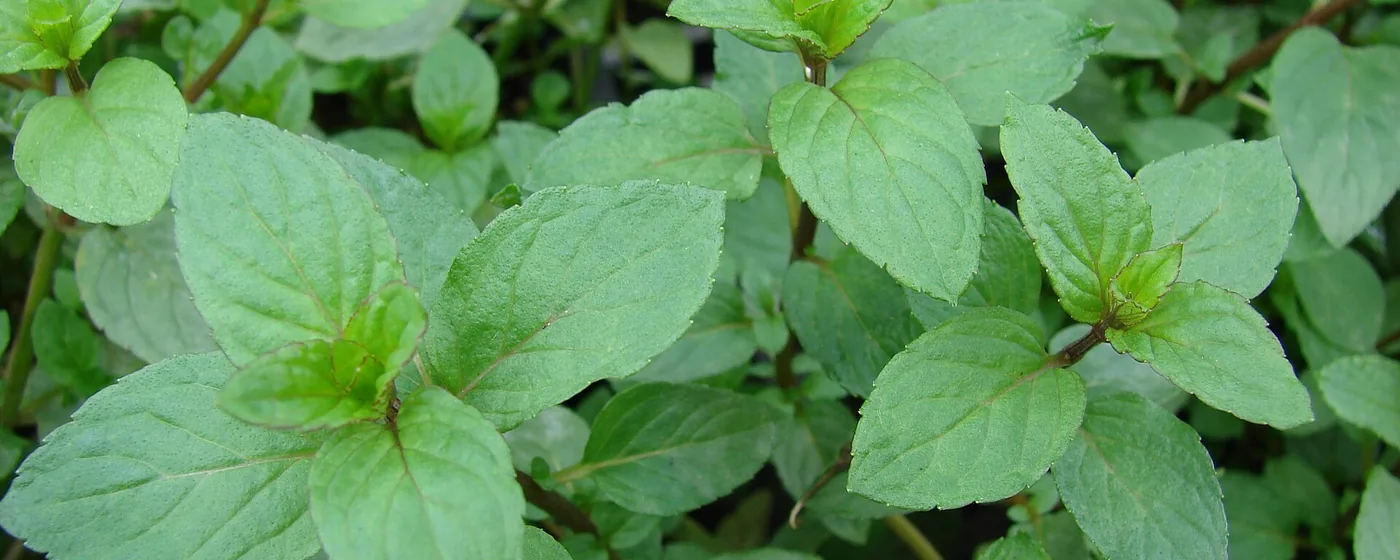
Photo: Starr 070906-8848 Mentha x piperita.jpg by Forest & Kim Starr — CC BY 3.0. Cropped and re-encoded.
Frequently asked questions
Does spearmint tea cause acid reflux the same way peppermint does?
Possibly, and for a different reason than you would expect. In a double-blind randomized crossover trial in healthy volunteers, spearmint at a flavoring dose caused no more symptoms than placebo, and even a high dose left lower esophageal sphincter pressure and reflux episodes unchanged. Six people on the high dose still reported symptoms, which the authors attributed to direct irritation of the lining rather than reflux. So a mint-flavored antacid is unlikely to be the problem; a strong mug of mint tea might be.
Can I drink peppermint tea if I take omeprazole or another PPI?
The tea itself has no known interaction with proton pump inhibitors. The catch is different: if you also take enteric-coated peppermint oil capsules, acid-suppressing drugs raise stomach pH and can make the coating dissolve too early, in the stomach, causing heartburn. That is a capsule problem, not a tea problem. Either way, if you are on a PPI you have reflux worth treating, and peppermint tea is a strange thing to keep drinking.
How long after drinking peppermint tea would heartburn start?
Nobody has measured this, because no trial has tested the tea. Reflux symptoms from a trigger typically show up within the hour, and lying down or bending over soon after drinking makes them likelier. If you want to test peppermint on yourself, drink it upright, in daylight, well away from bedtime, and note what happens over the next couple of hours.
Is iced peppermint tea easier on reflux than hot peppermint tea?
There is no evidence either way. Temperature has not been compared in any reflux trial, and the menthol content does not change when the drink cools. Some people find cold drinks more soothing on a raw esophagus and some find them worse. It is a preference, not a precaution.
Do peppermint candies, gum, or breath mints trigger reflux too?
They are commonly reported as triggers, and they contain the same menthol, but no clinical trial has tested them. Chewing gum after a meal is sometimes suggested as a way to clear acid by producing more saliva, which makes peppermint gum a genuinely mixed case rather than a clear-cut trigger. If a mint reliably brings on burning for you, that observation beats any theory.
Is chamomile tea actually safe for acid reflux, or is that just marketing?
It is unproven, and for most people safe to try. No human trial has tested chamomile for reflux or heartburn, so the evidence tier is traditional. Its virtue here is negative: it contains no menthol, no caffeine, and nothing known to irritate the esophagus. Two cautions. Skip it if you are allergic to ragweed, chrysanthemums, daisies, or marigolds, since chamomile belongs to the same family and NCCIH notes allergic reactions including anaphylaxis. And NCCIH reports interactions between chamomile and warfarin, so ask your prescriber before drinking it if you take a blood thinner.
References
- Peppermint oil for the treatment of irritable bowel syndrome: a systematic review and meta-analysis.. Journal of clinical gastroenterology, 2014. PubMed 24100754 · doi:10.1097/MCG.0b013e3182a88357
- Peppermint oil in irritable bowel syndrome.. Phytomedicine : international journal of phytotherapy and phytopharmacology, 2005. PubMed 16121521 · doi:10.1016/j.phymed.2004.10.005
- Effects of intraduodenal application of peppermint oil (WS(R) 1340) and caraway oil (WS(R) 1520) on gastroduodenal motility in healthy volunteers.. Phytotherapy research : PTR, 2003. PubMed 12601675 · doi:10.1002/ptr.1089
- Lack of effect of spearmint on lower oesophageal sphincter function and acid reflux in healthy volunteers.. Alimentary pharmacology & therapeutics, 1999. PubMed 10383511 · doi:10.1046/j.1365-2036.1999.00528.x
- Effects of menthol on esophageal motility in humans: Studies using high-resolution manometry.. Neurogastroenterology and motility, 2021. PubMed 34520608 · doi:10.1111/nmo.14267
- Esophageal Infusion of Menthol Does Not Affect Esophageal Motility in Patients with Gastroesophageal Reflux Disease.. Dysphagia, 2023. PubMed 37728794 · doi:10.1007/s00455-023-10617-7
- Peppermint oil improves the manometric findings in diffuse esophageal spasm.. Journal of clinical gastroenterology, 2001. PubMed 11418786 · doi:10.1097/00004836-200107000-00007
- The action of a carminative on the lower esophageal sphincter.. Gastroenterology, 1969. PubMed 5765428
- ACG Clinical Guideline: Management of Irritable Bowel Syndrome.. The American journal of gastroenterology, 2021. PubMed 33315591 · doi:10.14309/ajg.0000000000001036
- Nutritional Interventions in Adult Patients With Irritable Bowel Syndrome: An Umbrella Review of Systematic Reviews and Meta-analyses of Randomized Clinical Trials.. Nutrition reviews, 2025. PubMed 39110917 · doi:10.1093/nutrit/nuae107
- [Marshmallow Root Extract for the Treatment of Irritative Cough: Two Surveys on Users' View on Effectiveness and Tolerability].. Complementary medicine research, 2018. PubMed 30064132 · doi:10.1159/000489560
- Effect of ginger on gastric motility and symptoms of functional dyspepsia.. World journal of gastroenterology, 2011. PubMed 21218090 · doi:10.3748/wjg.v17.i1.105
- Are lifestyle measures effective in patients with gastroesophageal reflux disease? An evidence-based approach.. Archives of internal medicine, 2006. PubMed 16682569 · doi:10.1001/archinte.166.9.965
- ACG Clinical Guideline for the Diagnosis and Management of Gastroesophageal Reflux Disease.. The American journal of gastroenterology, 2022. PubMed 34807007 · doi:10.14309/ajg.0000000000001538
Last reviewed and updated . HelperTea is written by an enthusiast, not a clinician, and is not medically reviewed. How we research and rate evidence. Found an error? Tell us — safety corrections get priority.