Short answer
Peppermint is the better first try for crampy, gassy bloating; choose ginger when nausea or post-meal heaviness dominates, or when peppermint triggers heartburn. But neither tea has been tested for bloating. Peppermint's evidence comes from enteric-coated oil capsules, and ginger's capsule trials sped stomach emptying without easing symptoms.
The two teas are not interchangeable, because they do different things to your gut. Menthol, peppermint's dominant volatile oil, relaxes intestinal smooth muscle, which may calm a cramping gut and let trapped gas move along. Ginger does close to the opposite. It pushes: in small trials it sped stomach emptying and stepped up the contractions that squeeze a meal onward.
The useful question is therefore not which herb is stronger, but what your bloating feels like. Crampy, gassy, lower-abdominal pressure that builds over the day points toward peppermint. A heavy, sat-in-the-stomach fullness after eating, especially with nausea, points toward ginger.
One caveat runs through this page: almost every trial behind either herb used capsules, not tea.
Does peppermint tea help bloating?
Peppermint has the better evidence, but that evidence is for enteric-coated peppermint oil capsules, engineered to survive the stomach and release a measured dose of oil into the intestine. A teabag does not do that.
The capsule evidence is real, though it looks better from a distance than up close. A meta-analysis pooled 12 randomized trials in 835 patients with irritable bowel syndrome; in the seven trials that reported global symptoms, peppermint oil was about twice as likely as placebo to improve them (PubMed). A network meta-analysis of 51 trials ranked peppermint oil capsules first among traditional IBS therapies for global symptoms, while cautioning that only 13 of those trials were at low risk of bias and that considerable uncertainty surrounds the ranking (PubMed). The trial that speaks most directly to bloating randomized 57 adults with IBS to four weeks of enteric-coated peppermint oil or placebo, after screening out bacterial overgrowth, lactose intolerance, and celiac disease. Bloating was one of eight symptoms folded into a total score, and 75 percent of the peppermint group cut that total score by more than half, against 38 percent on placebo. Bloating on its own was not reported separately (PubMed).
The mechanism holds up in people, at least at concentrated doses. Peppermint oil delivered straight into the duodenum of healthy volunteers relaxed smooth muscle in the stomach and duodenum (PubMed). That is far more oil than a cup of tea provides, placed past the stomach, in people who were not bloated to begin with.
Now the deflation. A 2025 umbrella review that regraded this literature called the effects small and the certainty of the evidence low to very low (PubMed). And none of it was tea. For peppermint oil capsules in IBS the fair tier is moderate. For a mug of peppermint tea and everyday bloating, the honest tier is traditional: a plausible mechanism, centuries of after-dinner use, no trial.
Does ginger tea help bloating?
Ginger's case is weaker, and it comes with an honest negative that vendors never print.
Ginger does move the stomach. In a randomized double-blind crossover trial, 24 healthy volunteers given 1,200 mg of ginger emptied their stomachs in roughly half the time they did on placebo, 13.1 minutes against 26.7. The same trial reported no significant difference in any gastrointestinal symptom (PubMed). The team then ran it in 11 people with functional dyspepsia. Ginger again sped emptying, and again the participants felt no better (PubMed).
Read that twice. In both trials ginger did the mechanical thing people credit it for. In the two small trials that asked whether anyone felt less bloated, nobody did. Samples of 24 and 11 cannot rule out a modest benefit, but they stop anyone claiming a proven one.
Ginger looks better in combination. In a randomized placebo-controlled trial of 126 people with functional dyspepsia, a ginger-plus-artichoke-leaf extract improved bloating along with nausea and fullness (PubMed), though the trial was part-authored by staff of the company that makes the supplement. A 2023 Cochrane review of 41 herbal trials graded that result low certainty (PubMed), and it was a combination product, so the credit cannot go to ginger alone.
Ginger's real strength lies next door. A network meta-analysis of 42 randomized trials of treatments for nausea and vomiting in pregnancy found ginger reduced nausea scores and graded that evidence moderate quality, the only intervention the authors judged adequately supported (PubMed). Those trials used ginger powder or capsules, not tea. If your bloating rides along with nausea, that is the best argument for ginger tea, and it is an indirect one. For bloating alone the tier is traditional: no trial has tested the tea, and the capsule trials that did measure symptoms found none improved.
Peppermint vs ginger tea for bloating: side by side
| Peppermint tea | Ginger tea | |
|---|---|---|
| What the evidence supports | Oil capsules beat placebo on overall IBS symptom scores; bloating was one item inside those scores. The tea is untested: traditional. | Capsules sped gastric emptying but improved no symptoms. A ginger-artichoke extract improved bloating. The tea is untested: traditional. |
| How fast it acts | Unknown for tea. Drinkers who respond describe something in 20 to 40 minutes, which is anecdote. Capsule trials ran four weeks. | Unknown for tea. Capsules halved emptying time within an hour, without symptom relief. |
| Taste | Bright, cooling, faintly sweet, peppery finish. | Hot and peppery at the back of the throat. |
| Caffeine | None. | None. |
| Brewing | 212°F / 100°C, 5 to 7 minutes, covered. | 212°F / 100°C, 5 to 10 minutes, covered. |
| Who should avoid it | GERD, frequent heartburn, hiatal hernia, mint or menthol allergy. Ask a doctor about capsules if you have gallstones, bile duct obstruction, or liver disease. | Skip concentrated ginger supplements, and clear daily ginger tea with your prescriber, if you take an anticoagulant or antiplatelet drug. Same before surgery. Ask first if you have gallstones or bile duct obstruction. Skip it if reflux flares with spicy food, or if you react to ginger. |
Cover the cup either way: the oils doing the work otherwise leave with the steam.
Who should avoid peppermint for bloating?
Anyone with reflux. Heartburn was the most commonly reported adverse event across the peppermint oil IBS trials (PubMed), a strange result for a remedy sold to settle stomachs.
The standard explanation is that menthol loosens the valve between esophagus and stomach. That explanation may be wrong. When menthol was infused into the esophagus of 11 GERD patients and 13 healthy volunteers, lower esophageal sphincter pressure did not budge, yet the reflux patients reported considerably more discomfort (PubMed). An older manometry study in eight people with diffuse esophageal spasm agreed: a dilute peppermint oil solution abolished their abnormal contractions while leaving sphincter pressure unchanged (PubMed).
The mechanism is unsettled. The heartburn is not. If peppermint burns, stop and try fennel or chamomile instead, which is what our ranking of teas for bloating suggests for reflux-prone drinkers. Two caveats on those swaps. Skip chamomile if you react to ragweed, chrysanthemums, marigolds, or daisies, because reactions to related plants are more likely and have run as far as anaphylaxis, and ask your prescriber first if you take warfarin, since chamomile-warfarin interactions have been reported. Skip fennel tea if you are allergic to the carrot family — celery, carrot, anise, caraway, dill — and do not give it to infants. Fennel is the traditional after-dinner cup for gas, and like the other two it has never been tested as tea.
Two more cautions on peppermint itself. Not every mint behaves like peppermint: in that 2023 Cochrane review, Mentha longifolia, a different species, was associated with worse dyspeptic symptoms rather than better, in one 88-person trial rated low certainty. Buy peppermint, not a generic mint blend. And peppermint tea is not peppermint essential oil. A published case report describes an adult who arrived at hospital comatose and in shock after swallowing a high dose of oral peppermint oil (PubMed). Never drink essential oil.
Who should avoid ginger for bloating?
Ginger's own commonly reported side effects, per NCCIH, include heartburn, abdominal discomfort, diarrhea, and mouth and throat irritation. A strong brew is genuinely spicy, and it can cause the symptom you are drinking it for.
The interaction worth taking seriously is bleeding. A randomized crossover trial in 12 healthy men found recommended ginger doses left INR, platelet aggregation, and warfarin clearance unchanged (PubMed). But a case report describes a 76-year-old woman on phenprocoumon whose INR climbed to 10, with nosebleeds, after she began ginger products; it came back into range after she stopped the ginger and was given vitamin K (PubMed). A cup of tea is unlikely to matter. Daily concentrated ginger, and the weeks before surgery, deserve a word with your prescriber. Ginger constituents inhibit platelet aggregation in laboratory work, so the same conversation is sensible if you take aspirin, clopidogrel, or a direct oral anticoagulant, where no human trials exist at all.
Two smaller cautions. If you have gallstones or a bile duct obstruction, ask a doctor before making ginger a habit; ginger is traditionally used to stimulate bile flow, and the warning is precautionary rather than well studied. And NCCIH's general advice holds: if you take any prescription medicine, mention ginger before you start.
On pregnancy, briefly: ginger is the better-supported of the two for pregnancy nausea, and NCCIH says ginger dietary supplements during pregnancy may be safe, while little is known about medicinal amounts of peppermint. Neither has been studied as tea. Raise it with your doctor or midwife.
Can you drink peppermint and ginger tea together?
Nothing suggests it is harmful, and nothing has tested it. The one peppermint combination with real trial support pairs peppermint oil with caraway oil, not ginger: the 2023 Cochrane review graded that pairing as probably producing a large improvement in functional dyspepsia symptoms, at moderate certainty (PubMed), and a meta-analysis of the proprietary Menthacarin product agreed, though it was co-authored by employees of the company that makes it (PubMed). Both are oil capsules, not a blended teabag.
When bloating is not a tea problem
Bloating is common. In one survey of roughly 180 adults recruited at community centers on the US-Mexico border, about half reported bloating or distension when shown pictures of it (PubMed). Most bloating traces back to swallowed air, a large meal, eating quickly, constipation, or a food that disagrees.
Some of it does not. See a doctor if bloating comes with abdominal pain, blood in the stool, vomiting, fever, worsening heartburn, or unintentional weight loss. Bloating on most days for three weeks or more needs prompt evaluation, especially in women over 50, and especially alongside pelvic pain, feeling full very quickly when eating, or urinating more often, because persistent bloating can be an early sign of ovarian cancer. Do not quietly drink tea for months while something goes unexamined.
The bottom line
Start with peppermint. It has the stronger case, even though that case was built with capsules, and it is the better bet for crampy, gassy bloating. Switch to ginger if nausea or post-meal heaviness leads, or if peppermint gives you heartburn, which it does to some people. Both are caffeine-free, cheap, and low-risk in ordinary amounts.
Expect modest help at most. Neither tea has been tested for bloating in a randomized trial, and the capsule evidence cited on their behalf keeps getting downgraded on closer inspection. Drinking a cup after dinner because you like it remains a perfectly good reason to drink one.
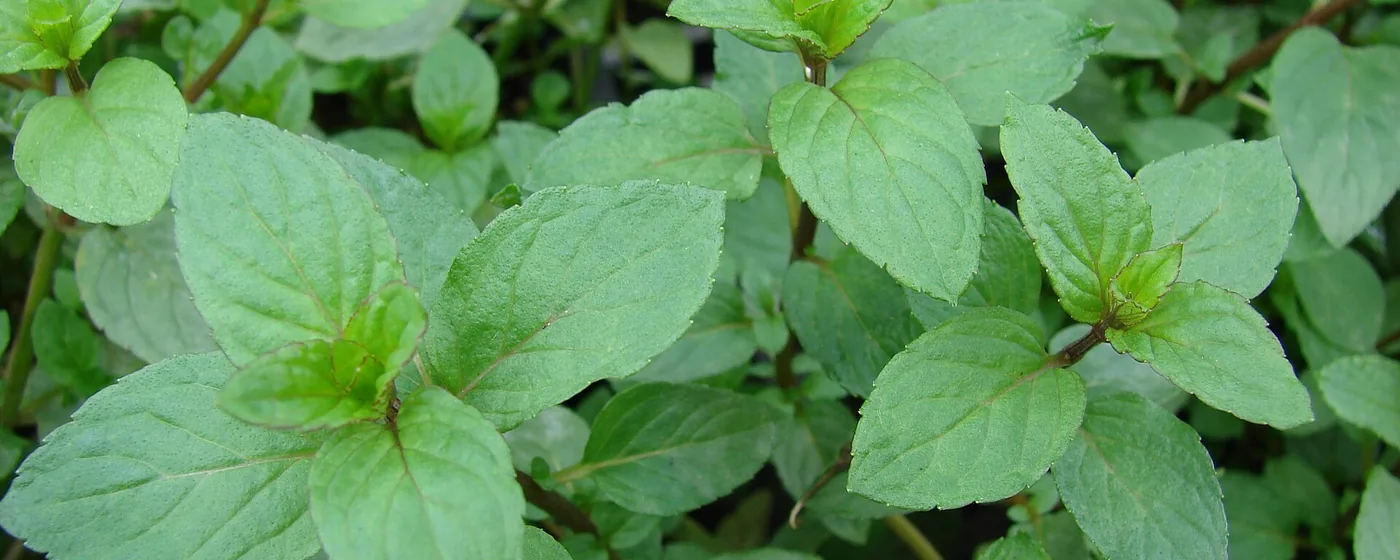
Photo: Starr 070906-8848 Mentha x piperita.jpg by Forest & Kim Starr — CC BY 3.0. Cropped and re-encoded.
Frequently asked questions
How long does peppermint tea take to work for bloating?
Nobody has measured it, because no trial has tested peppermint tea for bloating. The capsule trials ran four weeks and reported outcomes at the end. Drinkers who respond usually notice something 20 to 40 minutes after a cup, which is mechanism and habit rather than evidence. If a week or two of after-dinner tea changes nothing, the problem is probably not one a tea can reach.
Should I drink these teas before or after a meal?
It differs. Peppermint's traditional use is the after-dinner cup. Ginger is the other way around: the trials that sped up stomach emptying gave it about an hour before food, so before the meal is the better-reasoned time. No trial has compared timing for either tea. If you are reflux-prone, do not drink peppermint right before lying down.
Is fennel tea better than peppermint for gas?
Not on evidence, but possibly for you. Fennel's anethole relaxes gut muscle in laboratory work, much as menthol does, and fennel is the classic carminative for gas, though plain fennel tea has never been tested either. Its practical advantage is that it does not provoke heartburn the way peppermint can, which makes it a sensible first choice if you have reflux. Skip it if you are allergic to the carrot family, and do not give it to infants.
Should I take peppermint oil capsules instead of drinking the tea?
That is where the evidence actually lives. Enteric-coated capsules deliver a measured dose of oil past the stomach and into the intestine, which a teabag cannot do. They also cause more heartburn. Ask a clinician first, particularly if you have gallstones, bile duct obstruction, liver disease, or take a narrow-margin CYP3A4 drug such as cyclosporine, tacrolimus, or simvastatin. Never swallow peppermint essential oil, which is a different and dangerous product.
Can I drink ginger tea if I take a blood thinner?
Ask your prescriber before making it a daily habit. A randomized crossover trial in 12 healthy men found recommended ginger doses left INR and platelet aggregation unchanged, but a case report describes a woman on phenprocoumon whose INR reached 10, with nosebleeds, after she added ginger products; it came back into range once she stopped the ginger and received vitamin K. An occasional cup is very unlikely to matter. Concentrated ginger supplements, and the weeks before surgery, are the situations to raise.
Does ginger tea help you pass gas?
No human trial shows that it does. Ginger speeds gastric emptying, and in healthy volunteers it increased stomach contractions, which is a plausible route to less post-meal heaviness. But the two small trials that measured symptoms found no improvement. Ginger's own reported side effects include abdominal discomfort and heartburn. The traditional use is real; proof is not.
References
- The impact of peppermint oil on the irritable bowel syndrome: a meta-analysis of the pooled clinical data.. BMC complementary and alternative medicine, 2019. PubMed 30654773 · doi:10.1186/s12906-018-2409-0
- Peppermint oil for the treatment of irritable bowel syndrome: a systematic review and meta-analysis.. Journal of clinical gastroenterology, 2014. PubMed 24100754 · doi:10.1097/MCG.0b013e3182a88357
- Efficacy of soluble fibre, antispasmodic drugs, and gut-brain neuromodulators in irritable bowel syndrome: a systematic review and network meta-analysis.. The lancet. Gastroenterology & hepatology, 2019. PubMed 31859183 · doi:10.1016/S2468-1253(19)30324-3
- Peppermint oil (Mintoil) in the treatment of irritable bowel syndrome: a prospective double blind placebo-controlled randomized trial.. Digestive and liver disease : official journal of the Italian Society of Gastroenterology and the Italian Association for the Study of the Liver, 2007. PubMed 17420159 · doi:10.1016/j.dld.2007.02.006
- Nutritional Interventions in Adult Patients With Irritable Bowel Syndrome: An Umbrella Review of Systematic Reviews and Meta-analyses of Randomized Clinical Trials.. Nutrition reviews, 2025. PubMed 39110917 · doi:10.1093/nutrit/nuae107
- Effects of intraduodenal application of peppermint oil (WS(R) 1340) and caraway oil (WS(R) 1520) on gastroduodenal motility in healthy volunteers.. Phytotherapy research : PTR, 2003. PubMed 12601675 · doi:10.1002/ptr.1089
- Esophageal Infusion of Menthol Does Not Affect Esophageal Motility in Patients with Gastroesophageal Reflux Disease.. Dysphagia, 2023. PubMed 37728794 · doi:10.1007/s00455-023-10617-7
- Peppermint oil improves the manometric findings in diffuse esophageal spasm.. Journal of clinical gastroenterology, 2001. PubMed 11418786 · doi:10.1097/00004836-200107000-00007
- Effects of ginger on gastric emptying and motility in healthy humans.. European journal of gastroenterology & hepatology, 2008. PubMed 18403946 · doi:10.1097/MEG.0b013e3282f4b224
- Effect of ginger on gastric motility and symptoms of functional dyspepsia.. World journal of gastroenterology, 2011. PubMed 21218090 · doi:10.3748/wjg.v17.i1.105
- The Effect of Ginger (Zingiber officinalis) and Artichoke (Cynara cardunculus) Extract Supplementation on Functional Dyspepsia: A Randomised, Double-Blind, and Placebo-Controlled Clinical Trial.. Evidence-based complementary and alternative medicine : eCAM, 2015. PubMed 25954317 · doi:10.1155/2015/915087
- Non-Chinese herbal medicines for functional dyspepsia.. The Cochrane database of systematic reviews, 2023. PubMed 37323050 · doi:10.1002/14651858.CD013323.pub2
- Menthacarin, a Proprietary Peppermint Oil and Caraway Oil Combination, Improves Multiple Complaints in Patients with Functional Gastrointestinal Disorders: A Systematic Review and Meta-Analysis.. Digestive diseases (Basel, Switzerland), 2022. PubMed 36502789 · doi:10.1159/000528553
- Interventions for treating nausea and vomiting in pregnancy: a network meta-analysis and trial sequential analysis of randomized clinical trials.. Expert review of clinical pharmacology, 2018. PubMed 30261764 · doi:10.1080/17512433.2018.1530108
- Effect of ginkgo and ginger on the pharmacokinetics and pharmacodynamics of warfarin in healthy subjects.. British journal of clinical pharmacology, 2005. PubMed 15801937 · doi:10.1111/j.1365-2125.2005.02322.x
- Ginger-associated overanticoagulation by phenprocoumon.. The Annals of pharmacotherapy, 2003. PubMed 14742762 · doi:10.1345/aph.1D225
- A near fatal case of high dose peppermint oil ingestion- Lessons learnt.. Indian journal of anaesthesia, 2012. PubMed 23325948 · doi:10.4103/0019-5049.104585
- Disorders of Gut-brain Interaction on the US-Mexico Border: A Survey Using Rome IV Criteria.. Journal of clinical gastroenterology, 2024. PubMed 37267460 · doi:10.1097/MCG.0000000000001858
Last reviewed and updated . HelperTea is written by an enthusiast, not a clinician, and is not medically reviewed. How we research and rate evidence. Found an error? Tell us — safety corrections get priority.